At the very end of East Africa's Great Rift Valley, there's a 'land that time forgot'--the rolling grasslands of the Luangwa Valley. Seemingly untouched plains teem with Africa's most iconic animals. Some are unique to this place, others are critically endangered elsewhere. Here, prey exist in remarkable balance, each taking advantage of the secret at the heart of this Eden, the mighty Luangwa River and its dramatic annual transformation from dusty inferno to emerald paradise.
Sir David Attenborough reveals how Mammals have conquered the Earth, uncovering the secrets to their success with their winning design, incredible adaptability, unrivalled intelligence, and unique sociability. 66 million years ago, when the reign of the dinosaurs came to an end, mammals were set free to exploit every corner of the planet. Mammals reveals the strategies, behaviours and traits that lie behind the astonishing success of this remarkable group of animals. Above all, the series celebrates the amazing intelligence that enables mammals to learn, remember, problem-solve, parent, and co-operate. Experience the complete six-episode series in a single video, showcasing how mammals have adapted to thrive in every major environment on Earth. They inhabit every ocean and continent, from frozen wildernesses and dense jungles to baking deserts, the dark depths of the ocean, and even the skies above our forests.
Journey through the long-vanished corners of prehistoric North America, beginning when man first entered the vast, unspoiled continent some 14,000 years ago, in this appealing BBC documentary. Witness ancient beasts, mammoths, mastodons, giant bears, and sabre-toothed cats, and see the legacies each has passed to their modern successors. Computer animation and digital effects bring to life mammoths, saber-toothed cats, giant ground sloths, short-faced bears, glyptodonts, and a plethora of smaller animals in a lush Ice Age mosaic. Discoveries from sites across America are the basis for the reconstructions.
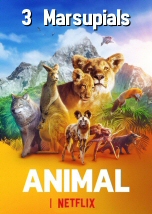
It's not all about the pouches. These mammalian misfits are full of surprises, from flamboyant kangaroo showdowns to rattling koala mating calls. They might seem a bit bizarre but don't underestimate them. With unexpected superpowers and amazing adaptability, they have conquered a continent.
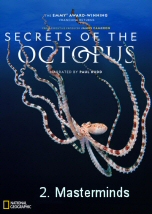
The second episode dives deeper into the enigmatic world of octopuses, uncovering the extraordinary intelligence of these cephalopods. From their ability to change color and shape in an instant to their sophisticated use of tools, this documentary reveals how octopuses navigate and survive in the ocean's most challenging environments. The documentary explores the profound cognitive abilities of octopuses, highlighting their potential for future planning, problem-solving, and even dreaming. Witness the coconut octopus's ingenious stilt-walking and shell-wielding tactics, and marvel at the giant Pacific octopus's intricate hunting strategies. Through stunning underwater footage and insights from leading scientists like Dr. Alex Schnell and Dr. C.E. O'Brien, viewers are invited to rethink what they know about intelligence in the animal kingdom. This captivating film showcases the remarkable adaptability and creativity of octopuses, making it a must-watch for anyone fascinated by the mysteries of the ocean.
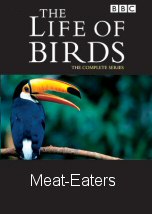
This episode examines those birds whose sustenance comes from flesh and their methods of hunting. In New Zealand, Sir Attenborough observes Keas, parrots that do not eat meat exclusively, raiding a shearwater's burrow for a chick. However, it is the dedicated birds of prey, such as owls, buzzards, eagles, falcons and vultures, to which much of the programme is devoted. In order to spot and pursue their victims, senses of sight and hearing are very acute. Vultures are the exception, in that they eat what others have left, and once a carcass is found, so many birds descend on it that the carrion seems submerged beneath them. The Turkey Vulture is an anomaly within its group, as it also has a keen sense of smell. Eagles defend their territory vigorously, and a pair of sea eagles are shown engaging in an aerial battle. The Galápagos Hawk hunts Marine Iguanas, but can only do so when its quarry is vulnerable, during the breeding season. The African Harrier Hawk has adapted to extracting burrowing animals by virtue of an especially long, double-jointed pair of legs. By contrast, a shrike is not equipped with the requisite sharp beak and talons needed for butchery, and so dismembers its kill by impaling it on the thorns of acacias. The Lammergeier eats bones, and will drop them on to rocks from a great height in order to break them down to a digestible size. Also featured are the Eurasian Sparrowhawk, Goshawk and Peregrine Falcon.
























Here, prey exist in remarkable balance, each taking advantage of the secret at the heart of this Eden, the mighty Luangwa River and its dramatic annual transformation from dusty inferno to emerald paradise.