COVID-19 is far from the first pandemic to wreak havoc in the world. A long line of infectious diseases have devastated and in some cases destroyed entire societies. Almost all of them started in animals and made the jump to humans. The Black Death spread across Europe and Asia in the 14th century leaving millions dead in its wake. Between the 15th and 18th centuries, European colonists brought smallpox to the Americas, the Pacific region and to Australia. In Europe, the 17th century saw a series of major epidemics. And at the end of the First World War, more people died of the Spanish flu than on the battlefield. This documentary examines the causes of these epidemics - whether it be lack of hygiene, interaction with animals, overcrowding, or the growth of cities - and how people travelling helped to spread disease and promote pandemics. It also sheds a light on the impact these infectious diseases have had on politics and societal change. Over the centuries, scientists managed to develop treatments and medicines to help control or even eradicate infectious diseases. Virologists are facing that task again with the coronavirus, as the world frantically searches for ways to overcome a pandemic which threatens our modern way of life.
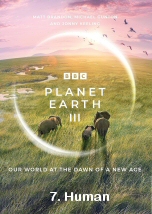
This featured episode of the documentary series takes viewers on a captivating journey around the world, showcasing the astonishing ways in which animals adapt to living alongside humans. In Sauraha, Nepal, a rhino navigates through human-inhabited areas in search of food. In Bali, long-tailed macaques have learned to trade stolen items for food, demonstrating their intelligence and adaptability. The bustling streets of New York City are home to pavement ants that thrive on human leftovers, while in India, revered cobras coexist with humans in a unique cultural relationship. Melbourne, Australia, features nocturnal frogmouths benefiting from urban lighting for hunting, and Lake Tahoe in North America sees black bears adapting to easy food sources in human settlements. The documentary also delves into the challenges faced by wildlife due to human expansion and climate change. It highlights the plight of African elephants in Kenya conflicting with farmers, the impact of overfishing on humpback whales in Vancouver Island, and the dramatic increase of desert locusts in northeastern Africa due to climate-induced conditions. The episode concludes by emphasizing the importance of reimagining our relationship with nature. It suggests a shift towards plant-based diets to reduce agricultural land use and the potential of vertical farming technologies, offering hope and solutions for a sustainable coexistence with wildlife.
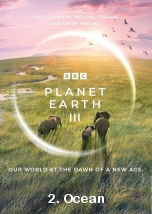
This second episode is a captivating exploration of the ocean's wonders and mysteries. It reveals how a significant part of our planet remains unexplored, primarily due to its vast water coverage. The film emphasizes the extraordinary discoveries awaiting every journey below the water's surface, with over a thousand new species identified annually. Home to 80% of all animal life on Earth, the ocean's diverse habitats host a range of surprising behaviors and life-and-death struggles, often hidden beneath a serene exterior. The shallow tropical seas, appearing as paradises, are actually arenas of intense survival battles. Predatory lionfish, with their patient hunting tactics, and clown frogfish, using a unique fishing rod-like dorsal fin as a lure, demonstrate the ocean's complex food web. The documentary also explores the kelp forests off the North American coast, revealing their role as nurseries for young horn sharks. Amidst these underwater forests lurk giant sea bass, wolf-eels, and various sharks like houndsharks and broadnose sevengills, posing significant threats to the smaller inhabitants. The episode takes viewers to the twilight and midnight zones of the ocean, unveiling alien-like creatures such as the siphonophore, glass squid, and gulper eel, adapted to the extreme conditions of deep waters. The journey concludes with the moving story of the pearl octopus, whose devotion to her eggs in the challenging deep-sea environment is both heartwarming and heartbreaking. This episode is not only a showcase of the ocean's diverse inhabitants but also a reminder of the urgent need to understand and protect this vast, mysterious, and vital part of our planet.
Adam Rutherford meets a new creature created by American scientists, the spider-goat. It is part goat, part spider, and its milk can be used to create artificial spider's web. It is part of a new field of research, synthetic biology, with a radical aim: to break down nature into spare parts so that we can rebuild it however we please. This technology is already being used to make bio-diesel to power cars. Other researchers are looking at how we might, one day, control human emotions by sending 'biological machines' into our brains.
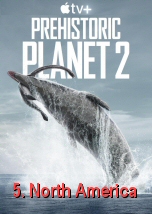
A Tyrannosaurus and two Quetzalcoatlus fight over an Alamosaurus carcass. A shoal of Sphenodiscus are ambushed by a Globidens, intent on surplus killing them. At an evaporating lake, juvenile Pectinodon hunt flies while their father hunts Styginetta. Male Triceratops fight and display for the right to mate. A female Nanuqsaurus hunts Ornithomimus to feed herself and her offpsring.
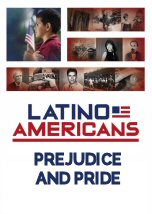
In the 1960s and 1970s a generation of Mexican Americans, frustrated by persistent discrimination and poverty, find a new way forward, through social action and the building of a new "Chicano" identity. The movement is ignited when farm workers in the fields of California, led by Cesar Chavez and Dolores Huerta, march on Sacramento for equal pay and humane working conditions. Through plays, poetry and film, Luis Valdez and activist Corky Gonzalez create a new appreciation of the long history of Mexicans in the South West and the Mestizo roots of Mexican Americans. In Los Angeles, Sal Castro, a schoolteacher, leads the largest high school student walkout in American history, demanding that Chicano students be given the same educational opportunities as Anglos. In Texas, activists such as Jose Angel Gutierrez, create a new political party and change the rules of the electoral game. By the end of the 1970s Chicanos activism and identity have transformed what it means to be an American. Chicano and Latino studies are incorporated into school curriculum; Latinos are included in the political process.











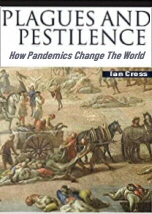









This documentary examines the causes of these epidemics - whether it be lack of hygiene, interaction with animals, overcrowding, or the growth of cities - and how people travelling helped to spread disease and promote pandemics. It also sheds a light on the impact these infectious diseases have had on politics and societal change. Over the centuries, scientists managed to develop treatments and medicines to help control or even eradicate infectious diseases. Virologists are facing that task again with the coronavirus, as the world frantically searches for ways to overcome a pandemic which threatens our modern way of life.