When Mariska Hargitay was just three years old, her mother’s life was cut short in a devastating car crash. Decades later, she embarks on a profoundly personal journey to piece together the story of the woman behind the Hollywood legend. Through revealing interviews and an extraordinary archive of rare home movies and photographs, she confronts the myths and contradictions surrounding her mother’s image. As the layers peel back, a portrait emerges that is both glamorous and deeply human—a mother, a star, and a woman whose impact endures. This is an unflinching exploration of loss, legacy, and the longing to finally understand the person who shaped her life from afar.
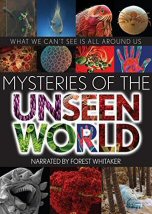
In the National Geographic tradition of powerful natural-history images and storytelling, this film reveals once-invisible dimensions of nature that are filled with beauty and wonder-and hold secrets crucial to our survival. It shines a fascinating spotlight on objects and events that escape the naked eye every minute of every day. Visually stunning and rooted in cutting-edge research, the film blends high-speed and time-lapse photography, electron microscopy and nanotechnology.
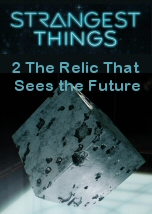
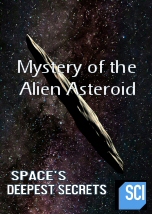
When a mysterious cigar-shaped object is spotted tumbling through our solar system, experts race to uncover it's true nature. The object, nicknamed Oumuamua, meaning 'a messenger that reaches out from the distant past' in Hawaiian, was discovered by the Pan-STARRS 1 telescope in Hawaii. Since its discovery, scientists have been at odds to explain its unusual features and precise origins, with researchers first calling it a comet and then an asteroid before finally deeming it the first of its kind: a new class of 'interstellar objects.' A recent paper by researchers at the Harvard Smithsonian Center for Astrophysics raises the possibility that the elongated dark-red object, which is 10 times as long as it is wide and travelling at speeds of 196,000 mph, might have an 'artificial origin.' The theory is based on the object's 'excess acceleration,' or its unexpected boost in speed as it travelled through and ultimately out of our solar system.
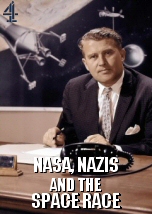
Against the backdrop of Cold War tensions and a global race for supremacy, this riveting film unveils a deeply unsettling chapter in space history. It reveals how the triumph of the 1969 Moon landing was made possible through the morally contentious recruitment of former Nazi scientists—most notably Wernher von Braun—who had engineered Germany’s V‑2 rockets during World War II through Operation Paperclip. As America navigated the ethical maze of enlisting men with dark pasts, these scientists became pivotal in crafting the mighty Saturn V rocket and ushering in the age of space exploration. This documentary invites viewers to confront the unspoken complexity behind progress: the collision of ambition, conscience, and the weight of history.
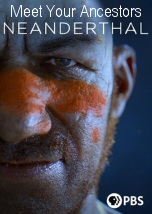
According to recent science the Neanderthals are not the knuckle-dragging apemen of popular imagination. The first part of the film investigates what Neanderthals looked like and how they lived in their Ice Age world. They were faster, smarter, better looking - and much more like us than we ever thought. Our guide is Ella Al-Shamahi, who enlists the skills of Andy Serkis, the master of performance capture, and a group of experts to investigate deeply Neanderthals appearance. In the second part, Ella explores the fate of the Neanderthals - asking why they became extinct, and discovering how they live on inside of us today. About 2% of the DNA of most people is of Neanderthal origin - and it continues to affect us today. Neanderthals were a people who were supremely well adapted to their environment. But about 40,000 years ago they disappeared. Why?
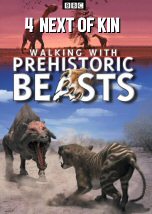
Moving on to Ethiopia 3.2 million years ago, we witness the beginnings of mankind via a group of australopithecus - a type of ape which, like us, walks upright on two legs. But unlike us, these early members of the human family weren't predators, they were prey. Things get worse for the group as they are hunted by a sabre-tooth cat called dinofelis and fall victim to other dangers such as malaria, rival australopithecus and a rampaging 14-tonne deinotherium.



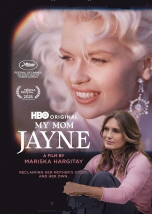



Through revealing interviews and an extraordinary archive of rare home movies and photographs, she confronts the myths and contradictions surrounding her mother’s image. As the layers peel back, a portrait emerges that is both glamorous and deeply human—a mother, a star, and a woman whose impact endures. This is an unflinching exploration of loss, legacy, and the longing to finally understand the person who shaped her life from afar.