The film unlocks the secrets to an innovative concept called circularity, an economic system based on the idea that nothing should go to waste. It's a deceptively simple idea that is at the heart of nature and the natural world, but very few of us actually live this way. And yet, it has the potential to save our planet's resources and save us from the ravages of future climate change. The film tells the story of four visionaries from around the world, whose thinking shapes and informs the concept of circularity: 102-year-old inventor Dr. James Lovelock, biomimicry biologist Janine Benyus, engineer and designer Arthur Huang, and financier John Fullerton. The extraordinary experiences of these very different people changed the way they think about humanity's future. Through the deeply personal transformation of each visionary profiled, the film explores concrete solutions individuals and communities are using to move toward a more circular society, rethinking everything from our food, our cities, our financial system, even our fashion industry.
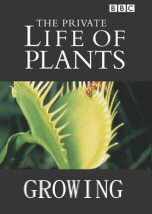
The second episode is about how plants gain their sustenance. Sunlight is one of the essential requirements if a seed is to germinate, and Attenborough highlights the cheese plant as an example whose young shoots head for the nearest tree trunk and then climb to the top of the forest canopy, developing its leaves en route. Using sunshine, air, water and a few minerals, the leaves are, in effect, the "factories" that produce food. However, some, such as the begonia, can thrive without much light. To gain moisture, plants typically use their roots to probe underground. Trees pump water up pipes that run inside their trunks, and Attenborough observes that a sycamore can do this at the rate of 450 litres an hour — in total silence. Too much rainfall can clog up a leaf's pores, and many have specially designed 'gutters' to cope with it. However, their biggest threat is from animals, and some require extreme methods of defence, such as spines, camouflage, or poison. Some can move quickly to deter predators: the mimosa can fold its leaves instantly when touched, and the Venus flytrap eats insects by closing its leaves around its prey when triggered. Another carnivorous plant is the trumpet pitcher that snares insects when they fall into its tubular leaves. Attenborough visits Borneo to see the largest pitcher of them all, Nepenthes rajah, whose traps contain up to two litres of water and have been known to kill small rodents.
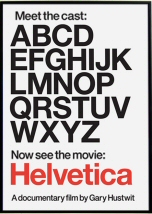
Helvetica is a feature-length independent film about typography, graphic design and global visual culture. It looks at the proliferation of one typeface (which celebrated its 50th birthday in 2007) as part of a larger conversation about the way type affects our lives. The film is an exploration of urban spaces in major cities and the type that inhabits them, and a fluid discussion with renowned designers about their work, the creative process, and the choices and aesthetics behind their use of type. The film encompasses the worlds of design, advertising, psychology, and communication, and invites us to take a second look at the thousands of words we see every day. Interviewees in Helvetica include some of the most illustrious and innovative names in the design world, including Erik Spiekermann, Matthew Carter, Massimo Vignelli, Wim Crouwel, Hermann Zapf, Neville Brody, Stefan Sagmeister, Michael Bierut, David Carson, Paula Scher, Jonathan Hoefler, Tobias Frere-Jones, Experimental Jetset, Michael C. Place, Norm, Alfred Hoffmann, Mike Parker, Bruno Steinert, Otmar Hoefer, Leslie Savan, Rick Poynor, and Lars Müller.
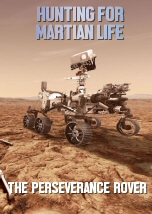
Meet Perseverance, NASA's latest rover, as it heads to Mars to answer one question: did life exist on the red planet? On the way, it will lay the foundation for human exploration of our closest neighbour. Today, Mars is hostile to life. It's too cold for water to stay liquid on the surface, and the thin atmosphere lets through high levels of radiation, potentially sterilizing the upper part of the soil. But it wasn't always like this. Some 3.5 billion years ago or more, water was flowing on the surface. It carved channels still visible today and pooled in impact craters. A thicker carbon dioxide atmosphere would have blocked more of the harmful radiation. The Mars 2020/Perseverance rover is designed to better understand the geology of Mars and seek signs of ancient life. The mission will collect and store a set of rock and soil samples that could be returned to Earth in the future. It will also test new technology to benefit future robotic and human exploration of Mars, as the Ingenuity Helicopter.
Why are ultra-processed foods so irresistible, and how they have come to dominate food culture? Dr Chris van Tulleken features interviews with former food industry insiders who talk openly about the way in which popular foods have been designed to be irresistible. Food companies go to extraordinary lengths to ensure their products connect with consumers - from using brain scans to assess the deliciousness of ice cream to carefully engineering the sound of a crunch. Ultra-processed foods are hyper-delicious and super-convenient, have long shelf lives and are extremely cheap. But a growing body of evidence is linking these products to our declining health.
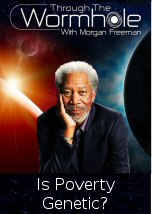
Are the wealthy just born in the right place at the right time? Are the poor victims of a system designed to keep them down? Or do physics and biology determine who is rich and who is poor? Throughout history, distribution of wealth is governed by hidden forces: DNA, environmental stress, patterns of human migration and even the laws of thermodynamics! Nature seems to demand winners and losers in life. But does this mean greed is king, and the rich can take what they want? Or is cooperation – between microorganisms, monkeys, and humans – more essential to survival of a species?












The film tells the story of four visionaries from around the world, whose thinking shapes and informs the concept of circularity: 102-year-old inventor Dr. James Lovelock, biomimicry biologist Janine Benyus, engineer and designer Arthur Huang, and financier John Fullerton. The extraordinary experiences of these very different people changed the way they think about humanity's future.
Through the deeply personal transformation of each visionary profiled, the film explores concrete solutions individuals and communities are using to move toward a more circular society, rethinking everything from our food, our cities, our financial system, even our fashion industry.