Can skyscrapers be made safer, more efficient, and livable in our rapidly growing cities? Skyscrapers are gleaming symbols of prestige, and an ingenious way to save space in dense urban areas. But as buildings rise ever higher, what are the risks of these architectural behemoths? Do we truly know how they will hold up in earthquakes, fires and wind? What have--or haven’t—we learned from past tragedies? But even as we devise ways to defend them against potential disasters, can we also make them more livable, interactive, and eco-friendly?
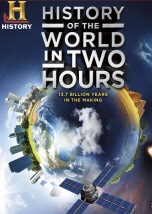
Did you know that 1% of the white noise you see on old televisions is background radiation from The Big Bang? That the gold on a wedding ring comes from a star that exploded 5 billion years ago? And, that we're connected to the salt water of the first oceans through the water in our bodies? Our human story is actually 14 billion years old and the clues are all around us. This CGI-driven special will tell the history of our world in two hours, an ambitious story that will give surprising connections to our daily lives. From the formation of the earth and the emergence of life, to the advance of man and the growth of civilization, it’s a rapid-fire view of our unforgettable story.
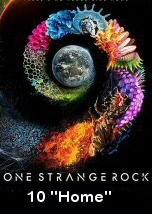
This is our home, the earth it's, it's the only place we've got. It is one strange rock because it's ours and we are here and we don't know if any other place in the universe, yet, that can support life. We're very lucky to have it as our home. Astronauts including the legendary Peggy Whitson, who spent 665 days in space, speak about how their concepts of home have changed since their experience.
Japan's landscapes range from snowy mountains to subtropical warmth. They are full of wildlife - and animals' and people's lives often cross as they adapt to these extremes. The central island of Honshu is home to over 100 million people, and its biggest city, Tokyo, is one of the largest urban metropolises on earth. But it has a wild heart - most of Honshu is mountainous. This wilderness is home to an astonishing range of wildlife - black bears, monkeys, exquisite fireflies and even cow demons. But all across this island, from the mountains to the edge of the sea, people and nature are drawn together in the most unexpected ways.
Push the limits of your imagination as astronomers attempt to grasp the mind-boggling extremes of size, distance and speed within our universe by bringing them down to earth. In this episode, our cast uses awesome analogies to bring the biggest objects, farthest distances and fastest speeds down to earth. To truly understand the scale of the cosmos, we jump behind the wheel of monster trucks, scale the Golden Gate Bridge, and race across the desert in a rocket-powered car.
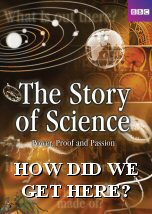
The question of our human origins is one of the most controversial science has wrestled with. This is the story of how scientists came to explain the beauty and diversity of life on earth, and reveal how its evolution is connected to the long and violent history of our planet. Featuring ocean adventurers, eccentric French aristocrats, mountain climbers, a secret Victorian publisher with 12 fingers, a ridiculed German meteorologist, and only a brief hint of Charles Darwin.







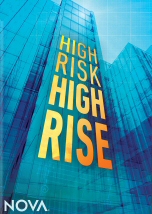







Do we truly know how they will hold up in earthquakes, fires and wind? What have--or haven’t—we learned from past tragedies? But even as we devise ways to defend them against potential disasters, can we also make them more livable, interactive, and eco-friendly?