Orbiting Earth at around 27.000 km/h, the International Space Station is one of humanity’s greatest engineering achievements, but also one of the most unforgiving places ever built. Astronauts and mission controllers recount moments when routine work suddenly became a fight for survival: a spacesuit filling with water, toxic ammonia spraying across a spacewalker, dangerous temperature extremes, radiation, fire, contamination and the constant threat of collision. The series reveals how every mission depends on training, improvisation and split-second decisions in an environment where even a small failure can become fatal. Across the two episodes, presented here together in a single uninterrupted video, the danger escalates from the hazardous construction and maintenance of the station to the growing risks of life aboard it. Astronauts face micrometeoroids and space debris travelling at lethal speeds, docking emergencies and system failures, culminating in the extraordinary 2021 incident when the newly arrived Nauka module unexpectedly fired its thrusters and sent the entire ISS rotating out of control. With communications at risk and the structure under immense strain, crews in orbit and controllers on Earth must work together to regain control. The result is a gripping story of courage, science and survival inside a machine that has kept humans continuously living in space for more than two decades.
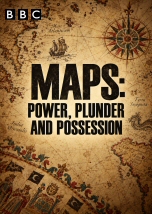
Professor Jerry Brotton reveals that maps are far more than neutral guides to places: they are expressions of the societies that create them and powerful instruments for shaping territory, belief and authority. Beginning with some of the earliest known maps, he traces how cartography evolved from marking land and ownership to serving kings, empires, scientists and governments. From Henry VIII’s coastal surveys and the Cassini family’s scientific breakthroughs to the drawing of modern national borders, the series shows how maps can define who controls land, who belongs where and even how entire peoples understand the world around them. Across the three episodes, presented here together in a single uninterrupted video, the journey moves from ancient and medieval worldviews to imperial expansion and the digital age. Brotton explores religious maps, Aztec symbolism, Victorian attempts to classify societies, the politics behind projections of the globe, and the rise of Google Earth and data-driven mapping. He then follows the mapmakers and explorers who turned distant lands into targets for conquest and profit, from Ptolemy and Columbus to Walter Raleigh and the trading empires that followed. The story ends in the Arctic, where new maps are once again being used to stake claims over oil, gas and minerals, proving that even in the twenty-first century, cartography remains inseparable from power, plunder and possession.
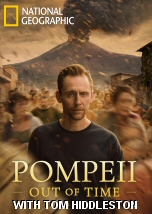
Tom Hiddleston returns to the ancient city that first awakened his fascination with the Roman world, determined to uncover a story far more human than the familiar tale of sudden destruction. Drawing on new archaeological evidence, expert analysis and vivid dramatic reconstruction, he follows three real Romans through the final hours before and during the eruption of Mount Vesuvius: Avianius, a headstrong young apprentice searching for his mother; Julia Felix, a wealthy and independent businesswoman responsible for an entire household; and a veteran soldier who risks everything to help others escape. As earthquakes intensify, ash begins to fall and burning avalanches race towards Pompeii and Herculaneum, every decision becomes a struggle between fear, loyalty and survival. Who understood the warning signs? Who fled, who stayed behind—and whose courage gave others a chance to live? Presented here as one uninterrupted feature containing all three episodes, this extraordinary journey allows viewers to experience the complete disaster from its first tremors to its devastating final surge, revealing Pompeii not simply as a city of death, but as an unforgettable story of ordinary people facing the end of their world.
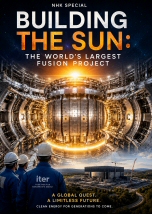
An ambitious scientific quest is underway to recreate the power of the Sun here on Earth. This fascinating documentary takes viewers inside one of the most complex engineering projects ever attempted: the construction of the world's largest nuclear fusion reactor. Bringing together thousands of scientists, engineers, and technicians from dozens of countries, the project seeks to harness the same process that powers the stars and transform it into a virtually limitless source of clean energy for future generations. With unprecedented access to the massive ITER facility in southern France, the documentary reveals the extraordinary challenges of building a machine capable of containing plasma hotter than the Sun itself. Through stunning visuals, cutting-edge technology, and firsthand accounts from the people making it possible, the film explores the race to unlock fusion energy, the scientific breakthroughs required to achieve it, and the potential to revolutionize humanity's energy future if this historic experiment succeeds.
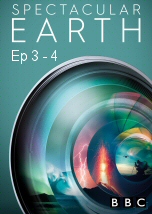
In the final two episodes, the documentary investigates the immense geological forces that continue to reshape our planet. Scientists and adventurers travel to Guatemala's Volcán de Fuego, one of the most active volcanoes on Earth, capturing spectacular eruptions, rivers of lava, and towering ash clouds from astonishingly close range. Along the way, the series reveals how volcanoes are formed, how tectonic plates trigger earthquakes and tsunamis, and how volcanic activity can even create entirely new islands in the middle of the ocean. The journey then turns to one of nature's most breathtaking displays: the Aurora Borealis. In the frozen landscapes of northern Sweden, scientists uncover how powerful storms on the Sun send streams of charged particles towards Earth, illuminating the night sky with vast curtains of color. Combining stunning footage with cutting-edge research, the documentary explores solar activity, space weather, eclipses, and the remarkable connection between our planet and the forces that originate far beyond its atmosphere.
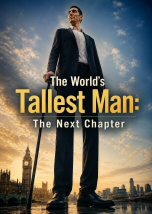
Fifteen years after becoming a global sensation as the tallest man on Earth, Sultan Kosen returns in a deeply personal and emotionally charged documentary that reveals the hidden cost of living inside a body that never stopped growing. Standing over 2.51 metres tall, Sultan became famous across the world, but behind the records and media attention was a painful battle against a rare medical condition that threatened both his mobility and his life. Now, as worsening health problems force him to rely increasingly on wheelchairs, he travels to London for critical medical evaluations that could determine whether his body can still be saved. At the same time, another life-changing moment approaches: Guinness World Records must officially measure him once again to decide whether he still holds the title that shaped his entire identity. But beyond the fame, the documentary reveals a far more intimate story — his failed marriage, his loneliness, and his continuing hope of finding love and building a family. Combining emotional honesty, medical suspense, and the extraordinary reality of a man unlike any other, the film builds toward a gripping conclusion that could change Sultan’s future forever.





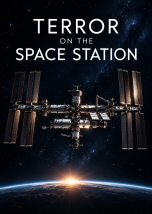
Across the two episodes, presented here together in a single uninterrupted video, the danger escalates from the hazardous construction and maintenance of the station to the growing risks of life aboard it. Astronauts face micrometeoroids and space debris travelling at lethal speeds, docking emergencies and system failures, culminating in the extraordinary 2021 incident when the newly arrived Nauka module unexpectedly fired its thrusters and sent the entire ISS rotating out of control. With communications at risk and the structure under immense strain, crews in orbit and controllers on Earth must work together to regain control. The result is a gripping story of courage, science and survival inside a machine that has kept humans continuously living in space for more than two decades.