





Last Watched

"Time"  Sort by

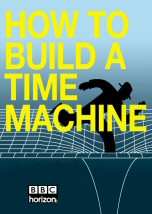
How to Build a Time Machine

   2018    Science
Time travel is not forbidden by the laws of nature, but to build a time machine, we would need to understand more about those laws and how to subvert them than we do now. And every day, science does learn more. In this film Horizon meets the scientists working on the cutting edge of discovery - men and women who may discover how to build wormholes, manipulate entangled photons or build fully functioning time crystals. In short, these scientists may enable an engineer of the future to do what we have so far been only able to imagine - to build a machine that allows us travel back and forward in time at the touch of a button. It could be you! Science fiction? Watch this film.
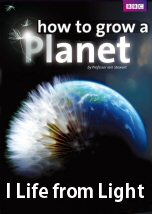
How to Grow a Planet Life from Light

   2012    Science
In this series Professor Iain Stewart tells a stunning new story about our planet. He reveals how the greatest changes to the Earth have been driven, above all, by plants. In this first episode Iain journeys from the spectacular caves of Vietnam to the remote deserts of Africa. He sees how plants first harnessed light from the sun and created our life-giving atmosphere. He uncovers the epic battle between the dinosaurs and the tallest trees on the planet. And, using remarkable imagery, he shows plants breathing - and for the first time talking to each other.
Series: How to Grow a Planet

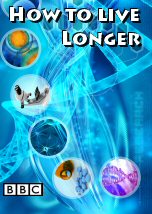
How to Live Longer

   2017    Medicine
Our lifespan is increasing by 2.5 years every decade - and a third of all babies born today can expect to live to 100. But living longer can come at a cost. Old age itself brings with it a range of debilitating illnesses, many of which are the result of accumulating damage during our lifetime. Three diseases in particular have become the main killers in the developed world - cancer, heart disease and dementia. But a revolution in bio-medicine is now offering new hope for the treatment of these ailments, and the potential to extend our lives still further. Methods such as gene editing and stem cell therapies are transforming the way medicine can conquer disease today. "How to Live Longer" counts with the guide of the Nobel laureate Sir Paul Nurse, for whom the big question isn't just what science can do to fix our bodies and extend our lives, but whether it's right to use all the tools and techniques available.
Series: The Big Think

Human

   2025    History    HD
Spanning five gripping episodes presented together in one seamless video, this sweeping journey explores 300,000 years of human evolution, revealing groundbreaking discoveries that are reshaping everything we thought we knew about our origins. From the first appearance of Homo sapiens in Africa—at a time when at least six other human species walked the Earth—to the dramatic encounters with Neanderthals and the mysteries of their disappearance, each chapter uncovers the epic struggle for survival and dominance.
As the Ice Age grips the planet, humanity pushes into the Americas, braving the harshest conditions in history. Finally, as the ice recedes, a transformation begins: the shift from wandering hunters to the builders of the first permanent settlements. This story brings to life the triumphs, dangers, and defining moments that made us who we are today.
Series: Human

Human Planet: The Oceans

   2011    Culture
Human Planet is a majestic portrait of humankind and the power of nature in extraordinary symbiosis, struggle and strife. For the first time, the camera has turned on ourselves. In doing so, we see how amazing human beings can be and how we adapt to any habitat, anywhere. Human Planet is epic in ambition, extreme in content, intimate in effect. It explores how we have devised ways of surviving in every corner of Earth – from the remotest deserts to the busiest urban metropolis. Each episode focuses on an iconic environment and reveals how we have adapted to the challenges of the landscape and the endless diversity of animals and plants we live with. Discover how our remarkable intelligence, tool use, and close-knit social lives have enabled us to cope with just about anything nature can throw at us". As an air-breathing animal, the human is not built to survive in water. But people have found ways to live an almost aquatic life so they can exploit the sea's riches. From a 'shark-whisperer' in the Pacific to Brazilian fishermen collaborating with dolphins to catch mullet, this journey into the blue reveals astonishing tales of ingenuity and bravery. Daredevil Galician barnacle-collectors defy death on the rocks for a catch worth 200 pounds per kilo. In Indonesia an epic whale-hunt, using traditional hand-made boats and harpoons, brings in a sperm whale. The Bajau 'sea gypsies' of the Sulu Sea spend so much time on water they get 'land sick' when they set foot on the land! We dive 40 metres down to the dangerous world of the Pa-aling fishermen, where dozens of young men, breathing air through a tangled web of pipes attached to a diesel engine, capture thousands of fish in a vast net. We see how surfing has its origins in the ancient beliefs of the ocean-loving Polynesians, and we join a Borneo free-diving spear-fisherman on a breath-taking journey 20 metres down in search of supper.
Series: Human Planet

Humboldt Epic Explorer

   2020    History
In 1799, the German scientist Alexander von Humboldt embarked on a perilous journey of discovery across South America. It would take him to the deepest jungle near the Orinoco and to the heights of the Andes. His aim was twofold: to conduct the first scientific survey of South America and to discover how the natural world actually works — at a time when most scientists believed that the world was created less than 6,000 years ago. He later became a leading scientific figure and champion of the abolitionist movement in the US.
This extremely visual docudrama follows Humboldt’s extraordinary path. Travelling in Humboldt’s footsteps is historian Andrea Wulf, whose book on Humboldt became a worldwide bestseller. For good reason, since Humboldt’s ideas on the planet’s fragile web of life are as important today as they were 220 years ago.
Chef's Table

Chef's Table

2017  Art
Racism: A History

Racism: A History

2007  Culture
The Jinx

The Jinx

2015  History
Atom

Atom

2007  Science
Human Universe

Human Universe

2014  History
Future of Work

Future of Work

2021  Technology
Human Planet

Human Planet

2011  Culture