In episodes 7 and 8 of the series, the journey moves from the towering Andes to the tropical Caribbean, revealing two worlds where wildlife survives through astonishing specialization. In the Andes, spectacled bears guide their cubs down perilous cliffs, rare marvelous spatuletail hummingbirds fight and dance for mates, frogs endure freezing nights high beside retreating glaciers, torrent ducks master near-boiling mountain rivers, and thousands of flamingos gather at toxic high-altitude lakes in spectacular courtship displays. The Caribbean offers an entirely different struggle for survival. Sailfish coordinate high-speed attacks on sardine shoals, sperm whales dive into the deep around Dominica, millions of red crabs cross Cuba’s forests on their migration to the sea, and animals on isolated islands develop remarkable ways to exploit scarce resources. On Isla Jicarón, white-faced capuchins even learn to use stones as tools to crack nuts, showing how intelligence and adaptation can make the difference between survival and failure in paradise.
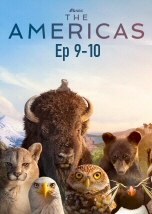
In the final two episodes, the journey reaches the Pacific edge of North America and the remote wilderness of Patagonia, two spectacular regions shaped by powerful oceans, towering forests and extreme weather. Along the West Coast, wolves comb the shoreline for food, sea otters battle crashing surf, blue whales gather in a rare display of speed and movement, and giant Pacific octopuses devote everything to protecting the next generation. High in the redwood canopy, even tiny salamanders perform extraordinary leaps to survive, revealing how life has adapted to one of the continent’s most dramatic coastal environments. The series then travels to the far south of the Americas, where Patagonia delivers a fittingly wild finale. Pumas stalk guanacos through snowy mountains, rockhopper penguins fight their way through violent waves to reach their colonies, giant stag beetles climb immense trees to compete for mates, and elephant seals clash for dominance along the coast. In one of the most remarkable scenes, a family of orcas passes down a dangerous hunting technique from one generation to the next, showing how survival here depends not only on strength, but also on experience, cooperation and learning.
The fourth episode starts off with the two riding through Santa Cruz, Argentina. The plan is to cross over into Chile and then going up into the Andes. Ewan and Charley head through Argentina’s red rock landscape while a member of their team copes with altitude sickness. The duo are well and truly underway and the first signs of all are well is how well the Harleys hold up in challenging conditions. The roads alternate between unforgiving and pleasant and these e-bikes push through effortlessly. As they ride through Chilean Andes, the audience is shown a picturesque view of the beauty of the countryside, an experience which Boorman calls 'magical.'
A powerful movement is exploiting our fears, persuading some to believe the vaccine was designed to control or even kill us. Who are the people behind the international anti-Covid-vaccine movement and why are they doing it? In the anti-vax movement - where is the money? The money comes from a small but very well-heeled network of donors and philanthropists who fund anybody reinforcing their opinions. The film is a journey inside the astonishing world of the anti-vaxxers.
The Arctic is the harshest environment on Earth: little food grows, it's dark for months on end, and temperatures stay well below freezing for much of the year. Yet four million people manage to survive here. Human Planet tells remarkable stories of extraordinary people who make their homes in nature's deep freeze. In springtime, Amos and Karl-Frederik set out across the sea ice with their dogs to catch a real-life sea monster: a Greenland shark! Inuit mussel-gatherers venture underneath the sea ice at low tide for a perilous race against time as they gather their food. And the children of Churchill, Manitoba, set out on the most dangerous trick or treating Halloween in the world: they risk coming face-to-face with deadly polar bears on the streets of their town. Who'll get the tastiest snack?
With much of it covered in ice all year round and with no daylight from October to March, the Arctic Ocean is one of the world's most remarkable oceans. Its home to a multitude of unique life forms, all highly adapted to cope with the extreme and seasonal conditions. The impacts of climate change are more strongly felt here than anywhere else in the world.














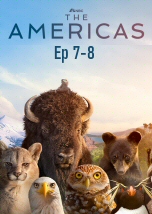


The Caribbean offers an entirely different struggle for survival. Sailfish coordinate high-speed attacks on sardine shoals, sperm whales dive into the deep around Dominica, millions of red crabs cross Cuba’s forests on their migration to the sea, and animals on isolated islands develop remarkable ways to exploit scarce resources. On Isla Jicarón, white-faced capuchins even learn to use stones as tools to crack nuts, showing how intelligence and adaptation can make the difference between survival and failure in paradise.