Eugene Levy, a celebrated actor and self-confessed travel skeptic forces himself into the discomfort of jetting across the globe, visiting dazzling destinations he would normally avoid. With his trademark wit and unease, he peels back the gloss of travel, dipping toes into local customs, natural wonders, and cultural rituals, transforming each journey into a quietly emotional reckoning with what it means to explore, to connect, and to grow. In episodes 1 through 4, the adventure starts in the Arctic north of Finland, where he tries ice fishing, feeds reindeer, rides in a husky sled and chases the aurora borealis. Then he plunges into the Costa Rican jungle, sleeping high among trees and confronting wild creatures. In Venice he lounges at a historic palazzo, bonds with a gondolier and reflects on his life and family. Finally, a helicopter drops him into the stark desert at Amangiri in Utah, where he absorbs breathtaking landscapes and engages with the Navajo Nation while battling his own nerves.
In the last four episodes, Eugene Levy’s journey turns into a celebration of contrast and courage. In the Maldives, he tries to find his sea legs at a luxurious private island resort that promises anything, anytime, anywhere. In South Africa, he experiences a powerful encounter with an elephant that changes the way he sees connection and empathy. In Portugal, he delights in rich Iberian cuisine, uncovering the soul of local traditions. Finally, in Tokyo, he steps into the ring as a sumo referee, embracing the balance between discipline, culture, and humor in a city bursting with life.
Bitcoin is a peer-to-peer monetary system in which all transaction records are public. Participants can use its open-source software to transfer virtual currency to one another as easily as they might send an email. Bitcoin opens an uncharted world of new possibilities to explore. We'll follow the stories of entrepreneurs and startups that are helping shape the new financial frontier. We'll look at the competitive mining market and the various subcultures within the Bitcoin community." You'll encounter a variety of characters and opinions as we examine the social and political impact of an open-source digital currency. Will the rise of Bitcoin bring a monetary paradigm shift that will forever change the world? Supposedly invented by a mysterious Japanese man named Satoshi Nakamoto (whose current whereabouts are unknown). Because it is designed to have an absolute ceiling of 21 million Bitcoins in circulation (not anticipated until 2040), and the system has no central depository or administrative authority, it has great appeal to libertarians and others who seek alternatives to a perceived corrupt, manipulative banking infrastructure and excessive government regulations. Its low processing fees compared with those of mainstream credit-card companies also hold considerable allure for merchants.
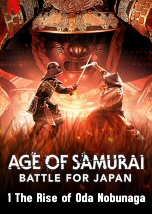
This brilliant docuseries is an exploration of the feudal Japan from 1551 to 1616 , during the final phase of the Sengoku period (The Age of Warring States), when several powerful daimyo (warlords) fought to become absolute ruler. It features reenactments of historical events and commentary by voice-over artist Hiro Kanagawa and outstanding historians. In the first episode, Oda Nobunaga becomes head of the Oda clan upon the death of his father, but this causes problems with family members who compete for control.
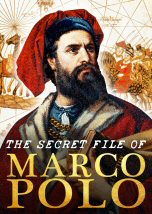
Did Marco Polo, the most illustrious traveller in history, ever go to China? To this day doubt lingers, among some scholars, as to whether the Venetian’s book is a personal account of China’s 13th-century Middle Kingdom and its marvels. Scientists, western scholars and Chinese historians have uncovered striking new evidence that the son of Venetian merchants actually had been to China. Explore the mysteries of the historical figure in this featured documentary.
Fourth episode examines how plants either share environments harmoniously or compete for dominance within them. Attenborough highlights the 1987 hurricane and the devastation it caused. However, for some species, it was that opportunity for which they had lain dormant for many years. The space left by uprooted trees is soon filled by others who move relatively swiftly towards the light. The oak is one of the strongest and longest-lived, and other, lesser plants nearby must wait until the spring to flourish before the light above is extinguished by leaves. Tropical forests are green throughout the year, so brute force is needed for a successful climb to the top of the canopy: the rattan is an example that has the longest stem of any plant. As its name suggests, the strangler fig 'throttles' its host by growing around it and cutting off essential water and light. Some can take advantage of a fallen tree by setting down roots on the now horizontal trunk and getting nutriment from the surrounding moss and the fungi on the dead bark. The mountain ash (eucalyptus regnans) grows so tall, that regeneration becomes a considerable problem. It is easily flammable, so its solution is to shed its seeds during a forest fire and sacrifice itself. It therefore relies on the periodic near-destruction of its surroundings in order to survive. Attenborough observes that catastrophes such as fire and drought, while initially detrimental to wildlife, eventually allow for deserted habitats to be reborn.




















In episodes 1 through 4, the adventure starts in the Arctic north of Finland, where he tries ice fishing, feeds reindeer, rides in a husky sled and chases the aurora borealis. Then he plunges into the Costa Rican jungle, sleeping high among trees and confronting wild creatures. In Venice he lounges at a historic palazzo, bonds with a gondolier and reflects on his life and family. Finally, a helicopter drops him into the stark desert at Amangiri in Utah, where he absorbs breathtaking landscapes and engages with the Navajo Nation while battling his own nerves.