Every year, around the world, seasonal changes transform entire landscapes and draw in millions of creatures as these great events unfold. This fantastic series combines the epic scale of Planet Earth and the intimate, emotional stories of charismatic animals as they struggle to survive. Using state of the art technology, these programmes capture the Earth's most dramatic and epic wildlife spectacles and the intimate stories of the animals caught up in them. The Great Melt: The summer melt of Arctic ice, opening up nearly three million square miles of ocean and land, provides opportunities for millions of animals, including beluga whales, families of Arctic foxes, vast colonies of seabirds, and the fabled Arctic unicorn, the narwhal. For polar bears, however, it is the toughest time of year. Why? How will they survive? A mother polar bear and her cub make their first journey together onto the sea ice. They are looking for ringed seals, their favourite prey. It is a serious business but the cub just wants to play. The melting ice makes it harder for them to hunt and threatens their survival. In a unique aerial sequence, the migration of narwhal with their distinctive unicorn-like tusks is filmed for the first time. The whales' journey is risky as they travel along giant cracks in the ice. If the ice were to close above them, they would drown. Hundreds of beluga whales gather in the river shallows. They rub themselves on smooth pebbles in one of the most bizarre summer spectacles. Guillemot chicks take their first flights from precipitous sea cliff nests to the sea 300 metres below. They attempt to glide to safety but many miss their target. Their loss is a bonus for the hungry Arctic fox family waiting below. As the melt comes to an end the bears gather, waiting for the sea to freeze again. Two 400kg males square up to each other to spar.
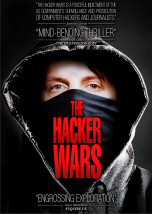
Ripped from international headlines, The Hacker Wars takes you to the front lines of the high-stakes battle over the fate of the Internet, freedom and privacy". Get ready to be shuttled between story lines at lightning speed mirroring the disjointed lives of the protagonists and life on the Internet. The Hacker Wars- a film about the targeting of (h)ac(k)tivists and journalists by the US government. Hacktivists are either terrorists or freedom fighters depending on ones perspective on who should control information. Meet weev, infamous hacker; Barrett Brown, journalist and propagandist for the hacktivist collective, Anonymous; and Jeremy Hammond, aka Anarchaos, number one on the FBI's cyber-criminal list. The fourth character is Sabu, the uber-hacker turned FBI informant who ran the FBI's cyber unit for 9 months and is responsible for many arrests. He is the shadowy protagonist in a high-stakes game of espionage and betrayal in the age of the Internet. Barrett Brown, American journalist, is facing 105 years in prison for publicizing information revealed through Jeremy Hammond's epic hacks. Hammond himself has just begun a 10-year prison term. Andrew Auernheimer, known by his hacker handle weev embarrasses large corporations. He was sentenced to 41 months for hacking AT&T, but his conviction was just overturned. He vows to continue doing what landed him in prison in the first place. These hacktivists are the rock stars of the Internetmodern-day folk heroes. Glenn Greenwald (Snowdon Leaks), Pulitzer Prize-winning journalist and others explain why these anti-heroes exposing the security surveillance state are essential to a functioning democracy.
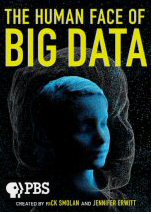
With the rapid emergence of digital devices, an unstoppable, invisible force is changing human lives: Big Data, a word that was barely used a few years ago but now governs the day for many of us. The real time visualization of data streaming in from satellites, billions of sensors and GPS enabled cameras and smart phones is beginning to enable us to sense, measure and understand aspects of our existence in ways never possible before". This massive gathering and analysing of data in real time is also allowing us to address to some of humanity biggest challenges, including pollution, world hunger and illness, and it is also helping create a new kind of planetary nervous system. But as Edward Snowden and the release of the NSA documents have shown, the accessibility of all this data comes at a steep price. The Human Face of Big Data captures the promise and peril of this extraordinary knowledge revolution.
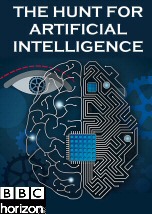
Marcus Du Sautoy wants to find out how close we are to creating machines that can think like us: robots or computers that have artificial intelligence. His journey takes him to a strange and bizarre world where AI is now taking shape. Marcus meets two robots who are developing their own private language, and attempts to communicate to them. He discovers how a super computer beat humans at one of the toughest quiz shows on the planet, Jeopardy". And finds out if machines can have creativity and intuition like us. Marcus is worried that if machines can think like us, then he will be out of business. But his conclusion is that AI machines may surprise us with their own distinct way of thinking.
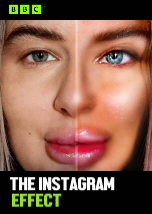
The story of how Instagram became the dominant force it is today, told by former staff and insiders and through powerful testimony from users who have been negatively impacted. An eye-opening documentary delving into the shadows of social media harm. More than half of the world now uses social media, and as our global usage increases and 87% of 12-15 year olds have an account, concerns continue to be raised about how we can stay safe online, and the role social media companies play in that. The film explores how Instagram affects its users and the role big tech companies play in exacerbating issues around body image and self-harm for younger users.
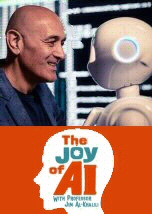
Professor Jim Al-Khalili looks at how we have created machines that can simulate, augment, and even outperform the human mind - and why we shouldn't let this spook us. He reveals the story of the pursuit of AI, the emergence of machine learning and the recent breakthroughs brought about by artificial neural networks. He shows how AI is not only changing our world but also challenging our very ideas of intelligence and consciousness.
Along the way, we'll investigate spam filters, meet a cutting-edge chatbot, look at why a few altered pixels makes a computer think it's looking at a trombone rather than a dog and talk to Demis Hassabis, who heads DeepMind and whose stated mission is to 'solve intelligence, and then use that to solve everything else'. Stephen Hawking remarked 'AI could be the biggest event in the history of our civilisation. Or the worst'. Jim argues that AI is a potent new tool that should enhance our lives, not replace us.




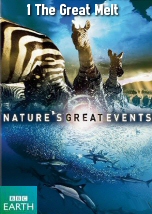



The Great Melt: The summer melt of Arctic ice, opening up nearly three million square miles of ocean and land, provides opportunities for millions of animals, including beluga whales, families of Arctic foxes, vast colonies of seabirds, and the fabled Arctic unicorn, the narwhal. For polar bears, however, it is the toughest time of year. Why? How will they survive? A mother polar bear and her cub make their first journey together onto the sea ice. They are looking for ringed seals, their favourite prey. It is a serious business but the cub just wants to play. The melting ice makes it harder for them to hunt and threatens their survival. In a unique aerial sequence, the migration of narwhal with their distinctive unicorn-like tusks is filmed for the first time. The whales' journey is risky as they travel along giant cracks in the ice. If the ice were to close above them, they would drown. Hundreds of beluga whales gather in the river shallows. They rub themselves on smooth pebbles in one of the most bizarre summer spectacles. Guillemot chicks take their first flights from precipitous sea cliff nests to the sea 300 metres below. They attempt to glide to safety but many miss their target. Their loss is a bonus for the hungry Arctic fox family waiting below. As the melt comes to an end the bears gather, waiting for the sea to freeze again. Two 400kg males square up to each other to spar.