The filmmakers challenge former Indonesian death-squad leaders to reenact their mass-killings in whichever cinematic genres they wish, including classic Hollywood crime scenarios and lavish musical numbers. Anwar Congo and his friends have been dancing their way through musical numbers, twisting arms in film noir gangster scenes, and galloping across prairies as yodeling cowboys. Their foray into filmmaking is being celebrated in the media and debated on television, even though Anwar Congo and his friends are mass murderers. Medan, Indonesia. When the government of Indonesia was overthrown by the military in 1965, Anwar and his friends were promoted from small-time gangsters who sold movie theatre tickets on the black market to death squad leaders. They helped the army kill more than one million alleged communists, ethnic Chinese, and intellectuals in less than a year. As the executioner for the most notorious death squad in his city, Anwar himself killed hundreds of people with his own hands. The Act of Killing is about killers who have won, and the sort of society they have built. Unlike ageing Nazis or Rwandan génocidaires, Anwar and his friends have not been forced by history to admit they participated in crimes against humanity. Instead, they have written their own triumphant history, becoming role models for millions of young paramilitaries. The Act of Killing is a journey into the memories and imaginations of the perpetrators, offering insight into the minds of mass killers. And The Act of Killing is a nightmarish vision of a frighteningly banal culture of impunity in which killers can joke about crimes against humanity on television chat shows, and celebrate moral disaster with the ease and grace of a soft shoe dance number.
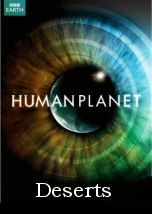
We can survive for weeks without food, but only days without water: it is the essential element of life. Yet many millions of us live in parched deserts around the world. In the second episode of Human Planet, we discover how the eternal quest for water brings huge challenges - and ingenious solutions - in the driest places on Earth. Battling through a sand storm in Mali, Mamadou must get his cows to a remote lake but desert elephants have arrived first. Can he find a safe way through the elephant blockade? Alone for weeks on end, Tubu women and children navigate the endless dunes of the Sahara. How does young Shede know where to find the last oasis, three days walk across the sea of sand? At the height of the drought we witness a spectacular frenzy: two thousand men rushing into Antogo Lake to catch the fish trapped by the evaporating water. When the rain finally arrives in the desert it's a time for flowering and jubilation - and love. The Wodaabe men of Niger put on make-up for an intoxicating courtship dance and beauty contest.
In the third episode you can see an extraordinary journey through the frigid realms of northern Asia. This captivating documentary unveils the remarkable strategies employed by wildlife to endure and flourish amidst relentless snow and ice. Witness the stealth and agility of Himalayan wolves as they pursue the swift chiru antelope across vast, frozen terrains. Observe the delicate courtship rituals of red-crowned cranes, mastering intricate mating dances in the snow-laden landscapes. Delve into the secluded habitats of the elusive Amur tigers, navigating the dense, frost-covered forests where Russia, China, and North Korea converge—a region also inhabited by the world's largest owls. Each scene offers a profound glimpse into nature's resilience and adaptability in some of the planet's most unforgiving environments.
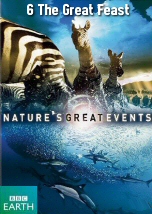
Every summer in the seas off Alaska humpback whales, sea lions and killer whales depend on an explosion of plant life, the plankton bloom. It transforms these seas into the richest on Earth. But will these animals survive to enjoy the great feast? The summer sun sparks the growth of phytoplankton, microscopic floating plants which can bloom in such vast numbers that they eclipse even the Amazon rainforest in sheer abundance of plant life. Remarkably, it is these minute plants that are the basis of all life here. But both whales and sea lions have obstacles to overcome before they can enjoy the feast. Humpback whales migrate 3,000 miles from Hawaii, and during their 3 month voyage lose a third of their body weight. In a heart-rending scene a mother sea lion loses her pup in a violent summer storm, while another dramatic sequence shows a group of killer whales working together to kill a huge male sea lion. In late summer the plankton bloom is at its height. Vast shoals of herring gather to feed on it, diving birds round the fish up into a bait ball and then a humpback whale roars in to scoop up the entire ball of herring in one huge mouthful. When a dozen whales work together they employ the ultimate method of co-operative fishing - bubble net feeding. One whale blows a ring of bubbles to engulf the fish and then they charge in as one. Filmed from the surface, underwater and, for the first time, from the air, we reveal how these giant hunters can catch a tonne of fish every day.
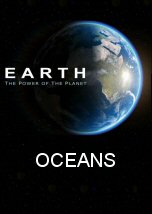
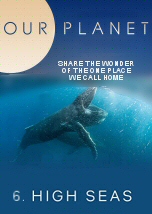
Far from land, where few of us ever venture, is the ocean beyond the boundary of any country. Largely ungoverned, wild, and lawless. Venture into the deep, dark and desolate oceans that are home to an abundance of beautiful - and downright strange - creatures.
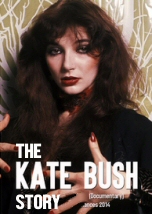
This documentary explores Kate Bush's career and music, from January 1978's Wuthering Heights to her 2011 album 50 Words for Snow, through the testimony of some of her key collaborators and those she has inspired. Contributors include the guitarist who discovered her (Pink Floyd's David Gilmour), the choreographer who taught her to dance (Lindsay Kemp) and the musician who she said 'opened her doors' (Peter Gabriel), as well as her engineer and ex-partner (Del Palmer) and several other collaborators (Elton John, Stephen Fry and Nigel Kennedy). Also exploring their abiding fascination with Kate are fans (John Lydon, Sidi Larbi Cherkaoui) and musicians who have been influenced by her (St Vincent's Annie Clark, Natasha Khan of Bat for Lashes, Tori Amos, Outkast's Big Boi, Guy Garvey and Tricky), as well as writers and comedians who admire her (Jo Brand, Steve Coogan and Neil Gaiman).








Medan, Indonesia. When the government of Indonesia was overthrown by the military in 1965, Anwar and his friends were promoted from small-time gangsters who sold movie theatre tickets on the black market to death squad leaders. They helped the army kill more than one million alleged communists, ethnic Chinese, and intellectuals in less than a year. As the executioner for the most notorious death squad in his city, Anwar himself killed hundreds of people with his own hands.
The Act of Killing is about killers who have won, and the sort of society they have built. Unlike ageing Nazis or Rwandan génocidaires, Anwar and his friends have not been forced by history to admit they participated in crimes against humanity. Instead, they have written their own triumphant history, becoming role models for millions of young paramilitaries. The Act of Killing is a journey into the memories and imaginations of the perpetrators, offering insight into the minds of mass killers. And The Act of Killing is a nightmarish vision of a frighteningly banal culture of impunity in which killers can joke about crimes against humanity on television chat shows, and celebrate moral disaster with the ease and grace of a soft shoe dance number.