‘Sugarcane’ is a compelling 2024 documentary that delves into the harrowing legacy of the Canadian Indian residential school system. The film investigates the discovery of unmarked graves at St. Joseph's Mission near Williams Lake, British Columbia, bringing to light the physical and sexual abuses endured by Indigenous children. Through intimate interviews with survivors and their descendants, directors Julian Brave NoiseCat and Emily Kassie reveal the enduring impact of these institutions on Indigenous communities, highlighting their resilience and ongoing quest for justice. The narrative intertwines personal stories with a broader historical context, showcasing the strength and unity of a community confronting its painful past. ‘Sugarcane’ not only exposes the atrocities committed but also celebrates the enduring spirit of Indigenous peoples as they heal and reclaim their cultural identity. This poignant film serves as a testament to their perseverance and the ongoing fight for recognition and reconciliation.
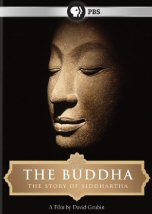
After 400 BC, a new philosophy was born in South east Asia, generated from the ideas of Buddha, a mysterious Prince from India who gained enlightenment while he sat under a large, shapely fig tree. He remains one of the most legendary and influential of all religious progenitors, but what of his actual life? In this biographical documentary, director David Grubin tells the historical tale of Gautama Buddha (563-483 BC), from his initial enlightenment through his death around the age of 80. In the process, Grubin makes an unusual point: that Gautama never once claimed to be God or God's emissary, but instead sought to find a way to bring peace and alleviation from suffering to others in a cruel and often insane world. In telling this story, Grubin combines a number of elements including original animations, testimony by contemporary Buddhists such as the 14th Dalai Lama Tenzin Gyatso, glimpses of sculptures and paintings that help tell Gautama's story, and much more. Narrated by Richard Gere
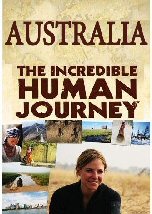
Dr Alice Roberts looks at our ancestors' seemingly impossible journey to Australia. Miraculously preserved footprints and very old human fossils buried in the outback suggest a mystery: that humans reached Australia almost before anywhere else. How could they have travelled so far from Africa, crossing the open sea on the way, and do it thousands of years before they made it to Europe? The evidence trail is faint and difficult to pick up, but Alice takes on the challenge. In India, new discoveries among the debris of a super volcano hint that our species started the journey much earlier than previously thought, while in Malaysia, genetics points to an ancient trail still detectable in the DNA of tribes today.
Alice travels deep into the Asian rainforests in search of the first cavemen of Borneo and tests out a Stone Age raft to see whether sea travel would have been possible thousands of years ago, before coming to a powerful conclusion.
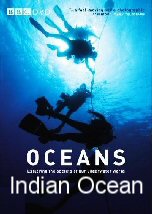
The Indian Ocean is the third largest body of water on Earth at more than 6,000 miles wide and covering 13% of the world's surface. It is home to 5,000 species of fish, many of which only exist in the Indian Ocean. But it is also an ocean under threat from global issues such as over-fishing and climate change, which make this an ocean on the edge.
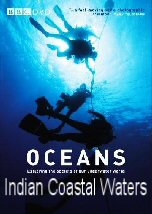
The tropical Indian Ocean is home to the Spice Islands. Characterised by beautiful sandy beaches, fringing coral reefs and coastal mangrove forests, this is a vibrant nursery area for marine life, such as whale sharks, crabs, seahorses and a great variety of fish. The coastal areas are where humans have the most direct impact on the ocean's resources.
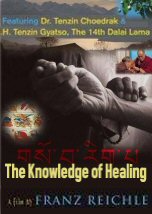
The documentary 'The Knowledge of Healing' is an illuminating examination of Tibetan medicine, a practice which has developed over two millennia into a modern day successful method of healing that rivals western medical practices. Unlike Western medicine, based on biochemistry, Tibetan medical thinking (which is strongly rooted in Buddhist principles) views the human body as governed by an elaborately organized system of energies flowing through a network of channels. In the 12th century, the Gyüshi (Knowledge of Healing) was created, a text codifying this intricate system. The medications used comprise herbs, roots, minerals, etc. After flourishing for centuries, most Tibetan medical schools were destroyed by the Chinese in the 1950's and 1960's, and many physicians were executed. Speaking from exile, the Dalai Lama argues for the value of Tibetan medicine, while his personal physician Dr. Tenzin Choedrak describes the principles behind it. We follow physicians in India and Siberia treating patients for a variety of ailments from paralysis to heart disease, and meet researchers in Israel and Switzerland to see how western clinical studies are testing the effectiveness of Tibetan medicine.













The narrative intertwines personal stories with a broader historical context, showcasing the strength and unity of a community confronting its painful past. ‘Sugarcane’ not only exposes the atrocities committed but also celebrates the enduring spirit of Indigenous peoples as they heal and reclaim their cultural identity. This poignant film serves as a testament to their perseverance and the ongoing fight for recognition and reconciliation.