
















Last Watched

"Predator"  Sort by

Life: Primates

   2009    Nature
Intelligence and adaptability allow primates to tackle the many challenges of life, and this is what makes our closest relatives so successful. This resourcefulness has enabled primates to conquer an incredible diversity of habitat. Hamadryas baboons live on the open plains of Ethiopia in groups up to 400 strong. Strength in numbers gives them some protection from potential predators. But, should their path cross with other baboon troops, it can lead to all-out battle, as males try to steal females from one another, and even settle old scores. Japanese macaques are the most northerly-dwelling primates and they experience completely different challenges. Some beat the freezing conditions by having access to a thermal spa in the middle of winter. But this privilege is only for those born of the right female bloodline. For western lowland gorillas, it's the male silverback that leads his family group in the rich forests of the Congo basin. He advertises his status to all with a powerful chest-beating display. Most primates are forest dwellers, and one of the strangest is the tarsier – the only purely carnivorous primate. As it hunts for insects the tarsier leaps from tree to tree in the dead of night, using its huge forward-facing eyes to safely judge each jump. Good communication is essential for success in primate society.
Series: Life

Life: Reptiles and Amphibians

   2009    Nature
Reptiles and amphibians look like hang-overs from the past. But they overcome their shortcomings through amazing innovation. The pebble toad turns into a rubber ball to roll and bounce from its enemies. Extreme slow-motion shows how a Jesus Christ lizard runs on water, and how a chameleon fires an extendible tongue at its prey with unfailing accuracy. The camera dives with a Niuean sea snake, which must breed on land but avoids predators by swimming to an air bubble at the end of an underwater tunnel. In a TV first, Komodo dragons hunt a huge water-buffalo, biting it to inject venom, then waiting for weeks until it dies. Ten dragons strip the carcass to the bone in four hours.
Series: Life

Living with Predators. Conservation

   2015    Nature
The final episode of the series visits the frontline of the conflict with the world's top predators, meeting the scientists fighting to save them. Crossing five continents and combining landmark natural history footage with real-life human drama, it checks the pulse of the earth's iconic animals, including lions, tigers, polar bears and blue whales. With three-quarters of the planet's carnivores now in decline, can people find ways to live with predators before they disappear forever?
Series: The Hunt

Misunderstood Predators

   2017    Nature    HD
Discover our extraordinary world through a stunning cinematic experience— -following the journeys of acclaimed photographers pursuing their personal projects. Their aim: changing people's perceptions through art. From the art of sacred nature, to the demons of the deep and the juxtaposition of life and death. Over the years Eric Cheng has dived with the planet's most magnificent creatures. Now he is determined to use his photography to tell the true story of the most misrepresented and demonised species.
Series: Tales by Light Season 2

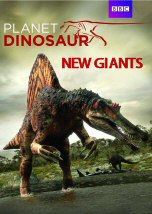
New Giants

   2011    History
This episode of the documentary series focuses on the new giants, the heavyweights of the dinosaur world. It is only in recent years that experts have unearthed the biggest dinosaurs that ever lived. One monster eclipsed all others; more than seven times as heavy as diplodocus was the immense argentinosaurus - a single backbone was bigger than a human. For years, these giants were considered immune to attack from any predator - until the discovery of mapusaurus, a new giant killer whose fate appeared to be inextricably linked to argentinosaurus
Series: Planet Dinosaur

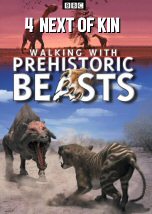
Next of Kin

       Science
Moving on to Ethiopia 3.2 million years ago, we witness the beginnings of mankind via a group of australopithecus - a type of ape which, like us, walks upright on two legs. But unlike us, these early members of the human family weren't predators, they were prey. Things get worse for the group as they are hunted by a sabre-tooth cat called dinofelis and fall victim to other dangers such as malaria, rival australopithecus and a rampaging 14-tonne deinotherium.
Series: Walking with Prehistoric Beast