







Last Watched

"Science"  Sort by

NASA Journey to Mars

   2019    Technology
NASA is on a mission to send humans to Mars within just 15 years, but to reach this next frontier of space exploration, experts must discover new technology and cutting-edge science that protects astronauts from the Red Planet's deadliest killers.
Series: How the Universe Works Series 8

NASA, Nazis and the space race

   2025    History
Against the backdrop of Cold War tensions and a global race for supremacy, this riveting film unveils a deeply unsettling chapter in space history. It reveals how the triumph of the 1969 Moon landing was made possible through the morally contentious recruitment of former Nazi scientists—most notably Wernher von Braun—who had engineered Germany’s V‑2 rockets during World War II through Operation Paperclip. As America navigated the ethical maze of enlisting men with dark pasts, these scientists became pivotal in crafting the mighty Saturn V rocket and ushering in the age of space exploration. This documentary invites viewers to confront the unspoken complexity behind progress: the collision of ambition, conscience, and the weight of history.

Nascar The IMAX Experience

   2004    Culture
Nascar: The IMAX Experience, literally transports auto racing fans and other spectators into the driver's seat to experience all the heart-pounding thrills and intense drama of the unpredictable action on the track. This groundbreaking film also goes behind the scenes to uncover the science, technology and teamwork that fuel America's most popular spectator sport.

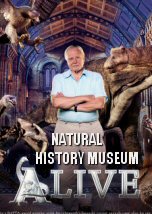
Natural History Museum Alive

       Science    3D    HD
In this ground-breaking film, Sir David Attenborough takes us on a journey through the world-famous Natural History Museum in London in a captivating tale of discovery, adventure, and magic, where state-of-the-art CGI, science, and research combine to bring the museum's now long-extinct inhabitants to life to discover how these animals once roamed the planet. As the doors are locked and night falls, Attenborough stays behind and meets some of the most fascinating extinct creatures which come alive in front of his eyes; dinosaurs, ice age beasts, and giant reptiles.
The film fulfils a lifelong dream of him, who said: 'I have been coming to the Natural History Museum since I was a boy. It's one of the great places to come to learn about natural history. In this film we have the technology to bring back to life some of the most romantic and extraordinary extinct creatures that can be conceived; some are relatively recent animals like the dodo, others older like the dinosaurs, and some we only know through fossil evidence. Using our current scientific knowledge, this film brings these creatures alive, allowing me to look at some of the biggest questions surrounding them.'

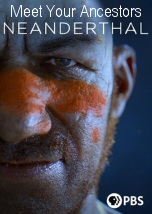
Neanderthals: Meet Your Ancestors

   2018    History
According to recent science the Neanderthals are not the knuckle-dragging apemen of popular imagination. The first part of the film investigates what Neanderthals looked like and how they lived in their Ice Age world. They were faster, smarter, better looking - and much more like us than we ever thought. Our guide is Ella Al-Shamahi, who enlists the skills of Andy Serkis, the master of performance capture, and a group of experts to investigate deeply Neanderthals appearance.
In the second part, Ella explores the fate of the Neanderthals - asking why they became extinct, and discovering how they live on inside of us today. About 2% of the DNA of most people is of Neanderthal origin - and it continues to affect us today. Neanderthals were a people who were supremely well adapted to their environment. But about 40,000 years ago they disappeared. Why?
Series: Neanderthals: Meet Your Ancestors

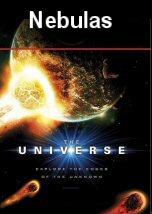
Nebulas

   2008    Science
Take a tour through the Art Gallery of the Galaxy and view what are considered the "crown jewels" of the heavens. Nebulas are mysterious clouds of gas that aren't classified as stars, planets, moons or asteroids. Astronomers use the most sophisticated techniques to view them since they are practically invisible to the naked eye. Nothing less than stunning, nebulas glow, reflect or obscure the galaxy's light with amazing swirls of color. Nebulas mark the regions where the nothingness of space first coalesces, where stars are born and where stars die. Cutting-edge computer graphics are used to bring the universe down to earth.
Series: The Universe