





Last Watched

"TT"  Sort by

God in the Dock

   2011    Culture
Diarmaid MacCulloch's own life story makes him a symbol of a distinctive feature about Western Christianity - scepticism, a tendency to doubt which has transformed both Western culture and Christianity. In the final programme in the series, he asks where that change came from. He challenges the simplistic notion that faith in Christianity has steadily ebbed away before the relentless advance of science, reason and progress, and shows instead how the tide of faith perversely flows back in. Despite the attacks of Newton, Voltaire, the French Revolutionaries and Darwin, Christianity has shown a remarkable resilience. The greatest damage to Christianity was actually inflicted to its moral credibility by the two great wars of the 20th century and by its entanglement with Fascism and Nazism. And yet it is during crisis that the Church has rediscovered deep and enduring truths about itself, which may even be a clue to its future.
Series: A History of Christianity
Going Big

   2022    Science
In the concluding episode of the series, Jim encounters ever larger cosmic structures to reveal the latest breakthroughs in our understanding of the universe. For example, Jim comes face to face with our galactic home, the Milky Way, a monstrous structure sculpted by the gravitational forces of dark matter. Jim finds out from pioneering researcher Adrian Fabian about the black hole at its centre, whose strange behaviour includes emitting the lowest note that can be heard in the cosmos.
At an even greater scale, Jim encounters huge structures such as the Laniakea Supercluster, of which the Milky Way is only a tiny part. Then there’s the 'Giant Arc', a collection of galaxies that account for more than three per cent of the observable universe. Jim learns from its discoverer, British PhD student Alexia Lopez, that this gargantuan structure is forcing scientists to reassess their theory of how the universe evolves and may overturn some of the most fundamental principles in physics.
Series: Secrets of Size: Atoms to Supergalaxies

Gone Girls: The Long Island Serial Killer

   2025    Culture
An unflinching investigation into the chilling disappearances of vulnerable women whose lives were cut short along the desolate stretches of Long Island. When a desperate search for a missing woman unveils a hidden graveyard, detectives uncover a sinister pattern of violence and secrecy. As corruption within law enforcement threatens to derail justice, years of frustration and unanswered questions finally culminate in a long-awaited breakthrough that exposes even darker truths.
We present all three episodes of this riveting series together—immerse yourself in the complete story from start to finish in one unforgettable experience.
Series: Gone Girls: The Long Island Serial Killer

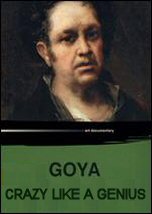
Goya: Crazy Like A Genius

   2007    Art
Written and presented by Robert Hughes, one of the world’s most prominent art commentators, this program explores the life and work of Francisco Goya—focusing on the painter’s subversive, often gruesome outlook. The video provides in-depth visual and intellectual analysis of dark Goya masterpieces, including The Dream of Reason, Witches in the Air, and The Third of May, as well as examples of his portraiture and early work—such as The Duchess of Alba, both Majas, and a gratuitously violent tapestry painting. Links between Goya’s work, deafness, and political stance are explored in detail, while observations from painter Leon Golub highlight Goya’s continuing relevance.

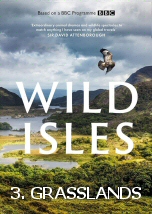
Grasslands

   2023    Nature
David Attenborough explores Britain and Ireland’s grasslands, revealing the creatures that create them and the extraordinary stories they hide. From the coastal flower meadows in the Scottish Outer Hebrides to the rich open landscapes in the mountains of southern Ireland, we enter surprising and dramatic worlds.
In southern England, we meet an extraordinary bee that lives in chalk grassland, one of our rarest habitats, laying her eggs in empty snail shells. Meanwhile, in the colourful machair of the Hebrides, ringed plovers and lapwings strive to rear their families of tiny fluffy chicks and to save them for marauding gulls.
We travel back in time to explore the vast wild grasslands once found throughout our isles, before meeting herds of semi-wild horses, where males battle fiercely for the females. Today, they are helping to turn some of this land back to wilderness. And in our precious remaining pockets of flower-rich meadow, a remarkable conservation success story plays out. Once extinct in our isles, England now has the largest known populations of large blue butterflies. Their survival relies on a game of deception with red ants, which are tricked into adopting the butterfly’s unassuming but predatory caterpillars.
Our story then journeys to the mountains. Each morning in early spring, feisty male black grouse battle for prime position on their frozen breeding grounds. Their sole mission is to impress a female. Meanwhile, on south-facing scree slopes, dozens of adders emerge from hibernation to perform a surprisingly delicate courtship routine.
The episode concludes with a mighty battle in the wild mountains of County Kerry. This is the scene of an epic and spectacular rut between the largest land mammals in Britain and Ireland, red deer.
The grasslands of Britain and Ireland are under threat. We have lost 97 per cent of our species-rich meadows in the last century, as modern agriculture replaces these precious habitats. This episode shows just how important different types of grassland are to the species which call these islands home.
Series: Wild Isles

Gravitational Waves Revealed

   2021    Science
In astronomy, we've been looking at different kinds of light and opening up the universe a little bit more of the time. But then in 2015, the roof came off. Something happened that changed everything, the ability to see waves in space and time itself. Gravitational waves help us roll back the clock to the dawn of time, discover epic cosmic collisions, on make Earth-shaking discoveries. Gravitational waves are the biggest game changer since the invention of the telescope. We have a completely new universe to view now. A new exploration of space is just beginning.
Series: How the Universe Works Series 9