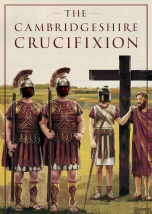
The documentary tells the story of the extremely rare discovery of evidence of Roman crucifixion, unearthed in a routine archaeological dig in the Cambridgeshire Fens. When human remains were found alongside a variety of Roman artifacts, none of the team at Albion Archaeology saw anything out of the ordinary. But once the bones were washed back at HQ, something highly unusual was uncovered: a nail through the heel bone of one of the individuals. Could this be evidence of a Roman crucifixion? When they did some research, they found that only one confirmed example had ever been unearthed before, discovered in the 1960s in Jerusalem. To find out more, they called in renowned osteoarchaeologist Dr Corinne Duhig to investigate. With exclusive access to Corinne’s investigation and the remains themselves, The Cambridgeshire Crucifixion sets out to find out who this person was, how they lived and why they were put to death in this notoriously gruesome way. We perform a CT scan, DNA and isotope analysis of the remains, and use them to create a cutting-edge virtual autopsy of the skeleton, conducted by Corinne and one of her former students, biologist Prof Ben Garrod. A supporting cast of expert contributors help to analyse the artefacts found at the Fenstanton site and reveal a compelling picture of life in Roman Britain in the 1st century CE. The film culminates in a world first: a full forensic facial reconstruction of a victim of Roman crucifixion, conducted by world-leading expert Joe Mullins.
In the last episode, Iain discovers the remarkable impact of just one plant: grass. On the savannah of South Africa he sees how grass unleashed a firestorm to fight its greatest enemy, the forests. He shows how cutting your finger on a blade of grass shows us how it transformed life in the oceans. In Senegal, he meets the cleverest chimps in the world. And, in the ruins of the oldest temple on Earth, he tells the extraordinary story of how grass triggered human civilisation.
This episode is centered around how science, in particular the work of Clair Patterson (voiced in animated sequences by Richard Gere[33]) in the middle of the 20th century, has been able to determine the age of the Earth. Tyson first describes how the Earth was formed from the coalescence of matter some millions of years after the formation of the Sun, and while scientists can examine the formations in rock stratum to date some geological events, these can only trace back millions of years. Instead, scientists have used the debris from meteor impacts, such as the Meteor Crater in Arizona, knowing that the material from such meteors coming from the asteroid belt would have been made at the same time as the Earth. Patterson also examined the levels of lead in the common environment and in deeper parts of the oceans and Antarctic ice, showing that lead had only been brought to the surface in recent times. He would discover that the higher levels of lead were from the use of tetraethyllead in leaded gasoline resulting in government-mandated restrictions on the use of lead.
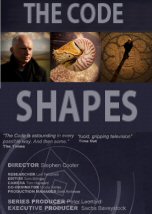
Marcus du Sautoy uncovers the patterns that explain the shape of the world around us. Starting at the hexagonal columns of Northern Ireland's Giant's Causeway, he discovers the code underpinning the extraordinary order found in nature - from rock formations to honeycomb and from salt crystals to soap bubbles. Marcus also reveals the mysterious code that governs the apparent randomness of mountains, clouds and trees and explores how this not only could be the key to Jackson Pollock's success, but has also helped breathe life into hugely successful movie animations.
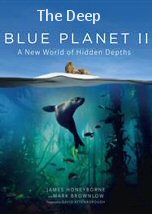
The deep is perhaps the most hostile environment on earth, at least to us - a world of crushing pressure, brutal cold and utter darkness. We have barely begun to explore it, and yet it is the largest living space on the planet. Scientists already think that there is more life in the deep than anywhere else on earth. This episode takes us on an epic journey into the unknown, a realm that feels almost like science fiction. We discover alien worlds, bizarre creatures and extraordinary new behaviours never seen before. We encounter savage hordes of Humboldt squid hunting lanternfish in the depths and coral gardens flourishing in absolute darkness, with more species of coral to be found in the deep than on shallow tropical reefs. Narrated by David Attenborough.
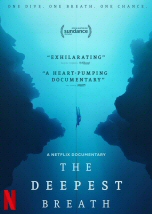
(Click CC for subtitles) Descending to remarkable depths below the sea on one single breath, Alessia Zecchini enters what she describes as the last quiet place on Earth. The Italian champion is determined to set a new world record in freediving, a dangerous extreme sport in which competitors attempt to reach the greatest depth without the use of scuba gear. Freedivers are often subject to blackouts upon ascent, necessitating the help of safety divers like Stephen Keenan, a free-spirited Irish adventurer who fell in love with the sport in Dahab, Egypt. Having formed a special bond on the freediving circuit, Alessia and Stephen train together to make an attempt on Dahab’s legendary Blue Hole and its challenging 85-foot-long tunnel 184 feet below the Red Sea, their fates inextricably bound together.




A supporting cast of expert contributors help to analyse the artefacts found at the Fenstanton site and reveal a compelling picture of life in Roman Britain in the 1st century CE. The film culminates in a world first: a full forensic facial reconstruction of a victim of Roman crucifixion, conducted by world-leading expert Joe Mullins.