


Last Watched

"Earth"  Sort by

The Kingdom How Fungi Made Our World

   2018    Science
You find fungi in Antarctica and in nuclear reactors. They live inside your lungs and your skin is covered with them. Fungi are the most under appreciated and unexplained organisms, yet they could cure you from smallpox and turn cardboard boxes into forests. They could even transform Mars into Eden. There are vastly more fungi species than plants and each and every one of them plays a crucial role in life’s support systems. Join us on a journey into the mysterious world of Fungi to witness their beauty, unravel their mysteries and discover how this secret kingdom is essential to life on Earth, and may in fact hold the key to our future.
The Last Reef

       Nature    3D    HD
Fly across iridescent tropical reefs, brush through a cloud of a million jellyfish, visit an alien world where the closer you look, the more you see, where the tiniest creatures support the greatest predators... We think of reefs as exotic, distant places with little or no connection to our everyday world. Yet every reef is a living city beneath the sea with a parallel existence to ours, distant yet undeniably connected. Reefs are hotspots of biodiversity as vital to life on earth as the rain-forests. They have been shaping our shorelines, literally forming islands and mountains, for millions of years. The fossil record shows that given time they have recovered from all of earth's major extinction events. Even reefs pulverised by atomic blasts at Bikini Atoll have regenerated. Yet within our lifetime reefs have come to face their greatest threat...

The Lost Gardens of Babylon

   2014    History
Of the Seven Wonders of the Ancient World, the Hanging Garden of Babylon is the most elusive of these constructions of classical antiquity. While traces have been found of the Great Pyramid of Gaza, the Temple of Artemis at Ephesus, the Statue of Zeus at Olympia, the Mausoleum of Halicarnassus, the Colossus of Rhodes and the Lighthouse of Alexandria, centuries of digging have turned up nothing about the lost gardens of Babylon – until now.
Why, in the nearly 3,000 years since the gardens were presumably built, has no archeological evidence ever been found to support their existence? Is the Hanging Garden of Babylon a myth or a mystery to be solved?
Travel with Dr. Stephanie Dalley of Oxford University’s Oriental Institute and author of The Mystery of the Hanging Garden of Babylon, to one of the most dangerous places on earth, as she sets out to answer these questions and prove not only that the gardens did exist, but also identify where they most likely were located, describe what they looked like and explain how they were constructed.
Series: Secrets of the Dead

The Lost Worlds of Planet Earth

   2014    Science
This episode explores the palaeogeography of Earth over millions of years, and its impact on the development of life on the planet. Tyson starts by explaining that the lignin-rich trees evolved in the Carboniferous era about 300 million ago, then explains on the nature of plate tectonics that would shape the landmasses of the world and the asteroid impact that initiated the Cretaceous–Paleogene extinction event, leaving small mammals as the dominate species on earth. Earth's landmasses are expected to change in the future and postulates what may be the next great extinction event.
Series: Cosmos: A Spacetime Odyssey

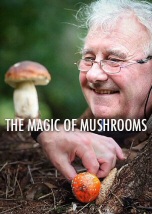
The Magic of Mushrooms

   2014    Science
Professor Richard Fortey delves into the fascinating and normally-hidden kingdom of fungi. From their spectacular birth, through their secretive underground life to their final explosive death, Richard reveals a remarkable world that few of us understand or even realise exists - yet all life on Earth depends on it. In a specially-built mushroom lab, with the help of mycologist Dr Patrick Hickey and some state-of-the-art technology, Richard brings to life the secret world of mushrooms as never seen before and reveals the spectacular abilities of fungi to break down waste and sustain new plant life, keeping our planet alive. Beyond the lab, Richard travels across Britain and beyond to show us the biggest, fastest and most deadly organisms on the planet - all of them fungi. He reveals their almost magical powers that have world-changing potential - opening up new frontiers in science, medicine and technology.

The Milky Way

   2007    Science
We used to think that Earth was at the centre of the universe, but now we know we're not even at the centre of our own galaxy. Countless wonders exist between where earth is situated and the massive black hole at the galactic centre of our galaxy. Within the Milky Way can be found the debris of old, dying stars fuelling the birth of new stars and at the galactic centre hypervelocity stars get catapulted clear beyond the Milky Way's outer rim at unimaginable speeds. Come along for a guided tour of 100,000 light-year-wide family of stars and stellar phenomena we call The Milky Way.
Series: The Universe