










Last Watched

"Borneo"  Sort by

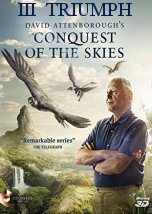
Triumph

   2015    Science    3D    HD
David Attenborough concludes his epic history of the evolution of flight with an exploration of the highly advanced fliers that dominate our skies today – the extraordinarily diverse skills of the birds, and the sonar-guided precision of the bats. He encounters some of our planet’s most remarkable fliers – from peregrine falcons dive-bombing starlings over Rome, to hummingbirds hovering in the cloud forests of Ecuador. In a spectacular finale, he visits Gomantong cave in Borneo to witness the mass exodus of a million bats.
Series: Conquest of the Skies
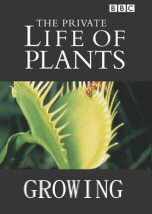
Growing

   1994    Nature
The second episode is about how plants gain their sustenance. Sunlight is one of the essential requirements if a seed is to germinate, and Attenborough highlights the cheese plant as an example whose young shoots head for the nearest tree trunk and then climb to the top of the forest canopy, developing its leaves en route. Using sunshine, air, water and a few minerals, the leaves are, in effect, the "factories" that produce food. However, some, such as the begonia, can thrive without much light. To gain moisture, plants typically use their roots to probe underground. Trees pump water up pipes that run inside their trunks, and Attenborough observes that a sycamore can do this at the rate of 450 litres an hour — in total silence. Too much rainfall can clog up a leaf's pores, and many have specially designed 'gutters' to cope with it. However, their biggest threat is from animals, and some require extreme methods of defence, such as spines, camouflage, or poison. Some can move quickly to deter predators: the mimosa can fold its leaves instantly when touched, and the Venus flytrap eats insects by closing its leaves around its prey when triggered. Another carnivorous plant is the trumpet pitcher that snares insects when they fall into its tubular leaves. Attenborough visits Borneo to see the largest pitcher of them all, Nepenthes rajah, whose traps contain up to two litres of water and have been known to kill small rodents.
Series: The Private Life of Plants

Living Together

   2006    Nature
The documentary deals with the future of conservation. It begins by looking at previous efforts. The 'Save The Whales' campaign, which started in the 1960s, is seen to have had a limited effect, as whaling continues and fish stocks also decline. In the 1990s, as head of the Kenya Wildlife Service, Richard Leakey took on the poachers by employing armed units. Although it was successful in saving elephants, the policy was detrimental to the Maasai people, who were forced from their land. The need for "fortress" areas is questioned, and the recently highlighted Raja Ampat coral reef in Indonesia is an example. The more tourism it generates, the greater the potential for damage — and inevitable coastal construction. Sustainable development is viewed as controversial, and one contributor perceives it to currently be a "contradiction in terms". Trophy hunting is also contentious. Those that support it argue that it generates wealth for local economies, while its opponents point to the reducing numbers of species such as the markhor. Ecotourism is shown to be beneficial, as it is in the interests of its providers to protect their environments. However, in some areas, such as the Borneo rainforests, the great diversity of species is being replaced by monocultures. The role of both religion and the media in conservation is argued to be extremely important. Contributors to the programme admit a degree of worry about the future, but also optimism.

Planet Earth III: Forests

   2023    Nature
Journey to secret worlds where lives are wrapped in unexpected of ways. The fifth episode of the series takes viewers into the fascinating world of forests, revealing their hidden complexities and the intricate relationships within. Initially perceived as tranquil, forests are in fact bustling with life and intricate ecological interactions. The episode showcases various species, each with its unique lifestyle and survival strategies. Highlights include the Oriental pied hornbills in Borneo, whose extraordinary nesting rituals and partner dynamics are captivating.
The Amazon rainforest is explored, introducing the peculiar treehoppers and their unique communication methods, vital for survival amidst numerous predators like ants and assassin bugs. The episode also delves into the intelligent and cooperative hunting techniques of dholes in the forests of India. The narrative takes a turn to China, focusing on the visually stunning courtship displays of Temminck's tragopans and golden pheasants. In the temperate rainforests of Western Canada, the rare spirit bear and its unique relationship with its habitat are examined.
The episode concludes with an insightful look at the impact of human activity on forests and their inhabitants, particularly focusing on chimpanzees in Uganda, whose survival is increasingly intertwined with human expansion.
Series: Planet Earth III

Tangled Worlds

   2024    Nature    3D    HD
In Episode 4, you can witness a gripping journey through the hidden threads that connect Asia's most complex societies. From the snow leopards of the Himalayas to the elephants of Sri Lanka, and from the forests of Borneo to the bustling streets of Bangkok, this episode explores how nature, tradition, and modernity collide. It uncovers the silent role of animals in shaping cultural identity and the fragile balance between preservation and progress.
With breathtaking imagery and powerful storytelling, it reveals how the destinies of creatures, cities, and civilizations are more intertwined than we ever imagined.
Series: Asia

Saving Asia

   2024    Nature    3D    HD
In the seventh and final episode, viewers are taken on a journey across Asia's diverse landscapes, from the vast Gobi Desert to the lush jungles of Borneo. The episode highlights the unique wildlife inhabiting these regions, such as the elusive snow leopard in Central Asia and the endangered Irrawaddy dolphin in the Mekong River. Through stunning visuals and compelling narratives, the documentary showcases the pressing conservation efforts aimed at protecting these species and their habitats.
Series: Asia
Clarkson Farm Season 2

Clarkson Farm Season 2

2023  Nature
The Hunt

The Hunt

2015  Nature
Planet Earth

Planet Earth

2007  Nature
Walking with Cavemen

Walking with Cavemen

2003  History
Cooked

Cooked

2016  Culture
Five Came Back

Five Came Back

2017  Art
Earthflight

Earthflight

2012  Nature