


Last Watched

"Dog"  Sort by

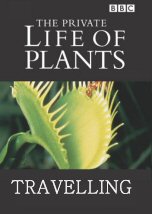
The Private Life of Plants: Travelling

   1994    Nature
Sir David Attenborough reveals plants as they have never been seen before - on the move and dangerously devious. About the major problems of life - growing, finding food, reproduction - and the varied ways plants have evolved to solve it. Filmed from the plant's point of view, using computer animations, fibre-optics and unique time-lapse photography. The first episode looks at how plants are able to move". The bramble is an aggressive example: it advances forcefully from side to side and, once settled on its course, there is little that can stand in its way. An altogether faster species is the birdcage plant, which inhabits Californian sand dunes. When its location becomes exposed, it shifts at great speed to another one with the assistance of wind — and it is this that allows many forms of vegetation to distribute their seeds. While not strictly a plant, the spores of fungi are also spread in a similar fashion. One of the most successful (and intricate) flowers to use the wind is the dandelion, whose seeds travel with the aid of 'parachutes'. They are needed to travel miles away from their parents, who are too densely packed to allow any new arrivals. Trees have the advantage of height to send their seeds further, and the cottonwood is shown as a specialist in this regard. The humidity of the tropical rainforest creates transportation problems, and the liana-species Alsomitra macrocarpa is one plant whose seeds are aerodynamic 'gliders'. Some, such as those of the sycamore, take the form of 'helicopters', while others, such as the squirting cucumber release their seeds by 'exploding'. Water is also a widely used method of propulsion. The tropical sea bean Entada gigas has one of the biggest fruits of all plants and is dispersed by water streams. However, most plants use living couriers, whether they be dogs, humans and other primates, ants or birds, etc., and to that end, they use colour and smell to signify when they are ripe for picking.
Series: The Private Life of Plants
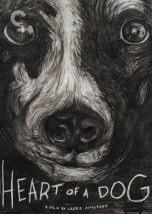
Heart of a Dog

   2015    Culture
Laurie Anderson embarks on a cinematic journey through love, death and language. Cantering on Anderson's beloved rat terrier Lolabelle, who died in 2011, the film is a personal essay that weaves together childhood memories, video diaries, philosophical musings on data collection, surveillance culture and the Buddhist conception of the afterlife, and heartfelt tributes to the artists, writers, musicians and thinkers who inspire her. Fusing her own witty, inquisitive narration with original violin compositions, hand-drawn animation, 8mm home movies and artwork culled from exhibitions past and present, Anderson creates a hypnotic, collage-like visual language out of the raw materials of her life and art, examining how stories are constructed and told - and how we use them to make sense of our lives.

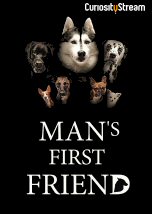
Man First Friend

   2018    Culture
We call them 'man’s best friend', but their story is almost as old as man himself. Our very first friend in the world, they have walked by our side for over 20,000 years, helping us to hunt for food and offering us companionship and protection. Man’s First Friend is an epic new primetime documentary event that combines natural history, science and anthropology to explore the enduring relationship between humankind and dogs, how the two species have co-evolved together, where did they come from to take such a prominent position in our lives, and how did we learn to harness their unique talents.
The film takes viewers on an extraordinary journey through some of the most remote locations in the world to answers these questions and more. It highlights what dogs are capable of: from the Pariah dog in India who protects her owner’s banana plantations from daily attacks by Black-headed Monkeys; to Kenyan Bloodhounds trained to track ivory poachers. Dogs comfort us, relieving loneliness and helping us cope with old age.

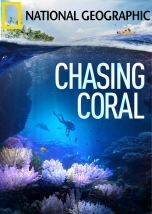
Chasing Coral

   2017    Nature
Coral reefs are the nursery for all life in the oceans, a remarkable ecosystem that sustains us. Yet with carbon emissions warming the seas, a phenomenon called 'coral bleaching' -a sign of mass coral death- has been accelerating around the world, and the public has no idea of the scale or implication of the catastrophe silently raging underwater.
Chasing Coral taps into the collective will and wisdom of an ad man, a self-proclaimed coral nerd, top-notch camera designers, and renowned marine biologists as they invent the first time-lapse camera to record bleaching events as they happen. Unfortunately, the effort is anything but simple, and the team doggedly battles technical malfunctions and the force of nature in pursuit of their golden fleece: documenting the indisputable and tragic transformation below the waves. With its breathtaking photography, nail-biting suspense, and startling emotion, Chasing Coral is a dramatic revelation that won't have audiences sitting idle for long.

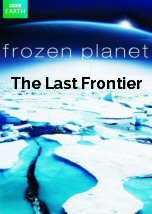
Frozen Planet: The Last Frontier

   2011    Culture
The documentary series reveals the extraordinary riches and wonders of the Polar Regions that have kept people visiting them for thousands of years. Today, their survival relies on a combination of ancient wisdom and cutting-edge science. Most Arctic people live in Siberia, either in cities like Norilsk - the coldest city on earth - or out on the tundra, where tribes like the Dogan survive by herding reindeer, using them to drag their homes behind them. On the coast, traditional people still hunt walrus from open boats - it is dangerous work, but one big walrus will feed a family for weeks. Settlers are drawn to the Arctic by its abundant minerals; the Danish Armed Forces maintain their claim to Greenland's mineral wealth with an epic dog sled patrol, covering 2,000 miles through the winter. Above, the spectacular northern lights can disrupt power supplies so scientists monitor it constantly, firing rockets into it to release a cloud of glowing smoke 100 kilometres high. In contrast, Antarctica is so remote and cold that it was only a century ago that the first people explored the continent. Captain Scott's hut still stands as a memorial to these men. Science is now the only significant human activity allowed; robot submarines are sent deep beneath the ice in search of new life-forms, which may also be found in a labyrinth of ice caves high up on an active volcano. Above, colossal balloons are launched into the purest air on earth to detect cosmic rays. At the South Pole there is a research base designed to withstand the world's most extreme winters. Cut off from the outside world for six months, the base is totally self-sufficient, even boasting a greenhouse.
Series: Frozen Planet

The Cell: The Hidden Kingdom

       Science
Dr Adam Rutherford tells the extraordinary story of the scientific quest to discover the secrets of the cell and of life itself. Every living thing is made of cells, microscopic building blocks of almost unimaginable power and complexity. The first part explores how centuries of scientific and religious dogma were overturned by the earliest discoveries of the existence of cells, and how scientists came to realize that there was, literally, more to life than meets the eye.
Series: The Cell
Prehistoric America

Prehistoric America

2003  Nature
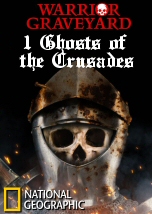
Warrior Graveyard

Warrior Graveyard

  History
Rome Second Season

Rome Second Season

  History
Top Gear

Top Gear

2012  Technology
Clarkson Farm Season 2

Clarkson Farm Season 2

2023  Nature
Absolute Zero

Absolute Zero

2007  Technology