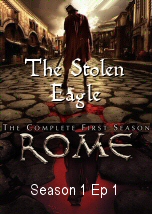
In this historical drama, the turbulent transition from Roman republic to autocratic empire, which changed world history through civil war and wars of conquest, is sketched both from the aristocratic viewpoint of Julius Caesar, his family, his adopted successor Octavian Augustus, and their political allies and adversaries, and from the politically naive viewpoint of a few ordinary Romans, notably the soldiers Lucius Vorenus and Titus Pullo and their families. 'The Stolen Eagle.' In Gaul in 52 B.C., two Roman soldiers, Legionary Titus Pullo and Centurion Lucius Vorenus, are tasked with recovering Julius Caesar's personal Eagle, stolen from his camp in the dead of night. With his campaign in Gaul coming to a successful conclusion, Caesar's popularity is continuing to grow. He's saddened however when he receives news from his good friend Pompey Magnus that his daughter, Pompey's wife, has died in childbirth. In the Senate, Pompey must defend the prolonged absence of his friend and co-Consul Caesar against charges of corruption.
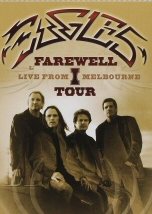
Without doubt, the Eagles are one of the all-time biggest acts in popular music since the dawn of the rock'n'roll era. The band's roots go back to their role as defining artists in the phenomenally popular Southern California rock scene of the '70s, a decade in which they delivered four consecutive #1 albums. Their momentous 2004 farewell tour filled stadiums around the world, and this series captures one of the most stellar events from that now-historic global sweep. It was filmed in Melbourne, Australia at the Rod Laver Arena on November 14, 15 and 17, 2004.
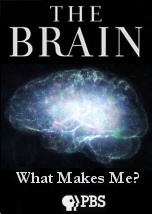
'What Makes Me?', explores the question of how the brain gives rise to our thoughts, emotions, our memories and personality. Philosophers and great thinkers have for millennia pondered the question of how physical stuff can give rise to mental processes. Last century, the new field of neuroscience joined the discussion, and Dr David Eagleman explains that to a neuroscientist, the answers to such questions lie in a deep understanding of the brain.
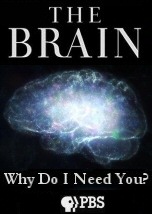
In ‘Why Do I Need You?’ Dr. David Eagleman explores how the human brain relies on other brains to thrive and survive. Our fundamentally social nature can hold the key to our sucdess as a species. Our brains are so fundamentally wired to interact that we are something more like a single vast super-organism. In this age of digital connection, we desperately need to understand how human brains interact if we want our civilization to have a future, if we want to avoid fanaticism and to embrace cooperation. This neural interdependence begins at birth. Dr. David Eagleman invites a group of babies to a puppet show to showcase their ability to discern who is trustworthy, and who isn’t.
The open arenas of grassland and desert make up half of all land on our planet. In these exposed habitats, predators like cheetahs, bald eagles and lions can usually see their prey. But it works both ways: their prey can see them too. With nothing but open vistas, the element of surprise is hard-won, and predators must make their own opportunities.
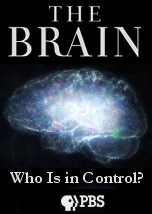
‘Who Is in Control?’ explores the great deception that greets us each morning when we awake: it feels as though we are in conscious control of our lives but the truth is that we are not. Instead almost every action, every decision, every belief that we hold is driven by parts of the brain that we have no access to.













'The Stolen Eagle.' In Gaul in 52 B.C., two Roman soldiers, Legionary Titus Pullo and Centurion Lucius Vorenus, are tasked with recovering Julius Caesar's personal Eagle, stolen from his camp in the dead of night. With his campaign in Gaul coming to a successful conclusion, Caesar's popularity is continuing to grow. He's saddened however when he receives news from his good friend Pompey Magnus that his daughter, Pompey's wife, has died in childbirth. In the Senate, Pompey must defend the prolonged absence of his friend and co-Consul Caesar against charges of corruption.