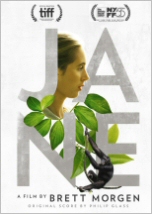
Drawing from over 100 hours of never-before-seen footage that has been tucked away in the National Geographic archives for over 50 years, award-winning director Brett Morgen tells the story of Jane Goodall, a woman whose chimpanzee research challenged the male-dominated scientific consensus of her time and revolutionized our understanding of the natural world. Set to a rich orchestral score from legendary composer Philip Glass, the film offers an unprecedented, intimate portrait of Jane Goodall - a trailblazer who defied the odds to become one of the world's most admired conservationists, her early explorations and research in Tanzania, the relationship with her cameraman and husband Hugo Van Lawick, and the chimpanzees that were the subject of her study.
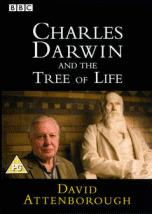
David Attenborough asks three key questions: how and why did Darwin come up with his theory of evolution? Why do we think he was right? And why is it more important now than ever before? David starts his journey in Darwin's home at Down House in Kent, where Darwin worried and puzzled over the origins of life. David goes back to his roots in Leicestershire, where he hunted for fossils as a child, and where another schoolboy unearthed a significant find in the 1950s. And he revisits Cambridge University, where both he and Darwin studied, and where many years later the DNA double helix was discovered, providing the foundations for genetics. At the end of his journey in the Natural History Museum in London, David concludes that Darwin's great insight revolutionised the way in which we see the world. We now understand why there are so many different species, and why they are distributed in the way they are. But above all, Darwin has shown us that we are not set apart from the natural world, and do not have dominion over it. We are subject to its laws and processes, as are all other animals on earth to which, indeed, we are related.
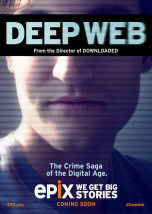
A featured documentary that explores the rise of a new Internet. Decentralized, encrypted, dangerous and beyond the law. The Deep Web, also called the Deep Net, Invisible Web, or Hidden Web is the part of the World Wide Web not indexed by search engines. The deep web was several orders of magnitude larger than the surface web. The majority of the information is hidden or locked inside databases and is growing exponentially at a rate that cannot be quantified. In 2008, to facilitate users of Tor hidden services in their access and search of a hidden .onion suffix, Aaron Swartz designed Tor2web, a proxy application able to provide access by means of common web browsers. Using this application, deep web links appear as a random string of letters followed by the .onion TLD.
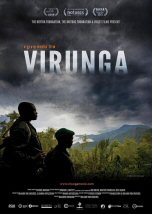
A group of brave individuals risk their lives to save the last of the world's mountain gorillas; in the midst of renewed civil war and a scramble for Congo's natural resources." Virunga National Park in the Congo is a place of unique natural beauty. It is the home to a plethora of wonderful animals and vegetation but as is so often the way, it has several serious problems that threaten it. It's the location of human violence, corruption and exploitation. The disasters that specifically loom are two different groups, the M23 and SOCO International. The former are a violent rebel force who engages in an ongoing civil war with the Congolese government and the latter are a British energy company who specialise in oil exploration. Both M23 and SOCO invade the park in their own ways and neither seems very interested in the laws that have been set up to protect the flora and fauna that exist there, far less the people who live there. It seems hardly surprising in the case of M23, as they are a paramilitary organisation who can hardly be expected to be concerned with such things but it is the more legitimate big business SOCO who seem more worrying if anything. We discover in fact that they have been involved in a bribery campaign, utilising M23 as enforcers. It's a very murky situation where big money walks all over an impoverished nation and disregards a natural space that they can see no value in in their pursuit of financial profit.
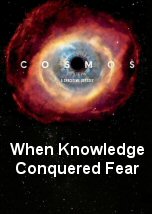
The episode begins with Tyson describing how pattern recognition manifested in early civilization as using astronomy and astrology to predict the passing of the seasons, including how the passage of a comet was often taken as an omen. Tyson continues to explain that the origin of comets only became known in the 20th century due to the work of Jan Oort and his hypothesis of the Oort cloud. Tyson then continues to relate the collaboration between Edmond Halley and Isaac Newton in the last part of the 17th century in Cambridge. The collaboration would result in the publication of Philosophiæ Naturalis Principia Mathematica, the first major work to describe the laws of physics in mathematical terms, despite objections and claims of plagiarism from Robert Hooke and financial difficulties of the Royal Society of London. Tyson explains how this work challenged the prevailing notion that God had planned out the heavens, but would end up influencing many factors of modern life, including space flight. Tyson further describes Halley's contributions including determining Earth's distance to the sun, the motion of stars and predicting the orbit of then-unnamed Halley's Comet using Newton's laws. Tyson contrasts these scientific approaches to understanding the galaxy compared to what earlier civilizations had done, and considers this advancement as mankind's first steps into exploring the universe. The episode ends with an animation of the Milky Way and Andromeda galaxies' merging based on the principles of Newton's laws.
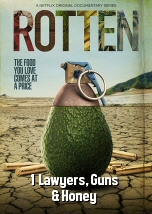
Honey has the greatest cachet in the marketplace, of all food items. A sweetener so natural, so exalted, that its value has held up for millennia. But honey is also perfect for savvy profiteers who are secretly cutting the world's honey with cheap substitutes. With demand for honey soaring just as bees are dying off in record numbers, hidden additives, hive thefts and other shady tactics are on the rise.









Set to a rich orchestral score from legendary composer Philip Glass, the film offers an unprecedented, intimate portrait of Jane Goodall - a trailblazer who defied the odds to become one of the world's most admired conservationists, her early explorations and research in Tanzania, the relationship with her cameraman and husband Hugo Van Lawick, and the chimpanzees that were the subject of her study.