(click CC for subtitles) 'a-ha' is Norway's only international pop band and their hit 'Take On Me' is still one of the most-played songs of the last millennium. The film follows the band over a period of four years, telling the full story of how three young men followed their impossible dream of becoming Norwegian pop stars. When 'Take On Me' reached number 1 on Billboard in the US in 1985, the dream came true. Or did it? Almost 35 years after their breakthrough, a-ha still creates magic on stage with their melancholic and timeless music. They tour the world but drive in separate cars and stay in separate hotel rooms. They only meet on stage, doing the one thing they love. The film closely portrays the challenging creative and personal dynamics of a group of three strong individuals who have grown up together, but in different directions. What does success do to friendship? Why are they not capable of creating new music together anymore? This is a story of great music, big ambitions, broken friendship--and maybe forgiveness.
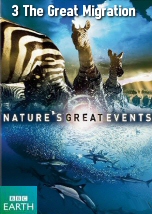
Each year more than one million wildebeest and zebra invade the Serengeti grasslands, making it a paradise for the predators that live there. But what happens when the herds move off again? We follow the moving story of one lion family's struggle to survive until the return of the great migration. Nature's Great Events tells the story of the epic trek of herds that follow the rains to fresh pastures, and the tale of the predators they leave behind. The crew captures the desperate plight of a single pride of lions, revealing a different side to the Serengeti. Rather than being a predators' paradise, it is a land in constant change, with wildebeest following the rains and leaving the lions to tough it out. The Ntudu pride has seven cubs, and is already suffering as the wildebeest leave to find fresh pastures. The four pride females struggle to find enough food for their hungry offspring. As weeks turn to months, the pride members become more emaciated and frailer, and the number of cubs dwindles to just two. As the herds begin to return, the plains reveal one final secret. For the first time since 1967 the Serengeti's only active volcano, Ol Doinyo Lengai, begins to billow ash and smoke. Filmed from the air, the team captures the exciting action. Fertilised by the volcanic ash over millions of years, these short grass plains are among the most productive grasslands in the world. After months of hardship, the pride's tragic story, through sickness, drought and fire, is over as the herds return, providing plentiful food.
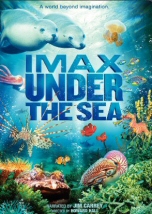
Experience up-close encounters with some of the most remarkable marine life ever captured on film while examining the impact of global climate change on the ocean wilderness as award-winning director/cinematographer Howard Hall travels from South Australia to the Indo-Pacific to teach viewers the importance of keeping our oceans clean for future generations. Just how great of an effect does global warming have on marine wildlife, and what can be done to ensure the future well-being of our planet? As the filmmakers reveal the delicacy of our fragile ecosystem, viewers are allowed the unique opportunity to see what we risk losing should we fail to address the issue of global climate change sooner rather than later.
The hunt for aliens is on! After a distinguished career in cosmology Professor Martin Rees, the astronomer royal, has taken up the search for extra-terrestrials. Looking for aliens is no longer science fiction - it is a question that's engaging some of the greatest minds in science." As our knowledge of the universe has increased, we're getting closer to answers. Many scientists now think we live in galaxy with a billion Earth-like planets, many of which may be teeming with life. But what kind of life? Has anything evolved into beings we could communicate with? This film gets inside the minds of the scientists considering one of the most exciting and profound questions we can ask - are we alone in the universe? Professor Rees thinks we may have our idea of what an alien is like all wrong. If he's right, it's not organic extra-terrestrials we should look for, it's machines.
In the final part, Professor Al-Khalili uncovers tales of success and heartache in the story of chemists' battle to control and combine the elements, and build our modern world. He reveals the dramatic breakthroughs which harnessed their might to release almost unimaginable power, and he journeys to the centre of modern day alchemy, where scientists are attempting to command the extreme forces of nature and create brand new elements.
This episodes the nature of the cosmos on the micro and atomic scales, using the Ship of the Imagination to explore these realms. Tyson describes some of the micro-organism that live within a dew drop, demonstrating parameciums and tardigrades. He proceeds to discuss how plants use photosynthesis via their chloroplasts to convert sunlight into chemical reactions that convert carbon dioxide and water into oxygen and energy-rich sugars. Tyson then discusses the nature of molecules and atoms and how they relate to the evolution of species. He uses the example set forth by Charles Darwin postulating the existence of the long-tongued Morgan's sphinx moth based on the nature of the comet orchid with pollen far within the flower. He further demonstrates that scents from flowers are used to trigger olfactory centers in the brain, stimulating the mind to threats as to aid in the survival of the species. Tyson narrates how Greek philosophers Thales and Democritus postulated that all matter was made up of combinations of atoms in a large number of configurations, and describes how carbon forms the basic building block for life on earth due to its unique chemical nature. Tyson explains on the basic atomic structure of protons, neutrons, and electrons, and the nature of nuclear fusion that occurs in most stars. He then discusses the existence of neutrinos that are created by these nuclear processes in stars, and that detecting such sub-atomic particles which normally pass through matter require subterranean facilities like the Super-Kamiokande that were used to detect neutrinos from the supernova SN 1987A in the Large Magellanic Cloud before light from the explosion were observed due to their ability to pass through matter of the dying sun. Tyson compares how neutrinos were postulated by Wolfgang Pauli to account for the conservation of energy from nuclear reactions in the same manner as Darwin's postulate on the long-tongued moth. Tyson concludes by noting that there are neutrinos from the Big Bang still existing in the universe but due to the nature of light, there is a "wall of infinity" that cannot be observed beyond.












Almost 35 years after their breakthrough, a-ha still creates magic on stage with their melancholic and timeless music. They tour the world but drive in separate cars and stay in separate hotel rooms. They only meet on stage, doing the one thing they love. The film closely portrays the challenging creative and personal dynamics of a group of three strong individuals who have grown up together, but in different directions. What does success do to friendship? Why are they not capable of creating new music together anymore? This is a story of great music, big ambitions, broken friendship--and maybe forgiveness.