To celebrate the 30th anniversary of its launch, this film tells the remarkable story of how the Hubble Space Telescope revealed the awe and wonder of our universe and how a team of daring astronauts risked their lives to keep it working. Additionally, a team led by Greg Bacon and Dr Frank Summers has transformed many of Hubble's most awe-inspiring images into visualisations - from the spectacular Orion Nebula to the fabulous Whirlpool Galaxy and ethereal Horsehead Nebula. One of the most mind-blowing of the visualizations takes the viewer on a remarkable journey, flying across the Universe to witness almost 13 billion years of cosmic evolution. It's called the 'Hubble Ultra Deep Field' and was created when Hubble stared at a small patch of sky for the equivalent of more than 11 days to see some of the most distant galaxies ever observed.
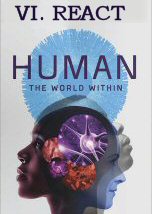
Over billions of years, planet Earth has become home to an amazing interdependent ecosystem, containing a dizzying variety of animals and plants. But how did life here begin? And does it exist anywhere outside of our solar system? We uncover the secrets of our world by tracking the evolution of the cosmos itself, from the Big Bang onwards. Follow scientists responsible for some of the major breakthroughs in understanding the origins of life and witness how their discoveries are fundamentally changing the way we perceive the universe.
In this curious series, the minds behind history's most iconic toy franchises will discuss the rise (and sometimes fall) of their billion-dollar creations. In 1977, after being rejected by Mattel and Hasbro, Lucasfilm signed with Kenner Products to have toys produced for their sci-fi film Star Wars. This was a huge gamble, as Kenner was a small toy company at the time and the negotiation process started late due to George Lucas' secrecy over the ship designs. Since then, toy sales of the Star Wars franchise have totaled to US$14 billion worldwide.
Join scientists as they grab light from across the universe to prove quantum entanglement is real. Einstein called it 'spooky action at a distance,' but today quantum entanglement is poised to revolutionize technology from computers to cryptography. Physicists have gradually become convinced that the phenomenontwo subatomic particles that mirror changes in each other instantaneously over any distance is real. But a few doubts remain. The film follows a ground-breaking experiment in the Canary Islands to use quasars at opposite ends of the universe to once and for all settle remaining questions.
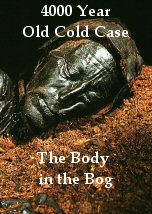
A 4000-year-old body is found preserved in an Irish peat bog, in Cashel, Ireland. To scientists and historians, it could offer brand new clues to solve an ancient mystery: the hundreds of bodies found mummified in the boglands of Northern Europe. Now, will Cashel Man help prove the theory these Irish victims were ancient kings? And what clues can the bog bodies of Europe offer to explain our ancestors' most macabre tradition - ritual murder? Meanwhile, that question could be answered by the bog itself.
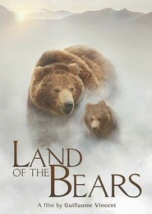
Set in the wilderness of the Kamchatka Peninsula, the land of legends and the kingdom of wild brown bears, we follow the daily adventures of five wild brown bears. A mother bear and her two young ones, an adolescent male and an experienced male leader. Each of them have their own concerns and preoccupations. The mother must feed and protect her cubs, whilst all they want is to explore the big wide world out there, unaware of the dangers that lie ahead of them. The adolescent is coming of age and must find his place in the adult world, whereas the experienced male must constantly defend his supremacy and impose his strength.







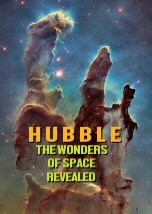




Additionally, a team led by Greg Bacon and Dr Frank Summers has transformed many of Hubble's most awe-inspiring images into visualisations - from the spectacular Orion Nebula to the fabulous Whirlpool Galaxy and ethereal Horsehead Nebula. One of the most mind-blowing of the visualizations takes the viewer on a remarkable journey, flying across the Universe to witness almost 13 billion years of cosmic evolution. It's called the 'Hubble Ultra Deep Field' and was created when Hubble stared at a small patch of sky for the equivalent of more than 11 days to see some of the most distant galaxies ever observed.