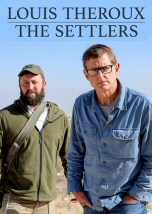
Louis Theroux travels to the West Bank to meet Israeli settlers living in the heart of one of the world’s most disputed territories. With unprecedented access to radical nationalists, devout religious families, and young pioneers, he explores the deep motivations behind the settlement movement — a movement seen by some as a divine mission and by others as a major obstacle to peace. Through candid interviews and tense moments, Theroux examines the impact of these communities on Palestinian lives, the broader Israeli society, and the fragile hopes for a two-state solution. Thought-provoking and immersive, The Settlers offers a rare window into a conflict that continues to shape the future of the Middle East.
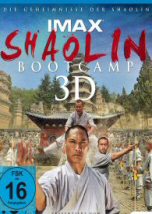
Hollywood actor Jason Scott Lee has been a student of Bruce Lee's martial art Jeet Kune Do for 20 years and in Secrets Of Shaolin. He fulfils his lifelong dream of joining the institution that invented kung fu - Shaolin Temple. In an intense two-week kung fu bootcamp, Jason will not only discover Shaolin's centuries old secrets of turning the human body into the ultimate weapon, but also experience the spiritual effects of it's Zen Buddhist practices. Secrets of Shaolin promises to be a stunning, action-packed insight into the world's most famous martial art and a spectacular celebration of the place, people and culture that has inspired generations of fans.
Horizon explores the strange and wonderful world of illusions – and reveals the tricks they play on our senses and why they fool us. We show how easy it is to trick your sense of taste by changing the colours of food and drink, explain how what you see can change what you hear, and see just how unreliable our sense of colour can be. But all this trickery has a serious purpose. It’s helping scientists to create a new understanding of how our senses work – not as individual senses, but connected together. It holds the intriguing possibility that one sense could be mapped into another.
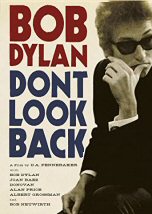
The film is a intimate diary of Bob Dylan's 1965 tour of Britain, chronicling reactions as his tunes caught the nation off-guard, but ultimately won him critical acclaim and worldwide fame and fortune. Featuring interviews with various Sixties cult figures, including the man himself, his then-girlfriend Joan Baez and poet Allen Ginsberg.
Brian Jones, Jimi Hendrix, Janis Joplin and Jim Morrison all died at the age of 27 between 1969 and 1971. At the time, the coincidence gave rise to some comment, but it was not until the death of Kurt Cobain, about two and a half decades later, that the idea of a '27 Club' began to catch on in public perception, reignited with the death of Amy Winehouse in 2011. Through interviews with people who knew them, such as music stars, critics, medical experts and unseen footage, the lives, music, and artistry of those who died at 27 are investigated with a bid to find answers.
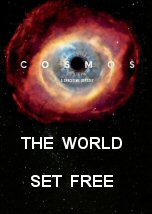
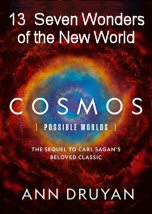
This episode explores the nature of the greenhouse effect (discovered by Joseph Fourier and Svante Arrhenius), and the evidence demonstrating the existence of global warming from humanity's influence. Tyson begins by describing the long-term history of the planet Venus; based on readings from the Venera series of probes to the planet, the planet had once had an ocean and an atmosphere, but due to the release of carbon dioxide from volcanic eruptions, the runaway greenhouse effect on Venus caused the surface temperatures to increase and boiled away the oceans. Tyson then notes the delicate nature of the amount of carbon dioxide in the atmosphere can influence Earth's climate due to the greenhouse effect, and that levels of carbon dioxide have been increasing since the start of the 20th century. Evidence has shown this to be from mankind's consumption of oil, coal, and gas instead of from volcanic eruptions due to the isotopic signature of the carbon dioxide. The increase in carbon dioxide has led to an increase in temperatures, in turn leading to positive feedback loops of the melting polar ice caps and dethawing of the permafrost to increase carbon dioxide levels. Tyson then notes that humans have discovered means of harvesting solar power, such as Augustin Mouchot's solar-driven motor in the 19th century, and Frank Shuman's solar-based steam generator in the 1910's. Tyson points out that in both cases, the economics and ease of using cheap coal and oil caused these inventions to be overlooked at the time. Today, solar and wind-power systems would be able to collect enough solar energy from the sun easily. Tyson then compares the motivation for switching to these cleaner forms of energy to the efforts of the Space race and emphasizes that it is not too late for humanity to correct its course.










Through candid interviews and tense moments, Theroux examines the impact of these communities on Palestinian lives, the broader Israeli society, and the fragile hopes for a two-state solution. Thought-provoking and immersive, The Settlers offers a rare window into a conflict that continues to shape the future of the Middle East.