We offer the complete second series of “Ancient Apocalypse” in a single video. In this series, journalist Graham Hancock travels to the Americas to search for evidence supporting his hypothesis: that an advanced civilization was lost to history during the cataclysms that marked the apocalyptic end of the last Ice Age, between 12,800 and 11,600 years ago. Each episode investigates new discoveries being made in the American hemisphere, which until recently has been largely under-explored by archaeologists interested in humanity’s origins. Graham reveals new findings and speculates about how those findings might suggest the existence of a globe-traveling advanced civilization that left traces of itself in ancient cultures. In episode one, evidence from New Mexico’s White Sands desert confirms the presence of people in the Americas long before it was possible to migrate across the Bering Straits that formed a land bridge during the lowered sea-levels of the Ice Age. The series takes us to multiple locations in the US, Mexico, Brazil, Peru and Easter Island to investigate when people first arrived in the “New World” and how they made the journey. The findings give Graham reason to question the accepted timeline of human history. During his journey, Graham interviews highly regarded archaeologists and historians as well as indigenous elders, who share their unique knowledge of the sites and their oral histories. Hollywood actor, Keanu Reeves, also joins Graham across the series, discussing, among other things, his insights into storytelling as an act of preserving culture. Experts in the series include American archaeologist Dr. Chris Davis, Brazilian palaeontologist Dr. Alceu Ranzi, and archaeo-botanist Dr. Sonia Cardinali of Rapa Nui, Easter Island, among others.
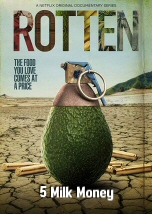
90% of the goods we consume in the West are manufactured in far-off lands and brought to us by ship. The cargo shipping industry holds the key to our economy, our environment and the very model of our civilization; without it, it would be impossible to fulfill the ever-increasing demands of our societies. Yet the functioning and regulations of this business remain largely obscure to many, and its hidden costs affect us all. Due to their size, freight ships no longer fit in traditional city harbors; they have moved out of the public's eye, behind barriers and checkpoints.
The film answers questions such as: Who pulls the strings in this multi-billion dollar business? To what extent does the industry control our policymakers? How does it affect the environment above and below the water-line? And what's life like for modern seafarers? Taking us on a journey overseas and oceans, we reveal in an audacious investigation the many faces of world-wide freight shipping and sheds light on the consequences of an all-but-visible industry.
Caravaggio's approach to painting was unconventional. He avoided the standard method of making copies of old sculptures and instead took the more direct approach of painting directly onto canvas without drawing first. He also used people from the street as his models. His dramatic painting was enhanced with intense and theatrical lighting.
Caravaggio's fate was sealed when he killed a man in a duel in 1606. He fled to Naples where he attempted to paint his way out of trouble, he became a Knight, but was then imprisoned in Malta and then finally moved to Sicily. He was pardoned for murder in 1610, but died of a fever when attempting to return to Rome. For me the power of Caravaggio's art is the power of truth, not least the truth about ourselves. If we are ever to hope for redemption we have to start from the recognition that the Goliath competes with the David in all of us."
Ever wonder what's happening inside your head? From dreaming to anxiety disorders, discover how your brain works with this illuminating series. The first episode looks at how memory works and examines the way in which the brain stores, processes, and retrains memories. It also looks at the ways in which memory can fail and discusses how memories can warp over time. It talks to neuroscientists and a memory champion who explains her techniques.
The film depicts the life and work of opera singer Maria Callas in her own words by using performances, TV interviews, home movies, family photographs, private letters and unpublished memoirs nearly all of which have never been shown to the public. Maria by Callas reveals the essence of an extraordinary woman who rose from humble beginnings in New York City to become a glamorous international superstar and one of the greatest artists of all time. Her letters and unpublished memoirs are read by opera singer Joyce DiDonato. (Click CC for subtitles)
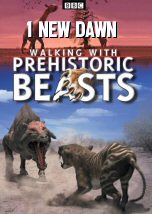
Take a dino's-eye view of life in the prehistoric past as cutting-edge filming techniques and hard science. When White Tip, a female velociraptor, loses the rest of her pack, she must struggle to survive on her own. In time, she locates a new pack, as well as a mate, only to find that her hardships are just beginning in the harsh desert environment.
In episode one, evidence from New Mexico’s White Sands desert confirms the presence of people in the Americas long before it was possible to migrate across the Bering Straits that formed a land bridge during the lowered sea-levels of the Ice Age. The series takes us to multiple locations in the US, Mexico, Brazil, Peru and Easter Island to investigate when people first arrived in the “New World” and how they made the journey. The findings give Graham reason to question the accepted timeline of human history. During his journey, Graham interviews highly regarded archaeologists and historians as well as indigenous elders, who share their unique knowledge of the sites and their oral histories. Hollywood actor, Keanu Reeves, also joins Graham across the series, discussing, among other things, his insights into storytelling as an act of preserving culture. Experts in the series include American archaeologist Dr. Chris Davis, Brazilian palaeontologist Dr. Alceu Ranzi, and archaeo-botanist Dr. Sonia Cardinali of Rapa Nui, Easter Island, among others.