







Last Watched

"Ants"  Sort by

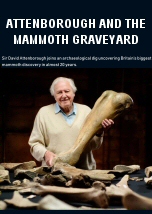
Attenborough and the Mammoth Graveyard

   2021    Science
David Attenborough joins an archaeological dig uncovering Britain’s biggest mammoth discovery in almost 20 years. In 2017, in a gravel quarry near Swindon, two amateur fossil hunters found an extraordinary cache of Ice Age mammoth remains and a stone hand-axe made by a Neanderthal. Professor Ben Garrod joins the team at DigVentures during the excavation as they try to discover why the mammoths were here and how they died. Could the Neanderthals have killed these Ice Age giants?
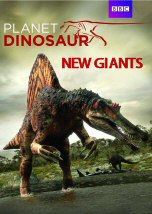
New Giants

   2011    History
This episode of the documentary series focuses on the new giants, the heavyweights of the dinosaur world. It is only in recent years that experts have unearthed the biggest dinosaurs that ever lived. One monster eclipsed all others; more than seven times as heavy as diplodocus was the immense argentinosaurus - a single backbone was bigger than a human. For years, these giants were considered immune to attack from any predator - until the discovery of mapusaurus, a new giant killer whose fate appeared to be inextricably linked to argentinosaurus
Series: Planet Dinosaur

Arctic Ice Hotel

   2019    Technology
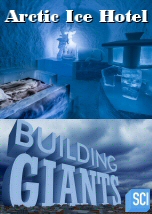
Deep inside the arctic circle, this team of elite engineers Is embarking on an epic endeavor. They're attempting to build a unique structure, one of the largest snow and ice hotels in the world. Constructed from more than 15,000 tons of snow and ice, spanning over 26,000 square feet, they are pushing to complete this ambitious build in an unheard-of six weeks.
Engineers brave the cold and nights of the Arctic Circle to build the Ice Hotel. Using cutting-edge tech, they'll construct this modern marvel in just six weeks.
Series: Building Giants

Growing

   1994    Nature
The second episode is about how plants gain their sustenance. Sunlight is one of the essential requirements if a seed is to germinate, and Attenborough highlights the cheese plant as an example whose young shoots head for the nearest tree trunk and then climb to the top of the forest canopy, developing its leaves en route. Using sunshine, air, water and a few minerals, the leaves are, in effect, the "factories" that produce food. However, some, such as the begonia, can thrive without much light. To gain moisture, plants typically use their roots to probe underground. Trees pump water up pipes that run inside their trunks, and Attenborough observes that a sycamore can do this at the rate of 450 litres an hour — in total silence. Too much rainfall can clog up a leaf's pores, and many have specially designed 'gutters' to cope with it. However, their biggest threat is from animals, and some require extreme methods of defence, such as spines, camouflage, or poison. Some can move quickly to deter predators: the mimosa can fold its leaves instantly when touched, and the Venus flytrap eats insects by closing its leaves around its prey when triggered. Another carnivorous plant is the trumpet pitcher that snares insects when they fall into its tubular leaves. Attenborough visits Borneo to see the largest pitcher of them all, Nepenthes rajah, whose traps contain up to two litres of water and have been known to kill small rodents.
Series: The Private Life of Plants

Strange Relations

   2022    Nature
Witness the secret powers of extraordinary animals, experience the world as they do and see the SUPER/NATURAL side of nature as never before. Executive produced by James Cameron and narrated by Benedict Cumberbatch, this series uses the scientific innovations and leading-edge filmmaking technology to reveal the secret powers and super-senses of the world’s extraordinary animals. See flowers in bee-vision to eavesdropping on conversations between elephant seals to soaring the length of a football field with glow-in-the-dark squirrels.
They say in nature that only the strongest survive. But when cooperation and communication bring animals and plants together and superpowers combine even the most vulnerable can become unstoppable. If you think you know nature, think again.
Series: Super/Natural

The Private Life of Plants Living Together

   1995    Nature
The fifth programme explores the alliances formed between the animal and plant worlds. Attenborough dives into Australia's Great Barrier Reef and contrasts the nocturnal feeding of coral, on microscopic creatures, with its daytime diet of algae. Some acacias are protected by ants, which will defend their refuge from any predator. Besides accommodation, the guards are rewarded with nectar and, from certain species, protein for their larvae as well. Fungi feed on plants but can also provide essential nutriment to saplings (Mycorrhiza). The connection is never broken throughout a tree's life and a quarter of the sugars and starches produced in its leaves is channelled back to its fungal partners. Meanwhile, fungi that feed on dead wood leave a hollow trunk, which also benefits the tree. Orchids enjoy a similar affiliation. Lichens are the product of a relationship between fungi and a photosynthetic associate, usually algae. They are extremely slow-growing, and a graveyard is the perfect location to discover their exact longevity. Mistletoe is a hemiparasite that obtains its moisture from a host tree, while using own leaves to manufacture food. Its seeds are deposited on another by the mistletoe tyrannulet, following digestion of the fruit. The dodder (Cuscuta) is also parasitic, generally favouring nettles, and siphons its nourishment through periodic 'plugs' along its stem. The rafflesia has no stem or leaves and only emerges from its host in order to bloom — and it produces the largest single flower: one metre across.
Series: The Private Life of Plants