Inside the world-renowned physics laboratory Fermilab, a team of scientists are constructing an audacious experiment to hunt for a mysterious new ‘ghost’ neutrino. If they find it, this could transform our understanding of the nature and fabric of our universe. The problem is, these tiny particles are almost impossible to detect. Elsewhere, physicists conduct experiments in some of the most extreme environments on the planet: from deep mine shafts in South Dakota to vast ice fields at the South Pole. In these unlikely places supersized neutrino detectors hope to unlock the universe’s deepest secrets. Could neutrinos overturn the most precise theory of particle physics that humans have ever written down? Could they even be a link to a hidden realm of new particles that permeate the cosmos – so called dark matter? Scientists at Fermilab are edging towards the truth.
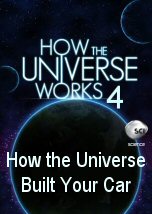
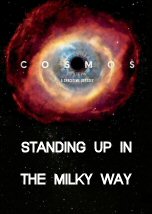
See as never before in this series the inner workings of our world, and explore black holes, supernovae, neutron stars, dark energy, and all the titanic forces that make us. A users guide to the cosmos from the big bang to galaxies, stars, planets and moons. Where did it all come from and how does it all fit together. A primer for anyone who has ever looked up at the night sky and wondered". Beneath the hood of your car lies the history of the Universe. The iron in your chassis, the gold in your stereo and the copper in your electronics all owe their existence to violent cosmic events that took place billions of years ago.
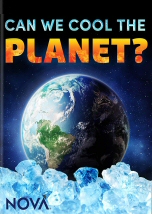
Are rising temperatures driving Earth's ecosystems past a point of no return? We have promising technologies that put solutions within our grasp. Scientists are exploring solutions: from geoengineering to sucking carbon out of the air to cloud brightening, as means to cool the planet. Cutting-edge solutions and high-risk measures. But would they work? And what are the risks of engineering Earth's climate?
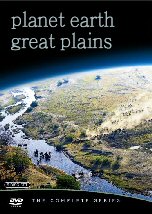
After filming for three years, Planet Earth finally captures the shy Mongolian gazelle. Only a handful of people have witnessed its annual migration. Don't miss the bizarre-looking Tibetan fox, captured on film for the first time. Over six weeks the team follow a pride of 30 lions as they attempt to hunt elephants. Using the latest night vision equipment, the crew film the chaotic battles that ensue at close quarters.
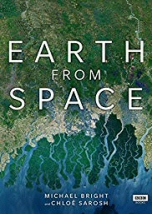
In just half a century, the human population has doubled to 7.4 billion, and during that time, astronaut and satellite photos have been capturing the startling changes on our planet. See how humans have made their mark reshaping the planet in our quest for new sources of food, power, and shelter. From glimmering new megacities like Shenzhen, China to areas affected by climate change like Mt. Kilimanjaro and Florida, witness Earth's changing look--the spectacular and the shocking--from 250 miles up.
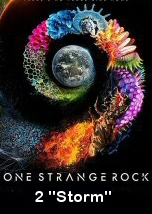
Space isn't vast and empty space but a dynamic, cosmic storm. It's a storm that could kill us, but without it we wouldn't be here at all. This is a story about the weird connections, the near misses, the lucky breaks that created this amazing world. For 4.5 billion years our planet has been battered and bruised and punched and pummeled but we're still standing. It's actually the battle that's built us and this is the tale of the tape. Ever wonder how our planet got here? It was born in a cosmic storm. The violence could have destroyed us, but instead it made us.















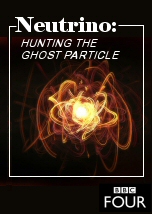




Elsewhere, physicists conduct experiments in some of the most extreme environments on the planet: from deep mine shafts in South Dakota to vast ice fields at the South Pole. In these unlikely places supersized neutrino detectors hope to unlock the universe’s deepest secrets. Could neutrinos overturn the most precise theory of particle physics that humans have ever written down? Could they even be a link to a hidden realm of new particles that permeate the cosmos – so called dark matter? Scientists at Fermilab are edging towards the truth.