Completely proving something can be difficult, if not impossible. So instead, we have the faith of the believer, the confidence interval of the scientist. What we think we know, we really only believe we know. On this episode of Mind Field, we are going to take a look at a kind of lie we tell ourselves. And we are going to use belief to turn a lie... into a truth.
When Ashley Madison, a dating site for people seeking adulterous affairs, is hacked, millions of users' intimate data is exposed, wrecking marriages and destroying lives. This complete three episode documentary series explores the creation of the website during the dot com boom, the people who used the site to explore a part of their love lives they felt was missing, and the hack that made it all come crashing down. This gripping story is told through a handful of insiders, journalists, and families that were devastated by the release of their confidential information.
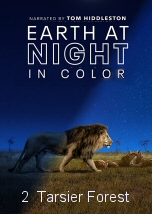
Deep in the twisted roots of a giant strangler fig tree, hidden from view, lives perhaps the most bizarre nighttime creature of all. The spectral tarsier, tiny primates barely larger than a tennis ball. As darkness falls, a family of these small primates in Sulawesi ventures into the jungle to find food while protecting their babies.
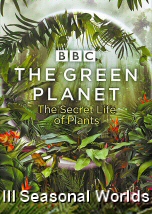
Will explore the strategy, deception and feats of engineering plants use to thrive in the changing weather of different seasons. In the face of conditions ranging from ice and snow to raging fires, survival is often a question of perfect timing - particularly when contending with intense competition and surprising predators. In this episode, David Attenborough travels to Finland to show one of the most extreme examples of seasonal plant life in the Arctic Circle. He also travels to California to see how climate change is affecting giant sequoias. These ancient trees like all other seasonal plants depend on the predictability of the seasons and our current changing climate threatens their survival.
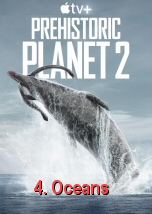
A female Phosphorosaurus hunts lanternfish under the ocean's moonlit surface. Hesperornis hunt for fish until they themselves are hunted by Xiphactinus. A Mosasaurus hunts a group of Tuarangisaurus. Nostoceras hatchlings are at the mercy of the tides and juvenile Pyroraptor. The young Nostoceras that survived find themselves among Baculites and Diplomoceras in their new seagrass meadow home. A pod of Morturneria sift the muddy seabed in search of food.
More than 90% of all crashes have a human driver as the cause. So if you want to solve traffic fatalities, the best solution is driverless vehicles. It's an ambitious goal, but only possible because of the recent breakthroughs in deep learning. Artificial intelligence is one of those key pieces that has made it possible now to do driverless cars where it wasn't possible ten years ago. For computers, until very, very recently, to do even the most basic visual tasks, like seeing a picture of a person and knowing that it's a person was remarkably hard. That's obviously fundamental to being able to understand the world around you with the sensors that you have. And we've made also gigantic strides in being able to perform complex tasks.










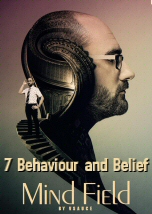






On this episode of Mind Field, we are going to take a look at a kind of lie we tell ourselves. And we are going to use belief to turn a lie... into a truth.