A mass grave at Zultepec, Mexico, containing more than 400 mutilated skeletons forces archaeologists to reconsider one of the most familiar stories of the Spanish conquest. Led by Aztec specialist Elizabeth Baquedano, the investigation follows forensic clues hidden in skulls, bones and artifacts to identify the victims and reconstruct what happened. Some remains prove to be European, including women, while Spanish-made iron objects and evidence of horses link the dead directly to the conquistadors who entered Mexico in the early sixteenth century. The evidence reveals a far more violent confrontation than the traditional image of an easy Spanish victory. Captured Spaniards and members of their entourage appear to have been imprisoned, ritually sacrificed, dismembered and, in some cases, consumed as part of ceremonial practices. By combining archaeology, forensic anthropology and Aztec codices, the documentary shows that indigenous resistance to the conquistadors could be organized, successful and terrifyingly effective, transforming Zultepec into crucial physical evidence of a conflict that history had long oversimplified.
Professor Brian Cox joins Chris Lintott and the team to investigate one of the most intriguing new mysteries in modern astronomy. Observations from the James Webb Space Telescope have revealed hundreds of compact, extraordinarily bright objects known as “little red dots”, appearing less than a billion years after the Big Bang. Many may hide rapidly growing supermassive black holes, raising a profound question: how could such enormous objects have formed so early in cosmic history? The journey begins with the strange physics of black holes themselves, from event horizons and singularities to the supermassive black hole at the centre of the Milky Way and the gigantic black hole in the galaxy M87. With cosmologist Emma Chapman and Professor Sadegh Khochfar, the programme explores radical explanations for these ancient monsters, including primordial black holes born soon after the Big Bang and massive black holes formed directly from collapsing clouds of gas, bypassing stars altogether. Cutting-edge computer simulations recreate the first billion years of the universe and reveal how the earliest galaxies and black holes may have emerged within the cosmic web. These discoveries are forcing astronomers to reconsider not only how supermassive black holes grow, but how galaxies and the early universe itself evolved.
In the final two episodes, the journey reaches the Pacific edge of North America and the remote wilderness of Patagonia, two spectacular regions shaped by powerful oceans, towering forests and extreme weather. Along the West Coast, wolves comb the shoreline for food, sea otters battle crashing surf, blue whales gather in a rare display of speed and movement, and giant Pacific octopuses devote everything to protecting the next generation. High in the redwood canopy, even tiny salamanders perform extraordinary leaps to survive, revealing how life has adapted to one of the continent’s most dramatic coastal environments. The series then travels to the far south of the Americas, where Patagonia delivers a fittingly wild finale. Pumas stalk guanacos through snowy mountains, rockhopper penguins fight their way through violent waves to reach their colonies, giant stag beetles climb immense trees to compete for mates, and elephant seals clash for dominance along the coast. In one of the most remarkable scenes, a family of orcas passes down a dangerous hunting technique from one generation to the next, showing how survival here depends not only on strength, but also on experience, cooperation and learning.
The Housemartins return to Hull during their breakthrough year of 1986 and revisit the places where the band began. Paul Heaton, Stan Cullimore, Norman Cook and Hugh Whitaker talk about forming the group, their sudden success and their determination to remain rooted in ordinary life despite growing fame. The film follows them through Hull, mixes informal conversations with rehearsals and performances, and includes songs such as Happy Hour, Sheep, Think for a Minute and Caravan of Love. The members also speak openly about their socialist views, religion, money and their distrust of the music industry, revealing the ideas behind their deliberately unglamorous image and sharply observant lyrics. Ending with a concert for their home audience, this documentary captures The Housemartins at the moment they were becoming nationally famous while still maintaining the humour, friendship and political convictions that defined the band.
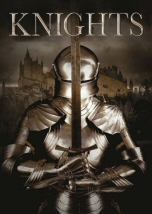
From ordinary mounted warriors to the legendary figures who came to embody courage, honour and chivalry, medieval knights dominated European life for centuries. Through dramatic reconstructions, historical experiments and surviving evidence, this series reveals the harsh reality behind the romantic image: brutal battles and personal feuds, swordsmanship and tournaments, the construction and defense of castles, courtly love and the strict codes of honour that could turn an insult into a fight to the death. It also follows knights to the Holy Land, where crusaders risked everything in pursuit of glory, wealth and salvation, while figures such as John of Bohemia and Joan of Arc show how courage and legend became inseparable from the medieval warrior. Presented here as all three episodes consecutively in a single video, the complete story also reveals how the world that created the knight eventually destroyed him. The rise of robber knights such as Götz von Berlichingen, the spread of mercenary warfare and increasingly spectacular tournaments mark the final years of an old order, while longbows, cannon, artillery and massed infantry transform the battlefield forever. Emperor Maximilian, celebrated as the “Last of the Knights,” embraces these new weapons even as he glorifies the traditions of chivalry. By the end, the armoured horseman who had ruled castles, battlefields and entire communities for centuries has become obsolete in war—but immortal in legend.
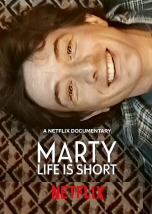
Few performers have turned joy into an art form quite like Martin Short. Through classic clips, candid new interviews and never-before-seen home movies filled with famous friends, this intimate documentary looks back on a career that has moved effortlessly across television, film, theater and live comedy. From his Canadian beginnings and breakthrough years on sketch comedy to unforgettable characters, Hollywood success and his long creative partnership with Steve Martin, it reveals the timing, energy and fearless imagination behind one of entertainment’s most beloved comic performers. But behind the laughter is a deeper and more moving story. As he revisits family, friendship, love, loss and the personal strength that carried him through tragedy, the documentary becomes more than a celebration of a brilliant career; it becomes a portrait of a man who chose humor not as an escape from life, but as a way to embrace it fully. Warm, funny, nostalgic and unexpectedly emotional, it invites viewers to discover the private memories behind the public legend, and the extraordinary heart behind a lifetime of making people laugh.













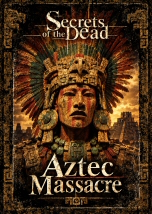







The evidence reveals a far more violent confrontation than the traditional image of an easy Spanish victory. Captured Spaniards and members of their entourage appear to have been imprisoned, ritually sacrificed, dismembered and, in some cases, consumed as part of ceremonial practices. By combining archaeology, forensic anthropology and Aztec codices, the documentary shows that indigenous resistance to the conquistadors could be organized, successful and terrifyingly effective, transforming Zultepec into crucial physical evidence of a conflict that history had long oversimplified.