How is the universe put together? How is it built? And how does it actually work? How the Universe Works Series 8 shows the inner workings of our planet, the solar system, the galaxies and the universe itself. In the first episode, if a massive asteroid collides with earth, it could end life on our planet as we know it. New discoveries and cutting-edge tech reveal just how close we are to apocalypse and what it would take for the world's leading space agencies to stop it.
The day of the Nazaré competition has arrived, and Garrett McNamara decides not to compete but instead support his long-time friend and teammate Andrew 'Cotty' Cotton. The competition does not go smoothly, with a major accident that has secondary effects on Cotty. After the competition, Garrett tries surfing at Nazaré again and realizes that can resume big-wave surfing. The episode concludes with retrospectives from a number of the surfers who appeared on various episodes throughout the season.
Ron Mann investigates the miraculous, near-secret world of fungi. Visionaries Gary Lincoff and Larry Evans lead us on a hunt for the wild mushroom and the deeper cultural experiences attached to the mysterious fungi. The oldest and largest living organisms recorded on Earth are both fungi. And their use by a new, maverick breed of scientists and thinkers has proven vital in the cleansing of sites despoiled by toxins and as a "clean" pesticide, among many other environmentally friendly applications. Combining material filmed at the Telluride Mushroom Fest with animation and archival footage, along with a neo-psychedelic soundtrack by The Flaming Lips, this film opens the doors to perception, taking the audience on an extraordinary trip where the fungi might well guide humanity to a saner, safer place.
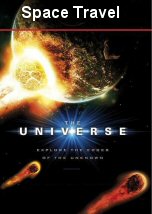
When man finally broke free of the Earth's gravitational pull the dream of travelling to other planets became a reality. Today scientists are proposing a bizarre array of technologies in the hope of travelling faster through space: from space craft sporting sails that catch laser beams, to propulsion engines powered by a bizarre entity known as anti-matter. Finally explore the science behind the seemingly fanciful notion of warp-drive and a theoretical particle that can travel faster than light.
Oil theft has become big business in Nigeria. Travel to this Africa's oil-producing region to meet with oil thieves, and follows one farmer's attempt to sue a foreign oil company for poisoning his family's land. The lethal combination of gangs and guns has turned Chicago into a war zone. Visit the city's most dangerous areas.
'Crude Awakening'- To combat the worst environmental disaster in American history, BP and the Coast Guard dumped nearly 2 million gallons of a chemical dispersant called Corexit into the Gulf. But instead of helping clean up the spill, Corexit made things worse. Shane Smith heads to Louisiana to report on the lasting effects of the BP oil spill. 'The Enemy of My Enemy' - Yemen, the fractured state in the Arabian peninsula, is at the top of the worry list for President Obama's national security team, and the rise of Al Qaeda there is only half the reason why. The real trouble is a current threat posed by the little-known Houthi rebel movement in the north of the country - a grassroots army, allegedly funded by Iran, that has never granted access to any other Western film crew before. Ben Anderson goes deep into Houthi-controlled territory to learn about the group that's fighting, and beating, Al Qaeda in the east, Saudi Arabia in the north, and Yemen's central government in the south.















In the first episode, if a massive asteroid collides with earth, it could end life on our planet as we know it. New discoveries and cutting-edge tech reveal just how close we are to apocalypse and what it would take for the world's leading space agencies to stop it.