Monty Don embarks on a journey across Spain, discovering gardens across the country’s diverse landscape and exploring its rich and varied history and culture. He will cover more than 4,000 kilometres to visit some of its most interesting gardens, community projects and parks in order to get under the skin of the country. His trips range from historic imperial palaces to cutting-edge modern gardens created by a new wave of Spanish designers working more closely with the landscape and the challenges of the climate. “Spain's history and its landscapes, climates and cultures have huge diversity. And in this series, I want to get under the skin of the country by visiting as many gardens in Spain as I can so I can shed light on this nation's past, its future and its people. The result is a picture not just of its gardens but this fascinating country itself. Dramatic, proud, complex, but always compelling.”
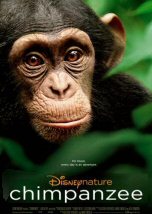
A young common chimpanzee nicknamed Oscar is part of a close-knit tribe of chimpanzees. They occupy a forest territory which is rich in native fruits, nuts, and figs, among other things. The chimps hunt small tree monkeys, and they also eat termites collected with primitive tools made from sticks. They also use rocks as tools to crack nuts. Oscar is tended by his mother, nicknamed Isha, and from her he begins learning many things about how to survive in the jungle. In the chaos of an attempted raid by a rival gang of chimpanzees led by 'Scar', Isha is injured and separated from the group and her son. This twist of fate leaves Oscar to fend for himself with a little help from an unexpected ally.
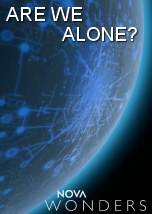
The search for extraterrestrial life is an age-old quest. But recent breakthroughs make today an era like no other in the history of astronomy. From the exhilarating probing of our own solar system and the Kepler mission’s astounding discovery of thousands of extrasolar planets, to the next-generation telescopes under development, the prospects for finding life beyond Earth have never been stronger. Still, daunting hurdles remain. How can we study anything light years away, let alone a little planet? In the vast universe, where should we even start to look? Is our failure to hear any other voices in the galaxy a sign that we are special? Join leading explorers now searching the galaxy for life and intelligence on other planets—and asks, if we do find other life in the universe... what would that mean?
Michael Wood’s epic series moves on to the revolutionary years after 500BC - the Age of the Buddha. Travelling by rail to the ancient cities of the Ganges plain, by army convoy through Northern Iraq, and on down the Khyber Pass, he shows how Alexander the Great’s invasion of India inspired her first empire.
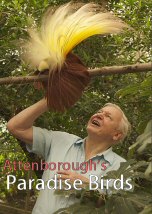
Birds of paradise are one of David Attenborough's lifelong passions. He was the first to film many of their beautiful and often bizarre displays, and over his lifetime he has tracked them all over the jungles of New Guinea. In this very personal film, he uncovers the remarkable story of how these 'birds from paradise' have captivated explorers, naturalists, artists, film-makers and even royalty. He explores the myths surrounding their discovery 500 years ago, the latest extraordinary behaviour captured on camera and reveals the scientific truth behind their beauty": the evolution of their spectacular appearance has in fact been driven by sex. And in a final contemporary twist to this story of obsession and royalty, he travels to the desert of Qatar, to a state-of-the-art facility which houses the largest breeding group of these birds in the world - a sheikh's very own private collection. There he has his closest ever encounter with a greater bird of paradise and its dramatic display, reliving the experience that captivated him in the forests of New Guinea more than 50 years ago.
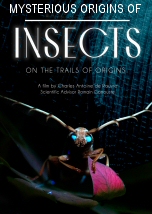
The film explores the eye-opening realm of these creatures to better understand how they evolved. Travelling from the rain forests of French Guiana to the Arctic Ocean, scientists use traditional and cutting edge techniques to examine both modern insects and the fossil record in their search for a single common insect ancestor. Insects are vital to life on our planet, yet almost 40% of known species are in danger of extinction. Insects are the most diverse group of organisms on Earth. The true number of species is unknown, but some estimates suggest that only a fraction have been identified. They have successfully adapted to every ecosystem on our planet. But insects still harbour many mysteries. Where do they come from? When did they first appear on Earth? How and why have they diversified and multiplied so successfully? At a time when certain insect species are in danger of extinction and there is greater interest in their role within ecosystems, this is the fascinating story of their origins.













“Spain's history and its landscapes, climates and cultures have huge diversity. And in this series, I want to get under the skin of the country by visiting as many gardens in Spain as I can so I can shed light on this nation's past, its future and its people. The result is a picture not just of its gardens but this fascinating country itself. Dramatic, proud, complex, but always compelling.”