This remarkable series profiles on the major defendants of the Nuremberg war crimes trials. In the first episode, Nathaniel Parker plays the most inscrutable Nazi on trial at Nuremberg, Hitler's architect and armaments minister Albert Speer. He was the only defendant who unreservedly accepted responsibility for the Nazis' crimes. But was Speer's remorse genuine or just a clever defense strategy to get off the hook? The film tells the intriguing behind-the scenes-story of Speer's trial and his showdown with unrepentant rival, Hermann Goering.
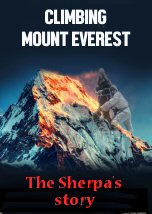
Every year, over a thousand climbers try to reach the summit of Mount Everest, with the annual record for successful attempts currently standing at 633. But of that number, nearly half were Sherpas - the mountain's unsung heroes. Yet the Sherpa community has remained secretive about their nation, culture and experiences living in the shadow of the world's highest mountain. Now, for the first time, they open the door into their world. Without the expertise of the Sherpas, only the hardiest and most skilful climbers would succeed. Every day they risk their lives for the safety of others, yet they seek neither glory nor reward, preferring to stay in the background. Following the stories of four such Sherpas - Phurba, Ngima, Ngima Tenji and Gelu - this film reveals the reality of their daily lives, not just up the mountain, but with their families after they return home.
This history of NASA includes a look at a group of youths attending a space camp, whose enthusiasm could be the key to launching an expedition to Mars. 'Ever since we first began exploring space, every generation has had a craft to transport their dreams into space. We have seen the Apollo Era, the Shuttle Era, and now we are ready to see the Orion Era. My generation, the Mars Generation, will make it happen. It's our time, we are ready.' - Astronaut Abby.
Around the world, food allergies are surging to near-epidemic levels. Medicine is just beginning to understand why some people react to seemingly harmless foods. Scientists race to understand what's changed in our bodies, while farmers and chefs contend with new challenges.
In just over 100 days, a new coronavirus has taken an unprepared world by storm, infiltrating every corner of the globe, sending entire nations into lockdown, killing thousands and infecting countless more. Across the world, governments are scrambling to react, hospitals are struggling to cope and an increasingly anxious public are starting to panic. The world's media is awash with data, information and misinformation. But what are the facts? What is COVID-19 and why is this strain of coronavirus so dangerous? What happens in our bodies when the virus attacks? How does this compare to previous pandemics? What do all the the numbers really mean, and how can data modelling help us look for an exit strategy? This programme investigates the scientific facts and figures behind the biggest public health crisis in living memory, and explores the latest research from the frontline of the medical and scientific fightback.
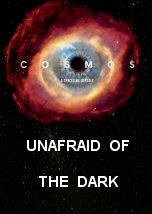
Tyson describes the discovery of cosmic rays by Victor Hess through high-altitude balloon trips. Swiss Astronomer Fritz Zwicky, in studying supernovae, postulated that these cosmic rays originated from these events instead of electromagnetic radiation. Also tells how Vera Rubin observed that the rotation of stars at the edges of observable galaxies did not follow expected rotational behavior leading to consider the existence of dark matter. This further led to the discovery of dark energy to account for the increasing rate of expansion of the universe. Tyson then describes the interstellar travel of the two Voyager probes. Tyson tells the Carl Sagan's role in the Voyager program, including creating the Voyager Golden Record to encapsulate humanity and Earth's position in the universe. Tyson concludes the series by emphasizing Sagan's message on the human condition in the vastness of the cosmos, and to encourage viewers to continue to explore and discover what else the universe has to offer.













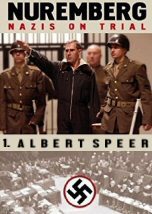









He was the only defendant who unreservedly accepted responsibility for the Nazis' crimes. But was Speer's remorse genuine or just a clever defense strategy to get off the hook? The film tells the intriguing behind-the scenes-story of Speer's trial and his showdown with unrepentant rival, Hermann Goering.