The International Space Station is the ultimate extreme home. Costing $150 billion, it is the most expensive structure humans have ever built, in the most inhospitable environment known to man, with no air food or water. Assembled at 250 miles above the earth, it's an epic engineering challenge. We're going to take it apart and uncover what's going on inside the ISS. Its superstructure secrets will help our species reach other planets and beyond. Using photo-real computer graphics, we take it apart to uncover the extraordinary innovations that enable it to support life in the deadly vacuum of space.
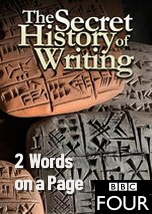
Writing itself is 5,000 years old, and for most of that time words were written by hand using a variety of tools. The Romans were able to run an empire thanks to documents written on papyrus. Scroll books could be made quite cheaply and, as a result, ancient Rome had a thriving written culture. With the fall of the Roman Empire, papyrus became more difficult to obtain. Europeans were forced to turn to a much more expensive surface on which to write: Parchment. Medieval handwritten books could cost as much as a house, they also represent a limitation on literacy and scholarship. No such limitations were felt in China, where paper had been invented in the second century. Paper was the foundation of Chinese culture and power, and for centuries how to make it was kept secret. When the secret was out, paper mills soon sprang up across central Asia. The result was an intellectual flourishing known as the Islamic Golden Age. Muslim scholars made discoveries in biology, geology, astronomy and mathematics. By contrast, Europe was an intellectual backwater. That changed with Gutenberg’s development of movable type printing. The letters of the Latin alphabet have very simple block-like shapes, which made it relatively simple to turn them into type pieces. When printers tried to use movable type to print Arabic texts, they found themselves hampered by the cursive nature of Arabic writing. The success of movable type printing in Europe led to a thousand-fold increase in the availability of information, which produced an explosion of ideas that led directly to the European Scientific Revolution and the Industrial Revolution that followed.
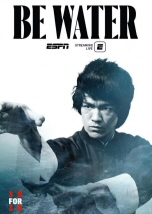
In 1971, after being rejected by Hollywood, Bruce Lee returned to his parents' homeland, Hong Kong. Over the next two years, he'd complete four iconic films that would define his legacy, a legacy cut short when he died, stunningly, in the summer of 1973. He was 32 years old. Directed by Bao Nguyen, 'Be Water' is a gripping, fascinating, intimate look at not just those final, defining years of Lee's life, but the complex, often difficult, and seismic journey that led to Lee's ultimate emergence as a singular icon in the histories of film, martial arts, and even the connection between the eastern and western worlds. The film chronicles Lee's earliest days, as the son of a Chinese opera star born while his father was on tour in San Francisco, and then raised in Hong Kong over what became an at times troubled childhood. Sent to live in America at the age of 18, he began teaching Kung Fu in Seattle, and established a following that included his future wife, Linda. His ambition ever rising, Lee eventually made his way to Los Angeles, where he strove to break into American film and television. There, despite some success as a fight choreographer and actor, it was clear Hollywood wasn't ready for an Asian leading man - and so he returned to Hong Kong to make the films that would in fact make him a legend, his international star skyrocketing just as his life was cut short. 'Be Water' is told by the family, friends, and collaborators who knew Bruce Lee best, with an extraordinary trove of archive film providing an evocative, immersive visual tapestry that captures Lee's charisma, his passion, his philosophy, and the eternal beauty and wonder of his art.
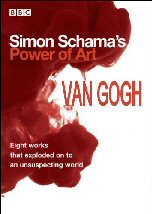
Born in Groot-Zundert, The Netherlands, Van Gogh spent his early life as an art dealer, teacher and preacher in England, Holland and Belgium. His period as an artist began in 1881 when he chose to study art in Brussels, starting with watercolours and moving quickly on to oils. The French countryside was a major influence on his life and his early work was dominated by sombre, earthy colours depicting peasant workers, the most famous of which is The Potato Eaters, 1885. It was during Van Gogh's studies in Paris (1886-8) that he developed the individual style of brushwork and use of colour that made his name. In 1888 he moved to Arles where the Provençal landscape provided his best-known subject matter. However, it also marked the start of his mental crisis following an argument with his contemporary Paul Gauguin. Van Gogh was committed to a mental asylum in 1889 where he continued to paint, but he committed suicide in 1890.
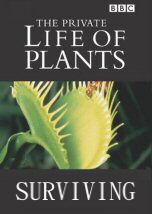
the final episode deals with plants that live in hostile environments. Attenborough visits Ellesmere Island, north of the Arctic Circle, to demonstrate that even in a place that is unconducive to life, it can be found. Algae and lichens grow in or on rock, and during summer, when the ice melts, flowers are much more apparent. However, they must remain close to the ground to stay out of the chilling wind. In the Tasmanian mountains, plants conserve heat by growing into 'cushions' that act as solar panels, with as many as a million individual shoots grouped together as one. Others, such as the lobelia in Mount Kenya, have a 'fur coat' of dense hairs on their leaves. The saguaro cactus in the Sonoran Desert flourishes because of its ability to retain vast amounts of water, which can't be lost through leaves because it has none. Many desert dwellers benefit from an accelerated life cycle, blooming rapidly within weeks after rainfall. Conversely, Mount Roraima is one of the wettest places on Earth. It is a huge sandstone plateau with high waterfalls and nutrients are continuously washed away, so plants have to adapt their diet if they are to survive. A bladderwort is shown invading a bromeliad. Inhabitants of lakes have other problems to contend with: those that dominate the surface will proliferate, and the Amazon water lily provides an apt illustration. Attenborough ends the series with an entreaty for the conservation of plant species.
Rivers provide the essentials of life: fresh food and water. They often provide natural highways and enable us to live in just about every environment on Earth. But rivers can also flood, freeze or disappear altogether!Cities - Surviving the Urban Jungle Human Planet joins Sam Niang, a Laotian fisherman, as he walks a high wire strung above the raging Mekong River rapids on an extraordinary commute to work. There's also a look at the remarkable partnership between Samburu tribesmen and wild elephants in their search for water in the dried-out river beds of Northern Kenya. Plus, a father who must take his two children on a six-day trek down a frozen river - the most dangerous school run on Earth, and the ice dam busters of Ottowa with their dynamite solution to a city centre hold-up.


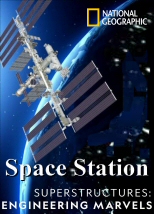




Its superstructure secrets will help our species reach other planets and beyond. Using photo-real computer graphics, we take it apart to uncover the extraordinary innovations that enable it to support life in the deadly vacuum of space.