What if death didn't have to be the final goodbye? ‘Eternal You’ is a gripping documentary that delves into the emerging industry of startups using AI to create digital avatars of the deceased. By harnessing the digital footprints left behind, these companies offer grieving individuals a chance to interact with their lost loved ones, blurring the lines between life and afterlife. The film explores this groundbreaking technology and its impact on bereaved families, delving deep into our innate desire for immortality. But at what cost does this technological resurrection come? ‘Eternal You’ raises profound questions about the ethics of commodifying grief and the psychological consequences of defying traditional notions of mortality. Does interacting with a digital echo of a loved one aid the healing process, or does it make letting go even harder? As we stand on the cusp of unprecedented technological possibilities, this documentary challenges us to consider whether we truly want—and are ready for—this new reality.
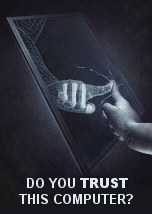
Science fiction has long anticipated the rise of machine intelligence. Today, a new generation of self-learning computers is reshaping every aspect of our lives. Incomprehensible amounts of data are being collected, interpreted, and fed back to us in a tsunami of apps, smart devices, and targeted advertisements. Virtually every industry on earth is feeling this transformation, from job automation to medical diagnostics, from elections to battlefield weapons. Do You Trust This Computer? explores the promises and perils of this developing era. Will A.I. usher in an age of unprecedented potential, or prove to be our final invention?
In this captivating film hosted by Anderson Cooper, viewers are presented with an insightful exploration of artificial intelligence (AI), its profound implications, and the ethical dilemmas it poses. The documentary begins with a startling revelation: what appeared to be Anderson Cooper was actually an AI-generated version, raising questions about the authenticity of what we see and hear. The narrative then shifts to broader concerns about AI replacing human roles across industries and its capability to outperform humans in tasks ranging from driving to creating art. Viewers are taken on a journey through various facets of AI, from the streets of San Francisco, where robot taxis hint at a future dominated by AI, to the insights of Yoshua Bengio, a pioneer in deep learning. The film also addresses the darker side of AI, including the potential for misuse and the challenges in distinguishing between reality and AI-generated content. The climax of the documentary presents a critical question: Can AI save humanity, or does it pose a threat to our existence? This thought-provoking exploration of AI's impact on our world is a must-watch for anyone curious about technology and its intersection with human life.
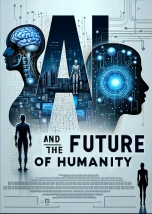
The film explores how artificial intelligence (AI) is catching up to us in ways once thought to be uniquely human: empathy, emotional intelligence and creativity. AI has the potential to reshape every aspect of our world – but most of us are unaware of what looms on the horizon. This documentary shows viewers what they need to know about a field that is advancing at a dizzying pace, often away from the public eye. Have AI the power to disconnect us from fellow humans? What does it mean when AI makes art? Can really AI interpret and understand human emotions? How is it possible that AI creates sophisticated neural networks that mimic the human brain? The documentary includes interviews with global leaders, commentators and innovators from the AI field, including Geoff Hinton, Yoshua Bengio, Ray Kurzweil and Douglas Coupland, who highlight some of the innovative and cutting-edge AI technologies that are changing our world.
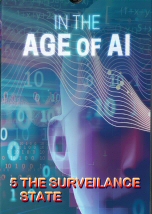
Frequent security expos feature companies like Megvii and its facial- recognition technology. They show off cameras with A.I. that can track cars, and identify individuals by face, or just by the way they walk. In China it's been projected that over 600 million cameras will be deployed by 2020. Here, they may be used to discourage jaywalking, but they also serve to remind people that the state is watching. Matching with the most advanced artificial intelligence algorithm, they can actually use this data, real-time data, to pick up a face or pick up a action. A.I. is a technology that can be used for good and for evil. So, how do governments limit themselves in, on the one hand, using this A.I. technology and the database to maintain a safe environment for its citizens, but not to encroach on a individual's rights and privacies?
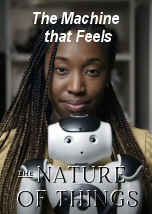
Marcus Du Sautoy wants to find out how close we are to creating machines that can think like us: robots or computers that have artificial intelligence. His journey takes him to a strange and bizarre world where AI is now taking shape. Marcus meets two robots who are developing their own private language, and attempts to communicate to them. He discovers how a super computer beat humans at one of the toughest quiz shows on the planet, Jeopardy". And finds out if machines can have creativity and intuition like us. Marcus is worried that if machines can think like us, then he will be out of business. But his conclusion is that AI machines may surprise us with their own distinct way of thinking.














‘Eternal You’ raises profound questions about the ethics of commodifying grief and the psychological consequences of defying traditional notions of mortality. Does interacting with a digital echo of a loved one aid the healing process, or does it make letting go even harder? As we stand on the cusp of unprecedented technological possibilities, this documentary challenges us to consider whether we truly want—and are ready for—this new reality.