




Last Watched

"Einstein"  Sort by

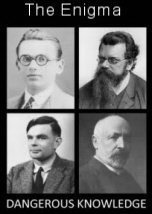
Dangerous Knowledge: The Enigma

   2007    Science
brilliant mathematicians whose genius has profoundly affected us, but which tragically drove them insane and eventually led to them all committing suicide. Kurt Gödel, the introverted confidant of Einstein, proved that there would always be problems which were outside human logic. His life ended in a sanatorium where he starved himself to death. Finally, Alan Turing, the great Bletchley Park code breaker, father of computer science and homosexual, died trying to prove that some things are fundamentally unprovable.
Series: Dangerous knowledge
Atom: The Clash of Titans

   2007    Science
Author and nuclear physicist Professor Jim Al-Khalili looks at what led to the discovery that everything is made of atoms. The programme looks at how the discovery affected the scientific world including the atomic energy theories of Albert Einstein and Werner Heisenberg and quantum mechanics
Series: Atom

Einstein Nightmare

   2014    Science
Professor Jim Al-Khalili investigates the most accurate and yet perplexing scientific theory ever - quantum physics. At the beginning of the 20th century scientists were led into the hidden workings of matter, into the sub-atomic building blocks of the world around us. They discovered phenomena unlike any encountered before - a realm where things can be in many places at once, where chance and probability call the shots and where reality appears to only truly exist when we observe it. Albert Einstein hated the idea that nature, at its most fundamental level, is governed by chance. Jim reveals how, in the 1930s, Einstein thought he'd found a fatal flaw in quantum physics because it implies that sub-atomic particles can communicate faster than light in defiance of the theory of relativity. In the 1960s the scientist John Bell showed there was a way to test if Einstein was right and quantum mechanics was actually mistaken. Jim repeats this critical experiment - with shocking results.
Series: The Secrets of Quantum Physics

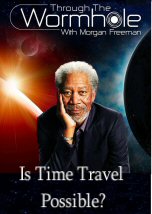
Is Time Travel Possible

   2011    Science
Einstein's world-shaking Theory of Relativity says that time travel is perfectly possible -- if you're going forward in time. Finding a way to travel backwards requires breaking the speed of light, which so far seems impossible. But now, strange-but-true phenomena such as quantum nonlocality (where particles instantly teleport across vast distances) may give us a way to make the dream of traveling back and forth through time a reality. Step into a time machine and rewrite history, bring loved ones back to life, control our destinies. But if succeed, what are the consequences of such freedom? Will we get trapped in a plethora of paradoxes and multiple universes that will destroy the fabric of the universe?
Series: Through the Wormhole

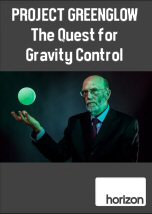
Project Greenglow The Quest for Gravity Control

   2016    Science
For centuries, the precise workings of gravity have confounded the greatest scientific minds - from Newton to Faraday and Einstein - and the idea of controlling gravity has been seen as little more than a fanciful dream. Yet in the mid 1990s, UK defence manufacturer BAE Systems began a ground-breaking project code-named Greenglow. Nasa was simultaneously running its own Breakthrough Propulsion Physics Project". It was concerned with potential space applications of new physics, including concepts like 'faster-than-light travel' and 'warp drives'. Looking into the past and projecting into the future, Horizon explores science's long-standing obsession with the idea of gravity control. It looks at recent breakthroughs in the search for loopholes in conventional physics and examines how the groundwork carried out by Project Greenglow has helped change our understanding of the universe. Gravity control may sound like science fiction, but the research that began with Project Greenglow is very much ongoing, and the dream of flying cars and journeys to the stars no longer seems quite so distant.

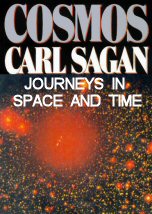
Journeys in Space and Time

   1980    Science
Ideas about time and space are explored in the changes that constellations undergo over time, the redshift and blue shift measured in interstellar objects, time dilation in Albert Einstein's theory of relativity, the designs of both Leonardo da Vinci and spacecraft that could travel near light speed, time travel and its hypothetical effects on human history, the origins of the Solar System, the history of life, and the immensity of space. In Cosmos Update, the idea of faster-than-light travel by wormholes (researched by Kip Thorne and shown in Sagan’s novel Contact) is discussed.
Series: Cosmos
Breakthrough

Breakthrough

2019  Medicine
The Art of Russia

The Art of Russia

2009  Art
The Hunt

The Hunt

2015  Nature
Clarkson Farm

Clarkson Farm

2021  Nature
The Story of Science

The Story of Science

2010  History
Asia

Asia

2024  Nature
Wild South America

Wild South America

2005  Nature