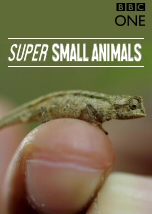
From a primate that’s no bigger than a mouse, to a chameleon that can fit on your fingertip, the natural world is full of fantastically small animals. Biologist Patrick Aryee explores the fascinating secrets behind these miniature marvels and shows that they’re not the underdogs you might think they are. Super Small Animals follows him as he meets the leading experts on these pint sized superstars, and finds out what makes them some of the most successful on the planet. First up, he reveals the huge benefits that being small can bring. There’s the little lemur whose diminutive frame helps it to exploit a unique gap in the eco-system, the tiny hummingbird that uses its size to out-maneuver the competition, and the world’s smallest seahorse that never has to leave home. He also explores why small animals are proportionally the strongest in the world, and introduces a peanut-sized beetle that can pull over a thousand times its own weight. Next he explores the challenges that animals face when they shrink in size, and the ingenious ways they overcome them. We find out how the smallest armadillo in the world manages to control its temperature in the searing desert sun, and the how the world’s smallest fish can survive in nothing more than a puddle, because it never really grows up. Patrick meets a secretive hippo that lives in the dense jungle, and looks like it’s been shrunk in the wash, and some of the world’s smallest snakes that give birth to enormous babies. He also meets a scientist that studies how really tiny spiders have a surprising trick that enables them to travel an incredible 40 miles per day, using almost no energy. Then there are the animals that refuse to be pigeon holed as small, and manage to punch way above their weight. He puts some astonishing invertebrates to the test, to see how they work together to become much bigger than the sum of their parts and meets a pint-sized predator that takes on some of the largest and most dangerous creatures on the planet, getting hands on to discover how its build helps it to be brave. Finally he uncovers the incredible lengths that deep sea anglerfish go to in order to be big and small at the same time, and has an endearing encounter with a tiny carnivore that manages to be small in just one direction. Whether their size helps them to hunt, hide or survive, all these remarkable animals prove that good things really do come in small packages.
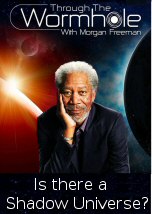
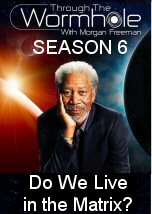
Our universe seems real. But what if it’s a videogame? Scientists in a variety of fields are taking seriously the possibility that we live in a virtual reality. Maybe the Big Bang was just the moment someone flipped the switch and turned on our universe. Maybe what looks random has already been programmed to happen. If some advanced civilization did design and program our universe, would we ever know? Scientists are looking for glitches in the laws of the universe that may uncover its hidden code.
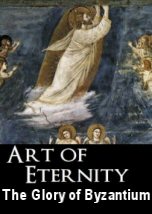
Andrew Graham-Dixon travels to Istanbul to immerse himself in the tumultuous world of the Byzantine Empire. He decodes the iconography of the art of the period and explains its continuing relevance.
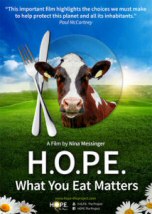
Half of the population in Western society suffers from being overweight. Cardio-vascular diseases, diabetes and cancer are epidemic. Our meat consumption has quintupled over the past 50 years. 65 billion land animals are being slaughtered every year for food consumption. One third of the global grain production is fed to animals for fattening while 1.8 billion people worldwide suffer from hunger and starvation. Can there really be a solution to all these problems? H.O.P.E. is a life-changing documentary uncovering and revealing the effects of our typical Western diet high in animal-based foods. It contrasts the limited interests of the pharmaceutical and agricultural industry with the all-encompassing interests of living beings on this planet and with the power of responsible consumer action. H.O.P.E. is an urgent call to action to all of us to commit to a change towards sustainability and safeguarding our living environment.
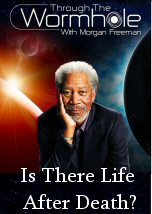
Everyone from the most simple-minded to the deepest thinking has pondered a question that strikes at the core of our existence: Is there life after death? What happens to the soul after we die? People who have had near-death experiences claim to have visited the other side before getting yanked back into consciousness. Now, some of the brightest minds in science are trying to understand how life can persist beyond the physical and what will it look like. It might be a quantum state based on the fundamental laws of the universe. Ultimately, it is a journey that struggles to decode the most complicated instrument in the universe: the human brain.
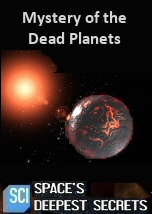
The season 8 of Space Deepest Secrets shares the stories of deep-space explorers who are risking their careers, and even their lives, to lead humanity to worlds yet to be seen. In the first episode, astronomers are laying the groundwork to locate a new planet for the human race to inhabit, and the more alien worlds they discover and encounter, the more they unmask the mysterious and truly destructive nature of the cosmos.









First up, he reveals the huge benefits that being small can bring. There’s the little lemur whose diminutive frame helps it to exploit a unique gap in the eco-system, the tiny hummingbird that uses its size to out-maneuver the competition, and the world’s smallest seahorse that never has to leave home. He also explores why small animals are proportionally the strongest in the world, and introduces a peanut-sized beetle that can pull over a thousand times its own weight.
Next he explores the challenges that animals face when they shrink in size, and the ingenious ways they overcome them. We find out how the smallest armadillo in the world manages to control its temperature in the searing desert sun, and the how the world’s smallest fish can survive in nothing more than a puddle, because it never really grows up. Patrick meets a secretive hippo that lives in the dense jungle, and looks like it’s been shrunk in the wash, and some of the world’s smallest snakes that give birth to enormous babies. He also meets a scientist that studies how really tiny spiders have a surprising trick that enables them to travel an incredible 40 miles per day, using almost no energy.
Then there are the animals that refuse to be pigeon holed as small, and manage to punch way above their weight. He puts some astonishing invertebrates to the test, to see how they work together to become much bigger than the sum of their parts and meets a pint-sized predator that takes on some of the largest and most dangerous creatures on the planet, getting hands on to discover how its build helps it to be brave. Finally he uncovers the incredible lengths that deep sea anglerfish go to in order to be big and small at the same time, and has an endearing encounter with a tiny carnivore that manages to be small in just one direction.
Whether their size helps them to hunt, hide or survive, all these remarkable animals prove that good things really do come in small packages.