The season 8 of Space Deepest Secrets shares the stories of deep-space explorers who are risking their careers, and even their lives, to lead humanity to worlds yet to be seen. In the first episode, astronomers are laying the groundwork to locate a new planet for the human race to inhabit, and the more alien worlds they discover and encounter, the more they unmask the mysterious and truly destructive nature of the cosmos.
After eight grueling years of hunting in the hot, wind-scoured desert of central Africa, an international team of researchers has uncovered one of the most sensational fossil finds in living memory: the well-preserved 7 million years old skull of a chimp-size animal, probably a male, that doesn't fit any known species. According to paleontologist Michel Brunet of the University of Poitiers in France, whose team reported the find in Nature last week, there is no way it could have been an ape of any kind. It was almost certainly a hominid — a member of a subdivision of the primate family whose only living representative is modern man.
Andrew Graham-Dixon travels to Istanbul to immerse himself in the tumultuous world of the Byzantine Empire. He decodes the iconography of the art of the period and explains its continuing relevance.
How should art depict the relationship between man and God? How can art best express eternal values? Can you and should you portray the face of Christ? For over 1,000 years these were some of the questions which taxed the minds of the greatest artists of the early West. In this three-part series, art historian Andrew Graham-Dixon sets out to unravel the mysteries of art from the pre-perspective era". In the first episode, Andrew traces the beginnings of Christian art in the declining Roman Empire, Egypt and medieval France, and reveals the ideas which lay behind the transition
Beneath Jupiter's swirling clouds lie our solar system's deepest secrets: from its violent youth, through the birth of life to the death of the sun. Now, scientists are unlocking these secrets and discovering that every living thing exists thanks to Jupiter.
What was the Wehrmacht? A group of obedient yeasayers? A murdering band of thugs? An army of millions of abused young men? This series in 5 parts provides differentiated and conclusive answers based on the latest historical and comprehensive investigative research, bringing many new facts to light – among them documents proving for the first time ever, what many among the officers actually thought. Blitzkrieg, the lightning war, in German incorporate modern weapons and vehicles as a method to help avoid the stalemate of trench warfare and linear warfare in future conflicts. The first practical implementations of these concepts coupled with modern technology were instituted by the Wehrmacht in the opening theatres of World War II. The strategy was particularly effective to Germany in the invasions of Western Europe and initial operations in the Soviet Union. These operations were dependent on surprise penetrations, general enemy unpreparedness and an inability to react swiftly enough to German offensive operations.




















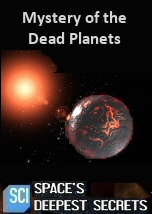











In the first episode, astronomers are laying the groundwork to locate a new planet for the human race to inhabit, and the more alien worlds they discover and encounter, the more they unmask the mysterious and truly destructive nature of the cosmos.