From a primate that’s no bigger than a mouse, to a chameleon that can fit on your fingertip, the natural world is full of fantastically small animals. Biologist Patrick Aryee explores the fascinating secrets behind these miniature marvels and shows that they’re not the underdogs you might think they are. Super Small Animals follows him as he meets the leading experts on these pint sized superstars, and finds out what makes them some of the most successful on the planet. First up, he reveals the huge benefits that being small can bring. There’s the little lemur whose diminutive frame helps it to exploit a unique gap in the eco-system, the tiny hummingbird that uses its size to out-maneuver the competition, and the world’s smallest seahorse that never has to leave home. He also explores why small animals are proportionally the strongest in the world, and introduces a peanut-sized beetle that can pull over a thousand times its own weight. Next he explores the challenges that animals face when they shrink in size, and the ingenious ways they overcome them. We find out how the smallest armadillo in the world manages to control its temperature in the searing desert sun, and the how the world’s smallest fish can survive in nothing more than a puddle, because it never really grows up. Patrick meets a secretive hippo that lives in the dense jungle, and looks like it’s been shrunk in the wash, and some of the world’s smallest snakes that give birth to enormous babies. He also meets a scientist that studies how really tiny spiders have a surprising trick that enables them to travel an incredible 40 miles per day, using almost no energy. Then there are the animals that refuse to be pigeon holed as small, and manage to punch way above their weight. He puts some astonishing invertebrates to the test, to see how they work together to become much bigger than the sum of their parts and meets a pint-sized predator that takes on some of the largest and most dangerous creatures on the planet, getting hands on to discover how its build helps it to be brave. Finally he uncovers the incredible lengths that deep sea anglerfish go to in order to be big and small at the same time, and has an endearing encounter with a tiny carnivore that manages to be small in just one direction. Whether their size helps them to hunt, hide or survive, all these remarkable animals prove that good things really do come in small packages.
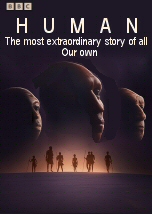
Spanning five gripping episodes presented together in one seamless video, this sweeping journey explores 300,000 years of human evolution, revealing groundbreaking discoveries that are reshaping everything we thought we knew about our origins. From the first appearance of Homo sapiens in Africa—at a time when at least six other human species walked the Earth—to the dramatic encounters with Neanderthals and the mysteries of their disappearance, each chapter uncovers the epic struggle for survival and dominance. As the Ice Age grips the planet, humanity pushes into the Americas, braving the harshest conditions in history. Finally, as the ice recedes, a transformation begins: the shift from wandering hunters to the builders of the first permanent settlements. This story brings to life the triumphs, dangers, and defining moments that made us who we are today.
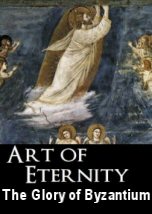
Andrew Graham-Dixon travels to Istanbul to immerse himself in the tumultuous world of the Byzantine Empire. He decodes the iconography of the art of the period and explains its continuing relevance.
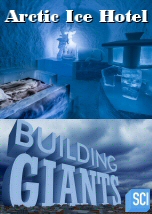
Deep inside the arctic circle, this team of elite engineers Is embarking on an epic endeavor. They're attempting to build a unique structure, one of the largest snow and ice hotels in the world. Constructed from more than 15,000 tons of snow and ice, spanning over 26,000 square feet, they are pushing to complete this ambitious build in an unheard-of six weeks. Engineers brave the cold and nights of the Arctic Circle to build the Ice Hotel. Using cutting-edge tech, they'll construct this modern marvel in just six weeks.
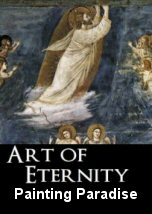
How should art depict the relationship between man and God? How can art best express eternal values? Can you and should you portray the face of Christ? For over 1,000 years these were some of the questions which taxed the minds of the greatest artists of the early West. In this three-part series, art historian Andrew Graham-Dixon sets out to unravel the mysteries of art from the pre-perspective era". In the first episode, Andrew traces the beginnings of Christian art in the declining Roman Empire, Egypt and medieval France, and reveals the ideas which lay behind the transition
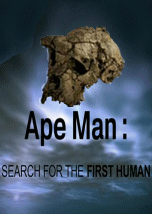
After eight grueling years of hunting in the hot, wind-scoured desert of central Africa, an international team of researchers has uncovered one of the most sensational fossil finds in living memory: the well-preserved 7 million years old skull of a chimp-size animal, probably a male, that doesn't fit any known species. According to paleontologist Michel Brunet of the University of Poitiers in France, whose team reported the find in Nature last week, there is no way it could have been an ape of any kind. It was almost certainly a hominid — a member of a subdivision of the primate family whose only living representative is modern man.












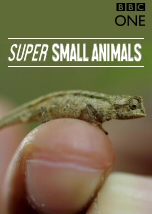




First up, he reveals the huge benefits that being small can bring. There’s the little lemur whose diminutive frame helps it to exploit a unique gap in the eco-system, the tiny hummingbird that uses its size to out-maneuver the competition, and the world’s smallest seahorse that never has to leave home. He also explores why small animals are proportionally the strongest in the world, and introduces a peanut-sized beetle that can pull over a thousand times its own weight.
Next he explores the challenges that animals face when they shrink in size, and the ingenious ways they overcome them. We find out how the smallest armadillo in the world manages to control its temperature in the searing desert sun, and the how the world’s smallest fish can survive in nothing more than a puddle, because it never really grows up. Patrick meets a secretive hippo that lives in the dense jungle, and looks like it’s been shrunk in the wash, and some of the world’s smallest snakes that give birth to enormous babies. He also meets a scientist that studies how really tiny spiders have a surprising trick that enables them to travel an incredible 40 miles per day, using almost no energy.
Then there are the animals that refuse to be pigeon holed as small, and manage to punch way above their weight. He puts some astonishing invertebrates to the test, to see how they work together to become much bigger than the sum of their parts and meets a pint-sized predator that takes on some of the largest and most dangerous creatures on the planet, getting hands on to discover how its build helps it to be brave. Finally he uncovers the incredible lengths that deep sea anglerfish go to in order to be big and small at the same time, and has an endearing encounter with a tiny carnivore that manages to be small in just one direction.
Whether their size helps them to hunt, hide or survive, all these remarkable animals prove that good things really do come in small packages.