In early 2003, a team of Italian thieves orchestrated one of the boldest robberies in modern history: The disappearance of hundreds of millions in diamonds from the heavily guarded vaults of Antwerp. Through unprecedented access to archival footage, police records, and newly recorded interviews, the film reconstructs the intricate planning that allowed the so-called School of Turin to bypass what was believed to be impenetrable security. Told with a balance of suspense and reflection, it confronts investigators with the alleged mastermind, weaving a story of ambition, betrayal, and the mystery of gems never recovered. Beyond the spectacular details of the heist, it examines the toll on jewelers, insurers, and investigators, while questioning how ingenuity, greed, and betrayal blur the lines between admiration and crime.
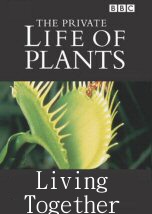
The fifth programme explores the alliances formed between the animal and plant worlds. Attenborough dives into Australia's Great Barrier Reef and contrasts the nocturnal feeding of coral, on microscopic creatures, with its daytime diet of algae. Some acacias are protected by ants, which will defend their refuge from any predator. Besides accommodation, the guards are rewarded with nectar and, from certain species, protein for their larvae as well. Fungi feed on plants but can also provide essential nutriment to saplings (Mycorrhiza). The connection is never broken throughout a tree's life and a quarter of the sugars and starches produced in its leaves is channelled back to its fungal partners. Meanwhile, fungi that feed on dead wood leave a hollow trunk, which also benefits the tree. Orchids enjoy a similar affiliation. Lichens are the product of a relationship between fungi and a photosynthetic associate, usually algae. They are extremely slow-growing, and a graveyard is the perfect location to discover their exact longevity. Mistletoe is a hemiparasite that obtains its moisture from a host tree, while using own leaves to manufacture food. Its seeds are deposited on another by the mistletoe tyrannulet, following digestion of the fruit. The dodder (Cuscuta) is also parasitic, generally favouring nettles, and siphons its nourishment through periodic 'plugs' along its stem. The rafflesia has no stem or leaves and only emerges from its host in order to bloom — and it produces the largest single flower: one metre across.
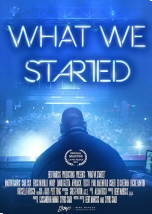
Aims to establish itself as the defining film of the electronic music genre. Through an artfully crafted narrative and stunning visual techniques, the film delves into the highly popular world of electronic dance music, providing backdoor access to a widely misunderstood, self-driven and well-insulated industry on its way to global domination. The narrative leads with the legacy of Carl Cox and following with newcomer, Martin Garrix, as the film explores the parallels between Cox's undeniable influence and hand in the evolution of dance music and Garrix's formation of mainstream genres and global fame.
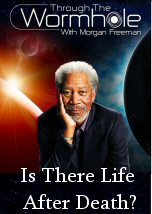
Everyone from the most simple-minded to the deepest thinking has pondered a question that strikes at the core of our existence: Is there life after death? What happens to the soul after we die? People who have had near-death experiences claim to have visited the other side before getting yanked back into consciousness. Now, some of the brightest minds in science are trying to understand how life can persist beyond the physical and what will it look like. It might be a quantum state based on the fundamental laws of the universe. Ultimately, it is a journey that struggles to decode the most complicated instrument in the universe: the human brain.
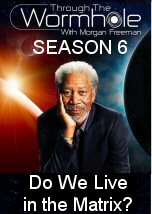
Our universe seems real. But what if it’s a videogame? Scientists in a variety of fields are taking seriously the possibility that we live in a virtual reality. Maybe the Big Bang was just the moment someone flipped the switch and turned on our universe. Maybe what looks random has already been programmed to happen. If some advanced civilization did design and program our universe, would we ever know? Scientists are looking for glitches in the laws of the universe that may uncover its hidden code.
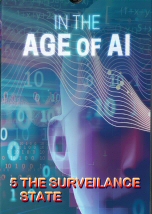
Frequent security expos feature companies like Megvii and its facial- recognition technology. They show off cameras with A.I. that can track cars, and identify individuals by face, or just by the way they walk. In China it's been projected that over 600 million cameras will be deployed by 2020. Here, they may be used to discourage jaywalking, but they also serve to remind people that the state is watching. Matching with the most advanced artificial intelligence algorithm, they can actually use this data, real-time data, to pick up a face or pick up a action. A.I. is a technology that can be used for good and for evil. So, how do governments limit themselves in, on the one hand, using this A.I. technology and the database to maintain a safe environment for its citizens, but not to encroach on a individual's rights and privacies?







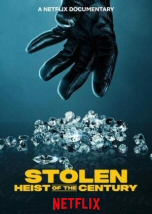


Told with a balance of suspense and reflection, it confronts investigators with the alleged mastermind, weaving a story of ambition, betrayal, and the mystery of gems never recovered. Beyond the spectacular details of the heist, it examines the toll on jewelers, insurers, and investigators, while questioning how ingenuity, greed, and betrayal blur the lines between admiration and crime.