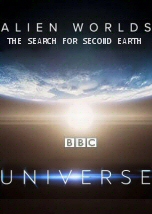
Humans have long gazed up at the night sky, wondering whether other lifeforms and intelligences could be thriving on worlds far beyond our own. But over the last few decades, ultra-sensitive telescopes and dogged detective work have transformed alien planet-hunting from science fiction into hard fact. We expected to find worlds similar to the planets in our own solar system, but we instead discovered a riot of exotic worlds. Vivid animation based on data from the most successful planet hunter of them all, the Kepler space telescope, brings these worlds into view: puffy planets with the density of polystyrene, unstable worlds orbiting two suns and 1,000-degree, broiling gas giants with skies whipped into titanic winds. But perhaps the most startling discovery was the number of worlds that may be contenders for a second Earth, at the right distance from their sun to have that ingredient so crucial for life as we know it, liquid water. Amongst them, we witness the most tantalizing discovery of all: a so-called ‘super-Earth’, situated in the Goldilocks zone - the area just the right distance from a sun to potentially support life - and with the faint signal of water in its atmosphere.
The fiercest, strangest, and wildest creatures in the animal kingdom face off in a countdown of the most incredible animal moments ever recorded. Across arid deserts, through dense rainforests, and into the deepest of oceans, witness remarkable scenes of animal activity, from deadly showdowns to wild romances.
Atheist and scientist Richard Dawkins visits England, America and Israel interveiwing prominant people of faith; Islamic, Hasidic Jews, and the new Christian sects popping up throughout the world, and expressing his view of the extent to which this fanaticism has degraded our civilisation, and will continue to degrade it. "The God Delusion" explores the unproven beliefs that are treated as factual by many religions and the extremes to which some followers have taken them. Dawkins opens the programme by describing the "would-be murderers ... who want to kill you and me, and themselves, because they're motivated by what they think is the highest ideal." Dawkins argues that "the process of non-thinking called faith" is not a way of understanding the world, but instead stands in fundamental opposition to modern science and the scientific method, and is divisive and dangerous.
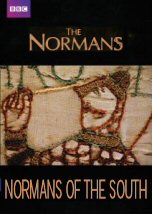
Professor Robert Bartlett explores the impact of the Normans on southern Europe and the Middle East. The Normans spread south in the 11th century, winning control of southern Italy and the island of Sicily. There they created their most prosperous kingdom, where Christianity and Islam co-existed in relative harmony and mutual tolerance. It became a great centre of medieval culture and learning. But events in the Middle East provoked the more aggressive side of the Norman character. In 1095, the Normans enthusiastically answered the Pope's call for holy war against Islam and joined the first crusade. They lay siege to Jerusalem and eventually helped win back the holy city from the muslims. This bloody conquest left a deep rift between Christianity and Islam which is still being felt to this day.
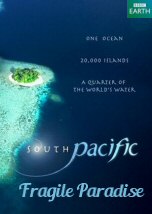
The extraordinary wildlife, culture and history of this immense, fascinating ocean and its myriad islands are revealed in stunning detail. With its coral reefs, turquoise lagoons and dramatic oceanic atolls, the South Pacific is the archetypal paradise. It is still relatively healthy and teeming with fish, but it is a fragile paradise. International fishing fleets are taking a serious toll on the sharks, albatross and tuna, and there are other insidious threats to these bountiful seas. We look at what is being done to preserve the ocean and its wildlife.
Cabeza de Vaca was shipwrecked off the coast of Texas in 1528 and lived with Indians for eight years. Upon his return to Spain, he wrote a book based on his experiences. His tale is one of empathy and respect for the Indians. Follow along as Michael Wood traces his journey.



















But perhaps the most startling discovery was the number of worlds that may be contenders for a second Earth, at the right distance from their sun to have that ingredient so crucial for life as we know it, liquid water. Amongst them, we witness the most tantalizing discovery of all: a so-called ‘super-Earth’, situated in the Goldilocks zone - the area just the right distance from a sun to potentially support life - and with the faint signal of water in its atmosphere.