Following engineers and scientists on a groundbreaking mission as they build, test and launch the James Webb Space Telescope, the most powerful observatory ever constructed, and discovers the astonishing cosmological enigmas it will investigate. Using the latest CGI animation technology, the film will follow the journey and share the incredible cosmological images and mysteries that scientists believe the telescope will capture. This super-telescope is the next generation successor to the Hubble Space Telescope, with a mirror 6 times bigger. It will also be able to peer back in time. For the first time in space exploration, scientists will be able to explore the formation of the first stars and galaxies and search for planets that can support life.
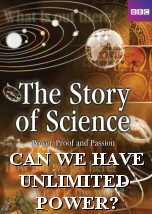
We are the most power-hungry generation that has ever lived. This film tells the story of how that power has been harnessed - from wind, steam and from inside the atom. In the early years the drive for new sources of power was led by practical men who wanted to make money. Their inventions and ideas created fortunes and changed the course of history, but it took centuries for science to catch up, to explain what power is, rather than simply what it does. This search revealed fundamental laws of nature which apply across the universe, including the most famous equation in all of science, e=mc2.
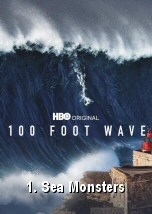
Follows the decade-long odyssey of big-wave pioneer Garrett McNamara who, after visiting Nazaré, a small fishing village in Portugal, helped push the sport beyond the realm of imagination. In the first episode, following a massive win at a competition at Maui's world-famous Jaws surf break in 2003, professional surfer Garrett McNamara comes out of retirement to pursue his lifelong dream of riding a 100-foot wave.
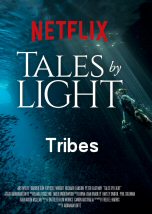
The sixth and last episode of the series follows photographer Art Wolfe as he documents the world's cultures, including the Surma of Ethiopia and the masked mud men and Huli clans of Papua, New Guinea.
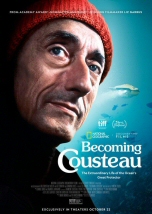
A look at the life, passions, achievements and tragedies surrounding the famous Jacques Cousteau, featuring an archive of his newly restored footage. Its focus will be on the inventor-explorer-environmentalist-filmmaker revolution, i.e., giving mankind the resources to explore the ocean with the Aqua Lung, calling attention to ocean pollution, and his long-time collaboration.
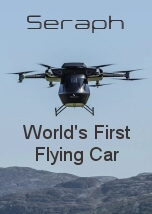
The world’s first flying car might be on the market sooner than we think, and as a new, cutting-edge invention goes through a series of gruelling tests, behind-the-scenes access reveals the secrets of this sci-fi innovation. With the ability to carry up to 250 kg (551 lb) of payload at speeds up to 80 km/h (50 mph), the 12-rotor Seraph is developed by the Bristol-based company aptly named Vertical Aerospace, and is the Britain's leading electric VTOL (vertical take-off and landing) air taxi candidate.













This super-telescope is the next generation successor to the Hubble Space Telescope, with a mirror 6 times bigger. It will also be able to peer back in time. For the first time in space exploration, scientists will be able to explore the formation of the first stars and galaxies and search for planets that can support life.