

Last Watched

Let there be Life

   2014    Science
Professor of physics Jim Al-Khalili investigates the most accurate and yet perplexing scientific theory ever - quantum physics, the perplexing theory of sub-atomic particles. Turning his attention to the world of nature, can quantum mechanics explain the greatest mysteries in biology? The European robin navigates using one of the most bizarre effects in physics - quantum entanglement, a process which seems to defy common sense. Jim finds that even the most personal of human experiences - our sense of smell - is touched by ethereal quantum vibrations. According to new experiments it seems that our quantum noses are listening to smells. Jim discovers that the most famous law of quantum physics - the uncertainty principle - is obeyed by plants and trees as they capture sunlight during the vital process of photosynthesis. Jim wonders if the strange laws of the sub-atomic world, which allow objects to tunnel through impassable barriers in defiance of common sense, could effect the mechanism by which living species evolve?
Series: The Secrets of Quantum Physics

Vice: Killer Kids

   2013    Culture
Follows Vice journalists Shane Smith, Ryan Duffy and Suroosh Alvi as they go to different parts of the world telling us surprising and shocking stories. In Afghanistan, the Taliban has ramped up its use of children in suicide bombing terrorist attacks. Ranging from teenagers to children as young as six years old, they are routinely manipulated and lied to as they are sent to blow up their targets. The Philippines are the most dangerous place in the world to run for office, as politicians are routinely killed by their rivals.
Series: Vice

Meat-Eaters

   1998    Nature
This episode examines those birds whose sustenance comes from flesh and their methods of hunting. In New Zealand, Sir Attenborough observes Keas, parrots that do not eat meat exclusively, raiding a shearwater's burrow for a chick. However, it is the dedicated birds of prey, such as owls, buzzards, eagles, falcons and vultures, to which much of the programme is devoted. In order to spot and pursue their victims, senses of sight and hearing are very acute. Vultures are the exception, in that they eat what others have left, and once a carcass is found, so many birds descend on it that the carrion seems submerged beneath them. The Turkey Vulture is an anomaly within its group, as it also has a keen sense of smell. Eagles defend their territory vigorously, and a pair of sea eagles are shown engaging in an aerial battle. The Galápagos Hawk hunts Marine Iguanas, but can only do so when its quarry is vulnerable, during the breeding season. The African Harrier Hawk has adapted to extracting burrowing animals by virtue of an especially long, double-jointed pair of legs. By contrast, a shrike is not equipped with the requisite sharp beak and talons needed for butchery, and so dismembers its kill by impaling it on the thorns of acacias. The Lammergeier eats bones, and will drop them on to rocks from a great height in order to break them down to a digestible size. Also featured are the Eurasian Sparrowhawk, Goshawk and Peregrine Falcon.
Series: The Life of Birds

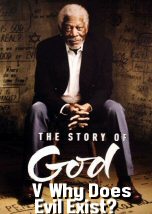
Why Does Evil Exist

   2016    Culture
In the fifth episode of the series, Morgan Freeman sets to examine the nature of evil, visiting a serial killer in prison and witnessing an exorcism in India. He also explores ancient beliefs, including Zoroastrianism.
Series: The Story of God

Japan at War

       History
Japan's role in World War II gets a whole new perspective in this consisting entirely of full colour footage, including colour films from Japan that were recently discovered. As the visuals of the world war take on a new vivid immediateness, the story of the rise of the militarists in Japan is told through the personal writings of the Japanese themselves. From the first overconfident tastes of victory, to the devastating losses that led to an unthinkable defeat amidst the ruins, the Pacific Theater of World War II is told through the Japanese's eyes.

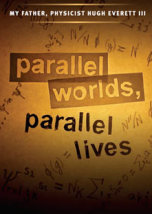
Parallel Worlds Parallel Lives

   2007    History
Mark Oliver Everett, singer of the band EELS, on his quest to get to know his later father, quantum physicist Hugh Everett III, who invented the Many Worlds theory. The film follows Mark on his journey across America, where he meets old friends and colleagues of his father. Hugh died of a heart attack in his home in 1982, where his body was found by 19-year-old Mark. Even though they had lived in the same house, the two of them were alienated. Only by entering the paradoxical world of quantum mechanics can Mark hope to understand why he was such a stranger to his own father.