


Last Watched

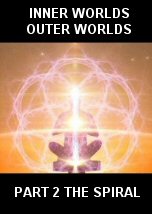
The Spiral

   2012    Science
The Pythagorian philosopher Plato hinted enigmatically that there was a golden key that unified all of the mysteries of the universe. It is this golden key that we will return to time and again throughout our exploration. The golden key is the intelligence of the logos, the source of the primordial om. One could say that it is the mind of God. With our limited senses we are observing only the outer manifestation of the hidden mechanics of self similarity. The source of this divine symmetry is the greatest mystery of our existence.
Series: Inner Worlds Outer Worlds
What Happened Before The Big Bang

   2010    Science
Where did everything in our universe come from? How did it all begin? For nearly a hundred years, we thought we had the answer: a big bang some 14 billion years ago. But now some scientists believe that was not really the beginning; our universe may have had a life before this violent moment of creation. Take the ultimate trip into the unknown, to explore a dizzying world of cosmic bounces, rips and multiple universes, and finds out what happened before the big bang. Horizon takes the ultimate trip into the unknown, to explore a dizzying world of cosmic bounces, rips and multiple universes, and finds out what happened before the big bang.

The Smartphone

   2019    Technology
Dial in to the fascinating history of the smartphone, from its roots in Morse Code to the latest models. Discover how the next generation of Smartphones will allow us to communicate through them just by thinking.
For most of history, we were isolated from the rest of humankind, but the urge to communicate with one another was so powerful that it changed how we interact and gave us a new interface with the world. The story of how we got here is full of the most astonishing twists and unlikely turns to create a device that put the whole world in our hands, the smartphone.
Series: Breakthrough: The Ideas That Changed the World

Battle for the Himalayas: The Fight to Film Everest

   2015    History
Between the 1920s and the 1960s the world's great powers sent vast military-style expeditions to conquer the peaks of the Himalayas, with Everest at their head. This was a great game played - camera in hand - by Imperial Britain, Nazi Germany and superpower America. As a result, Himalayan mountaineering's most iconic, epic and tragic moments didn't just go down in history, but were caught on film - from the deaths of Mallory and Irvine on Everest in 1924, to Everest's final conquest in 1953 by Hillary and Tensing. Using footage never before seen on British television, this is the story how of how film-makers turned the great peaks into great propaganda.

Words on a Page

   2020    History
Writing itself is 5,000 years old, and for most of that time words were written by hand using a variety of tools. The Romans were able to run an empire thanks to documents written on papyrus. Scroll books could be made quite cheaply and, as a result, ancient Rome had a thriving written culture. With the fall of the Roman Empire, papyrus became more difficult to obtain. Europeans were forced to turn to a much more expensive surface on which to write: Parchment. Medieval handwritten books could cost as much as a house, they also represent a limitation on literacy and scholarship.
No such limitations were felt in China, where paper had been invented in the second century. Paper was the foundation of Chinese culture and power, and for centuries how to make it was kept secret. When the secret was out, paper mills soon sprang up across central Asia. The result was an intellectual flourishing known as the Islamic Golden Age. Muslim scholars made discoveries in biology, geology, astronomy and mathematics. By contrast, Europe was an intellectual backwater.
That changed with Gutenberg’s development of movable type printing. The letters of the Latin alphabet have very simple block-like shapes, which made it relatively simple to turn them into type pieces. When printers tried to use movable type to print Arabic texts, they found themselves hampered by the cursive nature of Arabic writing. The success of movable type printing in Europe led to a thousand-fold increase in the availability of information, which produced an explosion of ideas that led directly to the European Scientific Revolution and the Industrial Revolution that followed.
Series: The Secret History of Writing

Orders and Initiatives

   2005    History
Originally a Prisoner of War camp for Soviet soldiers, SS Commander Rudolf Hoss oversaw the transition of Auschwitz from a political camp to a place to murder thousands of people. In the Autumn of 1941,the Nazis were about to embark on the most crucial few months in the planning of what they called 'The Final Solution' - the extermination of the Jews.
Series: Auschwitz The Nazis and the Final Solution