







Last Watched

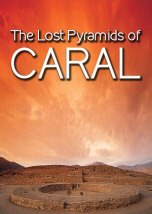
The Lost Pyramids of Caral

   2002    History
The magnificent ancient city of pyramids at Caral in Peru is a thousand years older than the earliest known civilisation in the Americas and, at 2,627 BC, is as old as the pyramids of Egypt. Many now believe it is the fabled missing link of archaeology - a 'mother city'. If so, then these extraordinary findings could finally answer one of the great questions of archaeology: why did humans become civilised?" For over a century, archaeologists have been searching for what they call a mother city. Civilisation began in only six areas of the world: Egypt, Mesopotamia, India, China, Peru and Central America. In each of these regions people moved from small family units to build cities of thousands of people. They crossed the historic divide, one of the great moments in human history. Why? To find the answer archaeologists needed to find a mother city - the first stage of city-building. Caral, is so much older than anything else in South America that it is a clear candidate to be the mother city. It also is in pristine condition. Nothing has been built on it at all. Instead laid out before the world is an elaborate complex of pyramids, temples, an amphitheatre and ordinary houses. Scientists developed a number of theories. Some said it was because of the development of trade, others that it was irrigation. Some even today believe it was all because of aliens. Gradually an uneasy consensus emerged. The key force common to all civilisations was warfare. Crucially, there is not the faintest trace of warfare at Caral; no battlements, no weapons, no mutilated bodies. Instead, Ruth's findings suggest it was a gentle society, built on commerce and pleasure. In one of the pyramids they uncovered beautiful flutes made from condor and pelican bones. They have also found evidence of a culture that took drugs and perhaps aphrodisiacs. Most stunning of all, they have found the remains of a baby, lovingly wrapped and buried with a precious necklace made of stone beads.
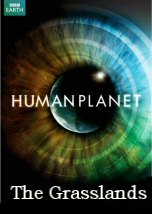
The Grasslands

   2011    Culture
Grasslands feed the world. Over thousands of years, we humans have learned to grow grains on the grasslands and domesticate the creatures that live there. Our success has propelled our population to almost seven billion people. But this episode reveals that, even today, life in the 'Garden of Eden' isn't always rosy. We walk with the Dorobo people of Kenya as they bravely attempt to scare off a pride of hungry lions from their freshly caught kill. We gallop across the Steppe with extraordinary Mongolian horsemen who were 'born in the saddle'. And in a perfect partnership with nature built up over generations Maasai children must literally talk to the birds! The honeyguide leads them to find sweet treats, but they'll have to repay the favour.
Series: Human Planet

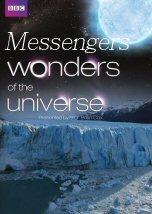
Messengers

   2011    Science
Professor Brian Cox travels from the fossils of the Burgess Shale to the sands of the oldest desert in the world to show how light holds the key to our understanding of the whole universe, including our own deepest origins. To understand how light holds the key to the story of the universe; you first have to understand its peculiar properties. Brian considers how the properties of light that lend colour to desert sands and the spectrum of a rainbow can lead to profound insights into the history and evolution of our universe. Finally, with some of the world's most fascinating fossils in hand, Brian considers how but for an apparently obscure moment in the early evolutionary history of life, all the secrets of light may have remained hidden. Because although the universe is bathed in light that carries extraordinary amounts of information about where we come from, it would have remained invisible without a crucial evolutionary development that allowed us to see. Only because of that development can we now observe, capture and contemplate the incredible wonders of the universe that we inhabit.
Series: Wonders of the Universe

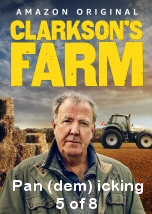
Pan(dem)icking

   2021    Nature
As Covid-19 puts Britain on lockdown, Jeremy Clarkson suddenly finds that his biggest worries aren’t all related to the upcoming lambing season. 'If you're involved in food production, you are key worker. We're gonna save the nation!... I've smoked a million cigarettes and I've had pneumonia. If I get it , there's not a lot of hope... Am I panic buying? I bought five tins of sardines the other day'.
Series: Clarkson Farm

What Have UFOs Done for Us

   2015    Culture
From unexplained flashes in the night sky to flying saucers, this episode delves into the mysterious world of UFOs. How our drive to explain these bizarre phenomena, and desire to discover little green men, has in fact transformed our understanding of the universe
Series: The Sky at Night

Snake Killers Honey Badgers of The Kalahari

   2007    Nature
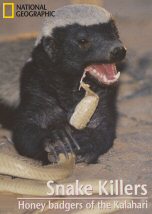
The honey badger looks like something you might buy in pet shop and give to children, but turns out to be one of the most violent and determined creatures ever to scuttle across the face of the earth. Nothing in the badger’s world-not even the badgers themselves-are safe from its remarkable ability to create havoc and cause harm. Like a meter long skunk with the brain of a shark the Honey Badger’s metabolism compels it to eat constantly and live on the run. Its diet is admirably inclusive ranging from insects to its own young. If an animal is too big to eat then the badger will fight it anyway, indeed it is this almost supernatural tenacity that compels you respect it, as well as yielding some of the most spectacular sequences in the film. Five foot long cobra sleeping in the top of tree? No problem, the badger scoots up and bites its head off. When an ailing badger is attacked by a full size leopard it takes the leopard over an hour to finish it off. When one is bitten in the face by a snake that can kill a man, it just lies down for a while and sleeps it off.
Leaving Neverland

Leaving Neverland

2019  Culture
First Life

First Life

2010  Science
Reel Rock

Reel Rock

2015  Culture
Living Universe

Living Universe

2018  Technology
Welcome to Earth

Welcome to Earth

2021  Nature
Tucci in Italy

Tucci in Italy

2025  Culture