One of the main battles of the Second World War took place inside the brain of a mathematician called Alan Turing. During the war, the allies' key objective was to crack the German army's encrypted communications code. Without a doubt, the key player in the game was this interdisciplinary scientist and a long-forgotten hero. Alan Turing's breakthroughs, his story and tragic destiny, gives us a chance to look at the Second World War from a different angle.
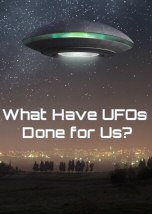
From unexplained flashes in the night sky to flying saucers, this episode delves into the mysterious world of UFOs. How our drive to explain these bizarre phenomena, and desire to discover little green men, has in fact transformed our understanding of the universe
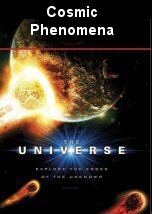
A variety of cosmic events have both helpful and harmful effects on life on Earth. From the beauty of the Aurora Borealis and rainbows to the dangers of UV radiation and cosmic rays, from the miracle of photosynthesis to the thrill of a meteor shower, this episode explores how the effects generated by the sun and other extra-solar sources can literally get under our skin, scramble our technology, make life possible and threaten our existence all at the same time
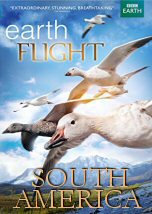
The documentary series gives a bird's-eye view of South America, as condors soar along the Andes, scarlet macaws explore the heart of the Amazon and hummingbirds and vultures see the continent's greatest sights. It is a journey that includes Machu Picchu, the Nasca Lines and the cities of Rio de Janeiro and Santiago. In Patagonia, giant petrels shadow killer whales as they hunt seals by stranding their huge bodies on the beach. At Iguassu Falls, dusky swifts dive through the cascades to huddle in communal roosts while hummingbirds bathe below. In a secret Andean location, condors soar in flocks over 40-strong and scavenge on casualties from herds of fighting guanacos. Elsewhere, a mother condor gently pushes her youngster to the edge of a 200-metre cliff, as flight school begins. Deep in the Amazon, macaws seek medicinal clay. They are joined by a host of secretive jungle animals, including spider monkeys and tapirs, all after the same remedy. In Peru, condors soar over fighting sea lions waiting for causalities and on a mass exodus north, birds converge on the Panama Canal. In Costa Rica, black vultures descend on turtles as they lay their eggs in the sand and pick off the eggs that ping-pong through the air.
Professor Brian Cox grapples with science's darker side, asking why, when science has done so much for us, it often gets such a bad press. Starting with the original Frankenstein - the grisly 19th century tale of George Foster's hanging and subsequent 'electrocution', Brian confronts the idea that science can go 'too far'. From the nuclear bomb to genetic modification, British science has always been at the cutting edge of discovery, but are British scientists feckless meddlers, or misunderstood visionaries whose gifts to humanity are corrupted by the unscrupulous?
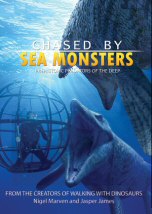
You will feel a lot more comfortable about going out for a swim or an afternoon boat ride knowing that such behemoths are extinct today!The Dunkleosteus is school bus-sized armored fish with razor sharp bladed jaws for cutting through anything in its path. The mighty Liopleurodon is a true monster, largest and most powerful of the Pliosaurs. The deadly Mosasaurs where the real sea serpents of their day, and some where large enough to dispatch an adult tyrannosaur easily.














Alan Turing's breakthroughs, his story and tragic destiny, gives us a chance to look at the Second World War from a different angle.