'It's alive!' Since Dr. Frankenstein spoke those famous words, we've been alternately enthralled and terrified by the idea of creating life in the lab. Now, a revolution in genetic engineering and thrilling innovations in synthetic biology are bringing that dream—or nightmare, as the case may be—closer to reality. New tools allow researchers to use cells to create their own DNA and edit it into existing genomes with more ease and less cost than ever before. Along with renewed hopes for treating some genetic diseases, there's serious talk of using the newest technologies to bring long-extinct animals back from the dead – like the team hoping to resurrect the woolly mammoth. Science fiction is quickly becoming science fact. Another daring genetic experiment to bioengineer animals could prevent Lyme disease. But the power to make life comes with deep ethical questions. What are the potential rewards—and dangers—of tinkering with nature? This films explores the benefits and the burden of risk surrounding the controversial new technology.
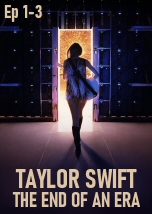
A record-breaking concert phenomenon comes alive through the eyes of Taylor Swift, blending electrifying performances with rare backstage access and intimate reflections from her closest collaborators. The film captures the scale, ambition, and emotional pulse of a tour that redefined modern live music, revealing the artistry, logistics, and personal moments behind a global cultural event. In the first three episodes, viewers witness the tour’s genesis and evolution: rehearsals take shape as preparations intensify for a landmark run at Wembley Stadium; a two-month break becomes a creative pivot to refresh the show and introduce The Tortured Poets Department; and as the tour returns to the U.S., Taylor looks back on her journey while planting the seeds for new surprises that keep each night feeling singular.
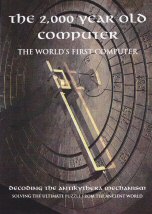
In 1901, a group of divers excavating an ancient Roman shipwreck near the island of Antikythera, off the southern coast of Greece, found a mysterious object - a lump of calcified stone that contained within it several gearwheels welded together after years under the sea. The 2,000-year-old object, no bigger than a modern laptop, is now regarded as the world's oldest computer, devised to predict solar eclipses and, according to recent findings, calculate the timing of the ancient Olympics. Following the efforts of an international team of scientists, the mysteries of the Antikythera Mechanism are uncovered, revealing surprising and awe-inspiring details of the object that continues to mystify
We are in the grip of an allergy epidemic. 50 years ago one in 30 were affected, but in Britain today it is closer to one in three. Why this should be is one of modern medicine's greatest puzzles. In search of answers, Horizon travels round the globe, from the remotest inhabited island to the polluted centres of California and the UK. We meet sufferers and the scientists who have dedicated their lives trying to answer the mystery of why we are becoming allergic to our world.
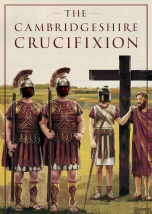
The documentary tells the story of the extremely rare discovery of evidence of Roman crucifixion, unearthed in a routine archaeological dig in the Cambridgeshire Fens. When human remains were found alongside a variety of Roman artifacts, none of the team at Albion Archaeology saw anything out of the ordinary. But once the bones were washed back at HQ, something highly unusual was uncovered: a nail through the heel bone of one of the individuals. Could this be evidence of a Roman crucifixion? When they did some research, they found that only one confirmed example had ever been unearthed before, discovered in the 1960s in Jerusalem. To find out more, they called in renowned osteoarchaeologist Dr Corinne Duhig to investigate. With exclusive access to Corinne’s investigation and the remains themselves, The Cambridgeshire Crucifixion sets out to find out who this person was, how they lived and why they were put to death in this notoriously gruesome way. We perform a CT scan, DNA and isotope analysis of the remains, and use them to create a cutting-edge virtual autopsy of the skeleton, conducted by Corinne and one of her former students, biologist Prof Ben Garrod. A supporting cast of expert contributors help to analyse the artefacts found at the Fenstanton site and reveal a compelling picture of life in Roman Britain in the 1st century CE. The film culminates in a world first: a full forensic facial reconstruction of a victim of Roman crucifixion, conducted by world-leading expert Joe Mullins.










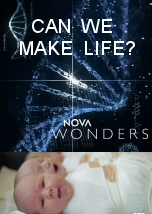




Along with renewed hopes for treating some genetic diseases, there's serious talk of using the newest technologies to bring long-extinct animals back from the dead – like the team hoping to resurrect the woolly mammoth. Science fiction is quickly becoming science fact. Another daring genetic experiment to bioengineer animals could prevent Lyme disease. But the power to make life comes with deep ethical questions. What are the potential rewards—and dangers—of tinkering with nature? This films explores the benefits and the burden of risk surrounding the controversial new technology.