The Vision After the Sermon, also known as Jacob Wrestling with the Angel, is a painting full of symbolism and mystery. But what does Gauguin’s famous work have to do with a 17-year-old girl called Madeleine, with Victor Hugo’s Les Miserables, and with sumo wrestlers? Waldemar Januszczak reveals all as he investigates Gauguin’s epic religious painting about good and evil, temptation and desire.
For thousands of years, mankind has found comfort in its presence. It's been a lantern for nighttime travellers, a timekeeper for farmers and a location finder for sailors at sea. For some cultures, it's even been a god. It's the only cosmic body ever visited by human beings. From afar, the Moon's luminance has captivated us since the beginning of time. And a closer look at the beacon in the dark sky reveals an ever-present source of myth, intrigue, controversy and unsolved mysteries. The field of science may cast an empirical light on some things about the Universe, but lunar experts are the first to admit they don't have all the answers when it comes to our Moon. This episode explores the theories behind Lunar Transient Phenomena that have left scientists stumped for centuries; takes to the Canadian waters to see how the Moon effects our planet through tides; and dusts off some age-old myths and weighs arguments that without our Moon, humanity may not even exist.
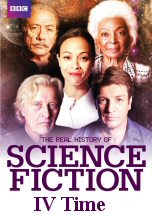
What if we could travel not just through space, but through time itself? If you could travel through time, would you change the past or the future? What if you found it couldn’t be changed? What price does the time traveller -- and the people they are closest to -- pay? This is a journey from H. G. Wells' The Time Machine through ideas like The Grandfather Paradox and The Butterfly Effect to the professional time traveller that is the ever popular Doctor Who. Steven Moffat, David Tennant, Karen Gillan, and Neil Gaiman offer a unique perspective on the Doctor. Edward James Olmos reveals the hidden meaning of the language he created for the vision of the future that is Blade Runner. Bob Gale and Christopher Lloyd take us behind the scenes of Back to the Future, while Ed Solomon describes the joy of solving a time travel conundrum for Bill & Ted’s Excellent Adventure. But what would be the physical and emotional cost to the time traveller? Audrey Niffenegger explains what inspired her novel The Time Traveller’s Wife. And what if someone from the future tried to travel back in time to warn us? Would we believe them? From the apocalyptic tones of 12 Monkeys to the drama of Quantum Leap and the comedy of Groundhog Day, time travel is a subject that has been irresistible to the creators of every type of science fiction.
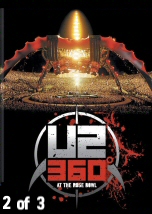
The tour was designed by Willie Williams, who has worked on every U2 tour since 1982. Williams had been toying with ideas for 360-degree stadium staging for U2 for a number of years, and presented sketches of a four-legged design to the group near the end of their Vertigo Tour in 2006. The inspiration for the 'spaceship-on-four-legs' design, nicknamed 'the Claw', came from the landmark Theme Building at Los Angeles International Airport.
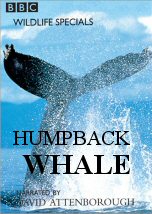
Few sounds are more beautiful or moving than the underwater songs of the humpback whale. Male whales compete with their songs, which often last for 10 minutes at a time, and can be repeated for hours on end. Whales separated by thousands of miles of sea will sing almost identical songs. Researchers have found that the songs change throughout the breeding months, following a mysterious pattern repeated across the waves. Whales also use sound to hunt. To catch herring, humpback whales release a stream of bubbles to form a shimmering, circular fishing net. Emitting a repetitive loud scream, they scare the fish into a tight ball, then lunge out of the water to swallow the shoal whole. Now it seems that the long-held image of the gentle giant must change to one of a ferocious and opportunistic hunter.
Scientists investigate the way the Sun builds its power -- through fusion -- hoping to find a way to use fusion as a less dangerous and less radioactive waste-producing path to energy than fission. But there are some major difficulties along the way. Fusion really is the perfect way to make energy. We have millions of years worth of fuel. It produces no long-lived radioactive waste. If we can solve the engineering challenges, energy will become cheaper, more available for everybody.





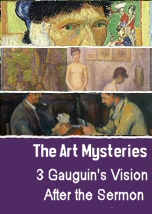


Waldemar Januszczak reveals all as he investigates Gauguin’s epic religious painting about good and evil, temptation and desire.