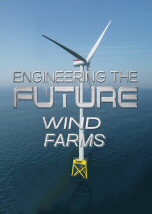





An engineering revolution is underway. Driven by dedicated individuals who are building extraordinary machines that will change our lives. The first episode follows the race to generate vast power from thin air - the wind. One of the world’s biggest wind farms is being built off the English coast where the harsh conditions pose great challenges for the team. Meanwhile, a Norwegian team is striving to build the first-ever floating wind farm.
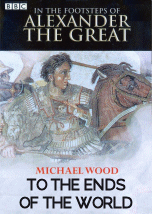
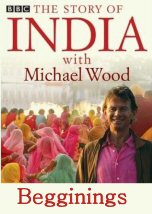
The final leg takes him from the Khyber Pass through Pakistan to the Punjab, where Alexander's army mutinied and he was forced to return across the Makran Desert to Babylon, where he died at only 32 years of age.
Sagan reflects on the future of humanity and the question of 'who speaks for Earth?' when meeting extraterrestrials. He discusses the very different meetings of the Tlingit people and explorer Jean-François de La Perouse with the destruction of the Aztecs by Spanish conquistadors, the looming threat of nuclear warfare, and the threats shown by destruction of the Library of Alexandria and the murder of Hypatia. The episode ends with an overview of the beginning of the universe, the evolution of life, and the accomplishments of humanity and makes a plea to mankind to cherish life and continue its journey in the cosmos. The Cosmos Update notes the preliminary reconnaissance of planets with spacecraft, the fall of the Berlin Wall and the end of apartheid in South Africa, and measures towards the reduction of nuclear weapons.
Dr Thomas Dixon delves into the BBC's archive to explore the troubled relationship between religion and science. From the creationists of America to the physicists of the Large Hadron Collider, he traces the expansion of scientific knowledge and asks whether there is still room for God in the modern world. He looks at what happens when new scientific discoveries start to explain events that were once seen as the workings of God, and explains how some of our most famous scientists have seen God in the grandest laws of the universe. Finally, he finds intriguing evidence from brain science which hints that belief in God is here to stay.
Scientists genuinely don't know what most of our universe is made of. The atoms we're made from only make up four per cent. The rest is dark matter and dark energy (for 'dark', read 'don't know'). The Large Hadron Collider at CERN has been upgraded. When it's switched on in March 2015, its collisions will have twice the energy they did before. The hope is that scientists will discover the identity of dark matter in the debris. The stakes are high - because if dark matter fails to show itself, it might mean that physics itself needs a rethink.
The Ebola virus is one of the most virulent infections known to science. This special episode of Horizon meets the scientists and doctors from all around the world looking for the cure and hears first-hand accounts of what it is actually like to catch and survive the disease
The first episode follows the race to generate vast power from thin air - the wind. One of the world’s biggest wind farms is being built off the English coast where the harsh conditions pose great challenges for the team. Meanwhile, a Norwegian team is striving to build the first-ever floating wind farm.