Join us on a journey into the mysterious depths of the human psyche as we investigate the strange and surprising terrain of the Mind Field. Chimps and Humans can be traced biologically back to a common ancestor. The Cognitive Tradeoff Hypothesis theorizes about the two different paths of development - particularly cognitive development - that occurred in these two species after the split. Chimps stayed in the trees and developed some extraordinary cognitive capabilities which are shown by the research work of Japanese scientists, while humans came down into the savanna and developed social capabilities and language. The hypothesis is that humans 'traded' some aspects of cognitive capabilities by re-purposing areas of the brain that had evolved in the context of other uses. Those capabilities are kept in chimps and are far surpassing that of normal humans. This is shown by the research work of scientists at the Primate Research Center connected with Kyoto University.
This edition explores the vast grasslands of the continent, hauntingly beautiful regions inhabited by strange creatures - giant anteaters, armadillos, maned wolves, capybara and jaguars.
Caesar contemplates Pompey's counteroffer but Mark Anthony wishes the war. Vorenus continues to struggle as a businessman and must reevaluate his career choice. Atia schemes to come between Caesar and Servilia and Pullo seeks Octavian's help.
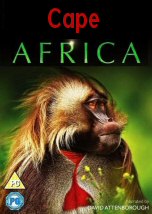
Southern Africa is a riot of life and colour because of two great ocean currents that sweep around the continent's Cape. To the east, the warm Agulhas current generates clouds that roll inland to the wettest place in southern Africa. To the west is the cold Benguela current, home to more great white sharks than anywhere else. Moisture laden fog rolls inland, supporting an incredible desert garden. Where the two currents meet, the clash of warm and cold water creates one of the world's most fabulous natural spectacles - South Africa's sardine run. This is the greatest gathering of predators on the planet, including Africa's largest, the Bryde's whale.
Supertramp's 'Breakfast in America' was the biggest selling album in the world in 1979. Following the album's release Supertramp embarked on a 10 month world tour which arrived in Paris at the end of November. Now, transferred and restored from the original 16mm film, this footage is available to Supertramp's legion of fans worldwide. In July 2006, the original master tapes of the album 'Supertramp: Live In Paris' were rediscovered in the Northern California barn of the band's drummer Bob Siebenberg, along with video footage. The tapes were sent to Cups 'N Strings Studios in Woodland Hills, California, for digital remastering. The tapes were initially in bad technical shape, but were successfully transferred to a digital format. The original idea was to feature heavily footage of Paris, adding a story in The Song Remains the Same. The sound was remixed by Peter Henderson and Supertramp's original sound engineer Russel Pope from the original multi-tracks.
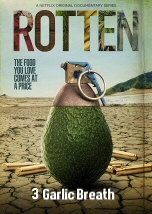
Cooking shows turned the humble garlic bulb into something that's essential to cuisines and into a multi-billion-dollar crop. Every year, humans consume nearly 50 billion pounds of garlic, and most of it comes from one country: China. But a lawsuit raises troubling questions about suppliers.














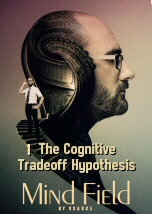






Chimps and Humans can be traced biologically back to a common ancestor. The Cognitive Tradeoff Hypothesis theorizes about the two different paths of development - particularly cognitive development - that occurred in these two species after the split. Chimps stayed in the trees and developed some extraordinary cognitive capabilities which are shown by the research work of Japanese scientists, while humans came down into the savanna and developed social capabilities and language.
The hypothesis is that humans 'traded' some aspects of cognitive capabilities by re-purposing areas of the brain that had evolved in the context of other uses. Those capabilities are kept in chimps and are far surpassing that of normal humans. This is shown by the research work of scientists at the Primate Research Center connected with Kyoto University.