An engineering revolution is underway. Driven by dedicated individuals who are building extraordinary machines that will change our lives. The first episode follows the race to generate vast power from thin air - the wind. One of the world’s biggest wind farms is being built off the English coast where the harsh conditions pose great challenges for the team. Meanwhile, a Norwegian team is striving to build the first-ever floating wind farm.
In the second episode, Will Smith descends 3,300 feet to the bottom of the ocean in a deep-water submersible, where even fewer people have gone than outer space. Along the way down, Will and explorer Diva Amon investigate how colour is used in the natural world and the role of bioluminescence. In the oceans, nearly 80 percent of animals use bioluminescence in some way, possibly the most common form of communication on the planet.
Cooking shows turned the humble garlic bulb into something that's essential to cuisines and into a multi-billion-dollar crop. Every year, humans consume nearly 50 billion pounds of garlic, and most of it comes from one country: China. But a lawsuit raises troubling questions about suppliers.
Andrew Graham-Dixon continues his exploration of German art by looking at the tumultuous 19th and early 20th centuries, and how artists were at the forefront of Germany's drive to become a single nation. Andrew travels to the north and the coastal town of Griefswald, the birthplace of Caspar David Friedrich, the most influential of the German Romantics, to discover how the Baltic coast impacted his mysterious paintings of the German landscape. He also visits Berlin and explores the art of the powerful Prussian state, which would spearhead the unification of Germany in 1871. The episode ends with the outbreak of World War I and the attempts of the artists Franz Marc and Otto Dix to rationalise the catastrophic experiences of the world's first technological war, a war driven by the Prussian innovations.
Ivan Orkin, the brash, white, Jewish guy from New York who made his name as one of the best ramen makers on the planet has an unorthodox story. That means no tweezer food, plenty of swear words, no slow shots of the chef communing with nature. He was a problem child, fell in love with Japan, fell in love with cooking, suffered personal tragedy, and found his reason for being and his ultimate success in Tokyo.
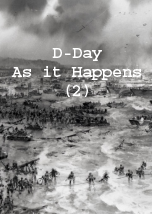
D-Day: As It Happens is a 24-hour history event to be broadcast across TV, web, mobile devices and social media, telling the story of this pivotal event in 20th-century history in a completely new way. Using newly-analysed archive footage, viewers can track the progress of seven people who were there on the day, each of them a real participant in the 1944 invasion. And they can do so moment by moment in real time, encountering the twists and turns of the fighting at the same time as the D-Day seven did, and learning their fate as the action unfolds in parallel with the present, Narrated by Peter Snow, with Channel 4 presenter and former marine Arthur Williams, and experts including former British Army officer Colonel Tim Collins and front-line journalist Lorna Ward. The second programme reveals what happened to the seven real people the event is following in real time, and also rounds up the events of D-Day.






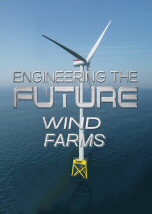


The first episode follows the race to generate vast power from thin air - the wind. One of the world’s biggest wind farms is being built off the English coast where the harsh conditions pose great challenges for the team. Meanwhile, a Norwegian team is striving to build the first-ever floating wind farm.